Skip to content
Search
Menu

We earn a commission if you book through this link. You pay the same price.

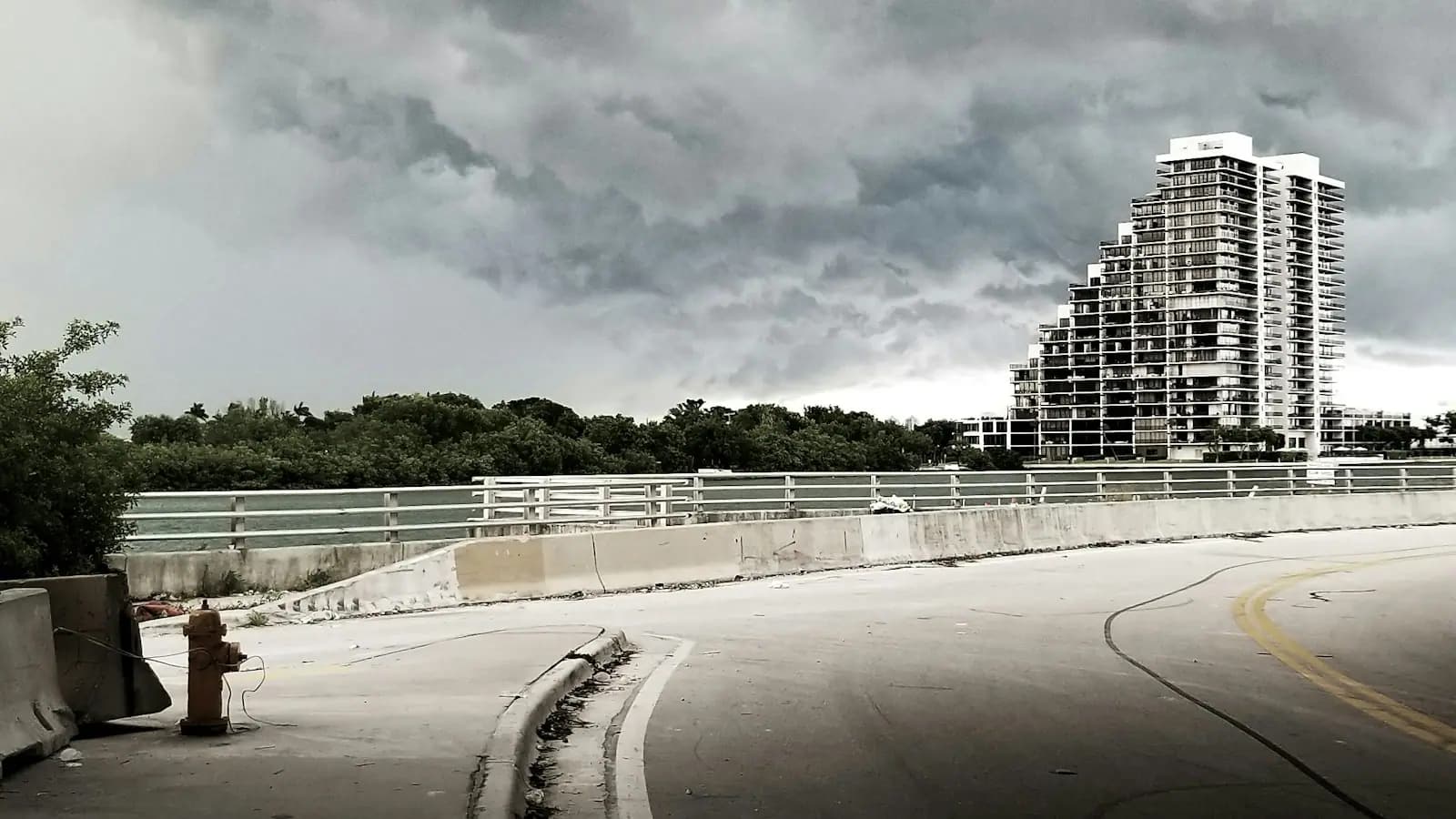
A causeway road with white railings curving towards a Miami high-rise under heavy grey cloud

Plan your trip

Getting Around Miami

Last updated

Getting around Miami: when you need a car, the free Metromover, causeway routes, parking costs, Brightline to Orlando and the rental car toll trap.

Getting around Miami is not hard, but it is counter-intuitive, and the mistakes are expensive rather than confusing. Three facts do most of the work.

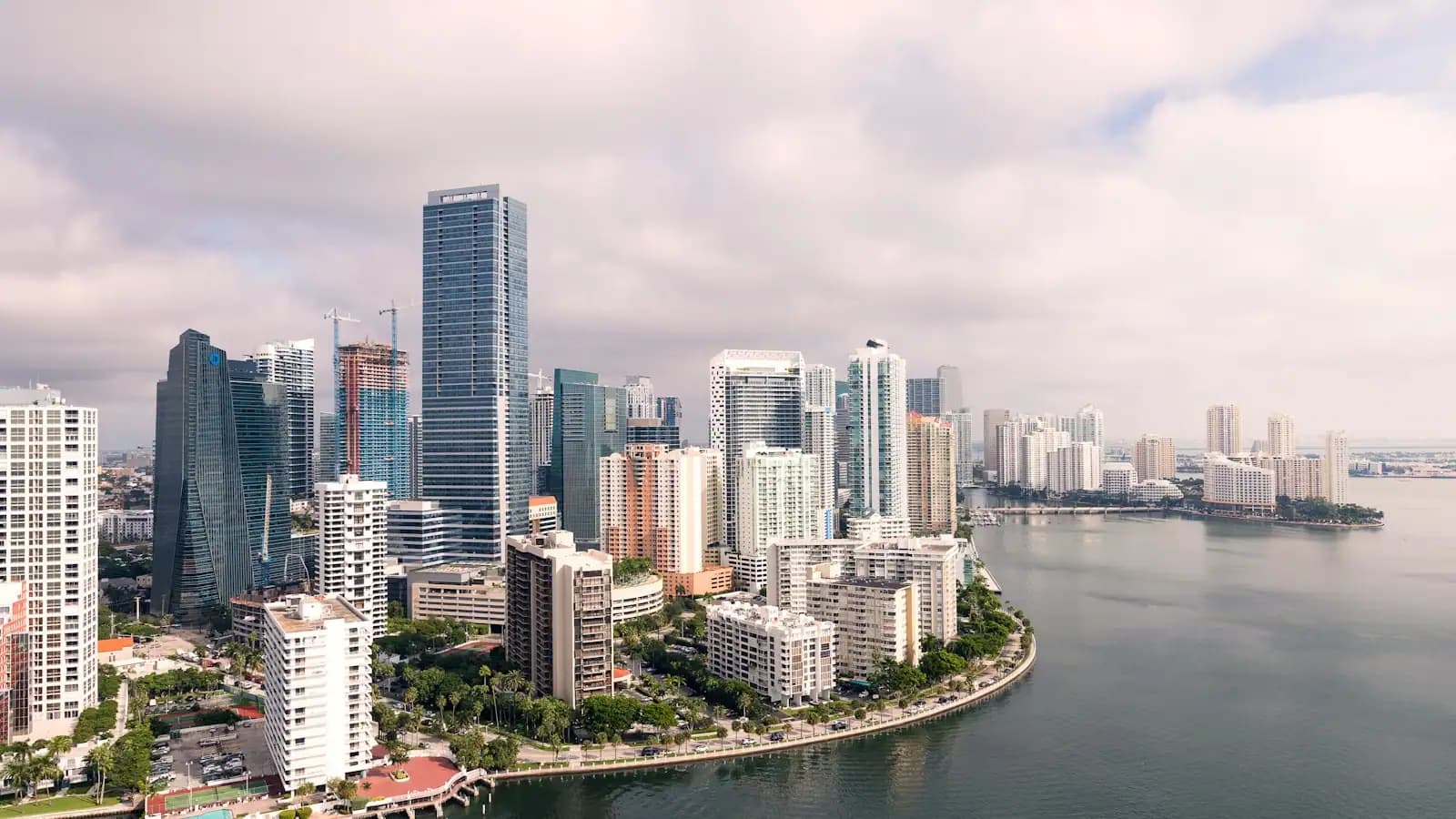
First, the city is split across water. Everything with a mainland address belongs to Miami. Everything on the sand opposite belongs to Miami Beach, which is a different municipality with its own government, and Biscayne Bay lies in between. Almost every decision you make here is really a decision about whether to cross it, and three bridges do the crossing. The MacArthur Causeway carries I-395 from downtown past the cruise port and the islands to Fifth Street in South Beach, and it is the main artery. The Julia Tuttle carries I-195 from Wynwood and the Design District into Mid-Beach, and it is usually the faster of the two. The Venetian Causeway hops a chain of residential islands with a toll, a low speed limit and a walking and cycling path, and it is the slowest and by far the most pleasant. At rush hour, or during an event, a crossing that takes twelve minutes at 10am takes forty at 6pm. Plan the day so you cross once.

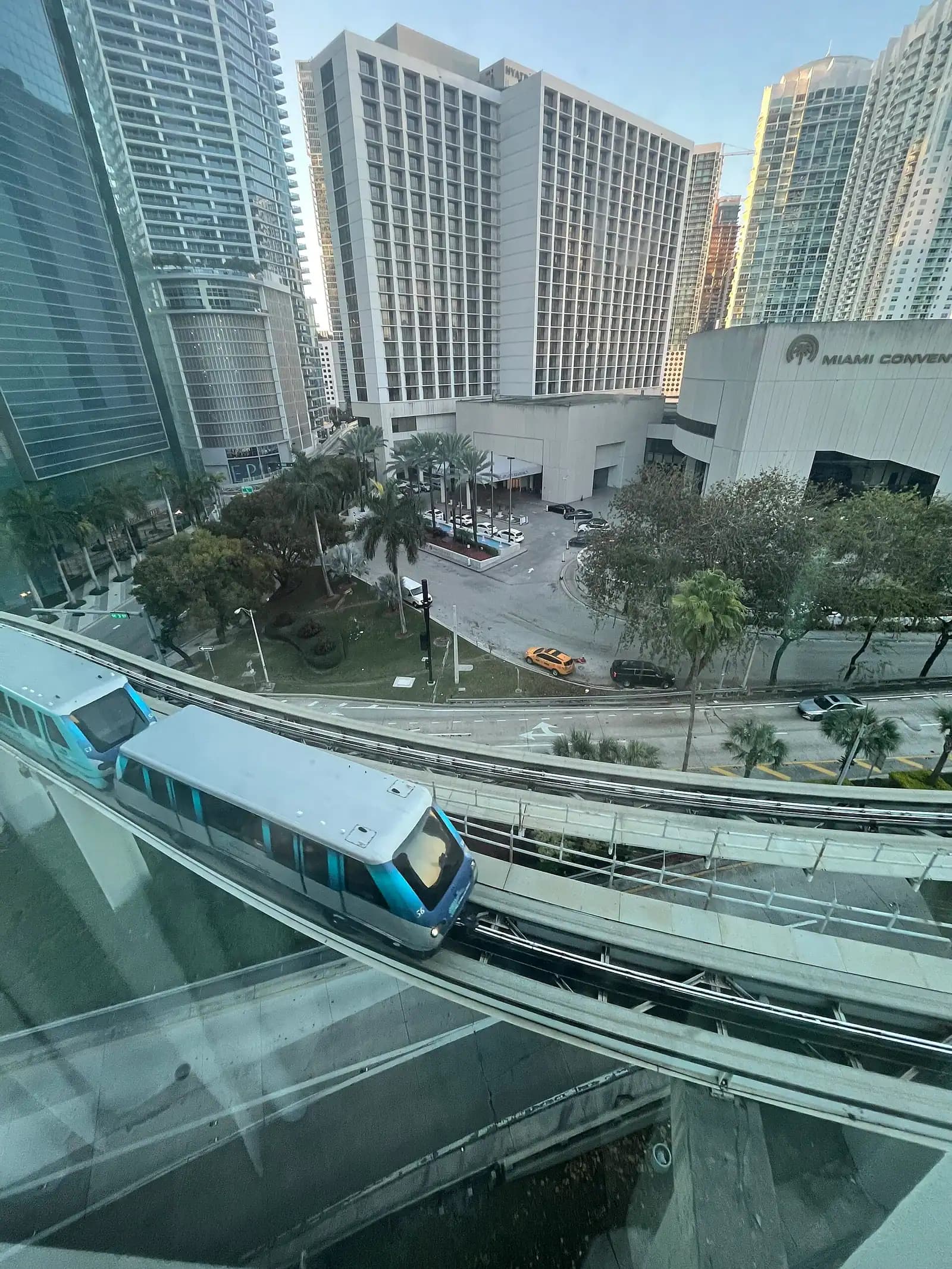
Second, the transit network is excellent in exactly one place and absent everywhere else. The Metromover is a free, driverless elevated people-mover running three loops through downtown and Brickell, with no ticket and no tap, from early morning until around 10pm. Within its footprint it is genuinely better than driving: it is fast, frequent, air-conditioned and covered. Metrorail is a two-line elevated heavy-rail system running from Dadeland in the south through Brickell and downtown and out to Hialeah, with the Orange Line serving Miami International Airport. Metrobus covers the county properly but slowly. The flat fare on Metrorail and Metrobus is $2.25, with a daily cap around $5.65 for unlimited rides, paid with an EASY Card, the transit app or contactless. What none of it does is cross the bay usefully or reach Wynwood, Coconut Grove and the Design District in a way most visitors will tolerate.

Third, no expressway here takes cash, and the bill finds you later. Not one booth survives on a Miami expressway. Overhead gantries either pick up a SunPass transponder or photograph the number plate, and the charge goes to whoever the car is registered to — which, for a visitor, is the hire company. Every firm recovers it through a toll product of its own, and the part that stings is the administration fee bolted on, levied against each day of the hire in most cases rather than each day you actually passed under a gantry. Twelve dollars of genuine tolls can arrive as sixty. Get the figure at the desk, and over short distances take the surface streets, where the time you lose is minor.

The genuinely useful conclusion is that most visitors should not decide between "car" and "no car" but should rent for the two or three days that need one. The Everglades, Key Biscayne, Fairchild, the Deering Estate and Homestead all reward a car. South Beach, Wynwood, Brickell and downtown punish one.

The free train, the paid train, and the trolley

Metromover. Free, no ticket, no tap. Three loops through downtown and Brickell, elevated one storey above the street, running from early morning to around 10pm daily. It reaches the bayfront museum park with PAMM and Frost Science, Bayside Marketplace, the Freedom Tower, Brickell City Centre, MiamiCentral station and the courthouse district. If you are staying downtown or in Brickell, this is your transport and you will not need much else within that footprint.

Metrorail. Two lines, elevated, running roughly north to south from Dadeland through Coconut Grove, Coral Gables' Douglas Road, Brickell and downtown up to Hialeah and Palmetto, with the Orange Line branching to Miami International Airport. Flat fare $2.25, daily cap around $5.65, paid by EASY Card, the transit app or contactless. It connects to the Metromover free at Government Center and Brickell. For an airport arrival staying downtown, this is a genuinely good option: train from MIA to Government Center, then the Metromover.

Metrobus. County-wide, comprehensive on paper, slow in practice, same $2.25 fare. Useful for specific corridors, particularly Biscayne Boulevard and the causeway routes into Miami Beach, and unrewarding as a general strategy.

The Miami Beach Trolley. A free, city-run circulator covering South Beach, Mid-Beach, North Beach and the Collins corridor. It is genuinely useful if you are based on the island and want to move a few dozen blocks without paying to park. Routes change, so check the current map rather than an old one.

MIA Mover. A free automated shuttle connecting Miami International Airport's terminals to the Miami Intermodal Center, where the rental car centre, Metrorail's Orange Line, Tri-Rail and the regional buses all are. If you are renting a car at MIA, this is the link you take to reach it.

Brightline. Higher-speed intercity rail from MiamiCentral downtown to Aventura, Fort Lauderdale, Boca Raton, West Palm Beach and on to Orlando. Fort Lauderdale is around 40 minutes, Orlando around three and a half hours. Advertised Miami to Orlando fares start around $39 on the cheapest tier and rise from there. MiamiCentral connects directly to the free Metromover and to Metrorail, which makes a car-free day trip north genuinely practical.
Rideshare, bikes and the ways to move without a car

Local tips

Rideshare is the practical default for most visitors. Uber and Lyft both operate across the county and coverage is dense. Typical fares between mainland neighbourhoods run $15 to $30. Across a causeway at peak, or anywhere at 2am on a Saturday, expect considerably more. MIA and the cruise port have designated pickup zones that are signposted and not where you first expect them.

One thing to sort before you land: rideshare vehicles in Florida do not carry child seats by default. If you are travelling with small children and not renting a car, arrange this in advance rather than at the kerb.

Citi Bike. Miami and Miami Beach have a dock-based bike share with stations across South Beach, downtown, Brickell, Wynwood and Coconut Grove. It works well on the island and along the bayfront, and less well as a way of crossing between neighbourhoods on the mainland, where the traffic is fast and the bike infrastructure is patchy.

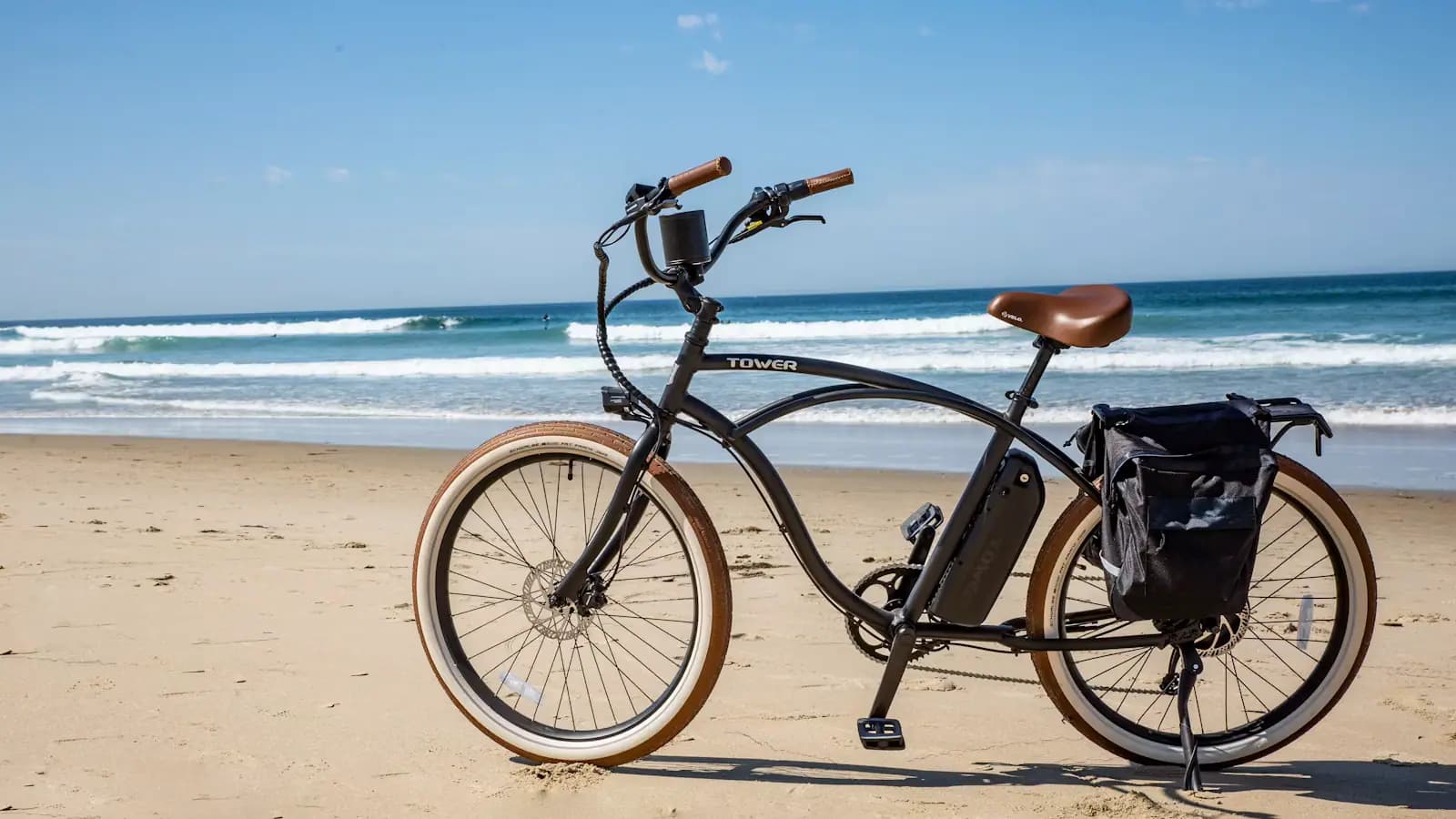
Where cycling genuinely works. The Venetian Causeway. The Rickenbacker Causeway out to Key Biscayne, which is the county's main road-cycling route. The Miami Beach Boardwalk and the Beachwalk. The 15-mile loop at Shark Valley in the Everglades, where hire bikes are available at the entrance and it is flat, paved and alligator-lined. And the Underline, the linear park being built beneath the Metrorail viaduct.

Walking. Individual neighbourhoods are walkable and the gaps between them are not. South Beach, Lincoln Road, Wynwood, the Design District, Brickell, Coconut Grove's village centre and the Calle Ocho strip are all comfortable on foot. Crossing between them is not a walk, it is a journey.

Scooters. Rental e-scooters operate in parts of the City of Miami under rules that have changed several times, including neighbourhood opt-outs and time restrictions. Check what is currently permitted where you are staying rather than assuming.

Water taxi. Services across Biscayne Bay have come and gone repeatedly. If one is running during your visit it is a pleasant way to cross; do not build a plan around it existing.

Airports, the cruise port, and getting in and out

When to go

Miami International Airport (MIA) is about eight miles west of downtown, 15 to 25 minutes without traffic and up to 45 with it. It is one of the busiest international gateways in the country and the immigration hall at peak is not quick. Options into the city:

  • Metrorail Orange Line from the Miami Intermodal Center, reached from the terminals on the free MIA Mover. $2.25 to downtown, then the free Metromover. Slow but cheap and immune to traffic.
  • Rideshare. Roughly $25 to $40 to downtown or Brickell, more to South Beach. Designated pickup zones.
  • Rental car. The rental centre is at the Intermodal Center, again via the MIA Mover.

Fort Lauderdale-Hollywood (FLL) is about 28 miles north and frequently cheaper to fly into. Brightline from Fort Lauderdale to MiamiCentral takes around 40 minutes, which makes FLL a realistic alternative if your flight price difference is meaningful. Factor a rideshare from the airport to the Brightline station.

PortMiami sits on Dodge Island, minutes from downtown across a bridge. It is unusually convenient: a bay cruise leaves from Bayside a short ride away, and downtown and Brickell are walkable-adjacent. What does not fit a turnaround day is the Everglades or the Keys.

Timing for departures. Allow three hours for an international flight out of MIA, two and a half for domestic, and add a buffer on top if you are crossing a causeway or travelling in the rain. Returning a rental car means the MIA Mover from the Intermodal Center, which adds 20 minutes to anything you have planned.

One route note. If you are staying in South Beach and flying out of MIA, the Julia Tuttle to I-195 to the airport is usually faster than the MacArthur through downtown, and considerably less exposed to event traffic.

Accessibility and step-free options

Local tips

Miami is flat, which helps, and its newest infrastructure is good while its oldest is variable.

The Metromover is fully step-free, with lifts at every station, level boarding and no fare. It is the single best accessible way to move around downtown and Brickell.

Metrorail stations have lifts and level boarding, and Metrobus is lift- or ramp-equipped. Miami-Dade operates a paratransit service for eligible riders that requires registration in advance, so start that process before you travel.

Museums. PAMM and Frost Science are fully accessible and share a garage in the same bayfront park. Vizcaya's main floor is accessible, but the gardens involve gravel, steps and uneven stone, and the visit is substantially the gardens.

Beaches. Several Miami-Dade and Miami Beach parks run beach wheelchair programmes, including Crandon Park and Haulover, and Miami Beach has installed accessible matting at some access points. Numbers are limited everywhere, so call ahead rather than turning up and hoping.

The Everglades. Shark Valley's 15-mile loop road is paved and flat, and the tram can carry a wheelchair with advance notice. The Anhinga Trail at Ernest Coe is a boardwalk and is one of the most accessible wildlife walks in the state.

Boats. Ask specifically when booking. Some Biscayne Bay operators board from proper docks and can accommodate limited mobility with notice; others load from a beach or a floating pontoon and cannot.

Parking. Accessible parking is enforced, and Florida recognises out-of-state permits. In Miami Beach, disabled parking permits do not automatically exempt you from meter payment, so check the posted signs.

Book it

What you can book

We could not find tours matching this right now

Nothing came back for Miami airport transfer. Operators add and retire experiences constantly, so this list changes week to week. Try a broader category, or come back in a day or two.

Do you actually need a car?

How they compare

Your tripCar?Why
South Beach onlyNoWalkable, free Miami Beach trolley, and parking costs $20–$30 a day
Downtown and BrickellNoThe free Metromover covers it better than driving
Mainland neighbourhoods: Wynwood, Little Havana, Design District, GroveRideshareEach is walkable inside itself; $15–$30 between them
Key Biscayne beachesYes for a dayCauseway toll around $3.25, then per-vehicle park fees
Everglades or Shark ValleyYes, or a tourNo transit reaches either
Fairchild, Matheson Hammock, Deering Estate, Zoo MiamiYesSpread across the southern county
Fort Lauderdale or the KeysYes, or Brightline northBrightline reaches Fort Lauderdale in about 40 minutes

The practical answer for most visitors: rent for two days out of a week. One day for the Everglades, one for Key Biscayne or the southern parks, and rideshare plus the Metromover for everything else. You save three to five days of parking charges, which in Miami is real money, and you skip the worst of the traffic.

Driving, tolls and the routes that matter

Before you book

Settle the toll question before you take the keys. The Dolphin, the Airport Expressway, the Palmetto express lanes and most of the Turnpike operate without a single booth between them. A gantry reads the transponder or photographs the plate, the charge reaches the hire company, and the hire company passes it back to you through its own toll account with a fee attached — applied, more often than not, to every day you have the car rather than the days you used a tolled road. Get that number at the desk. Across town, the surface streets cost you very little time.

I-95 express lanes. Variably priced, separated by plastic poles, and crossing the poles is an enforced offence. Enter and exit only at the marked openings.

The three causeways. MacArthur, I-395, from downtown to Fifth Street in South Beach: the main route, and the one that clogs. Julia Tuttle, I-195, from Wynwood and the Design District to Mid-Beach: usually faster. Venetian: tolled, slow, beautiful, with a path for walking and cycling. Locals choose by time of day rather than by habit.

The Rickenbacker Causeway to Virginia Key and Key Biscayne carries a toll of around $3.25 each way, and it is also the county's main cycling route, with heavy weekend bike traffic on the bridge shoulders.

Traffic. Rush hour runs roughly 7 to 9:30am and 4 to 7pm, and the causeways and I-95 are the pressure points. Rain makes both dramatically worse. Add a genuine buffer for flights.

Parking. Reckon on about $4 an hour at a South Beach meter, $20 to $30 for a day in a municipal garage, and $30 to $50 if someone else parks it. Residential zones in Miami Beach and Coconut Grove are permit-only and enforced by tow, not by ticket. Wynwood's lots charge like an event. Pay by app where you can; most Miami Beach meters take the city's app.

Flooding. Heavy rain floods low-lying streets fast, and king tides do the same on clear days from roughly September to November. Do not drive through standing water.

On the ground

Where to go

Every place below has its own page — hours, parking, what it costs and what to expect when you get there.

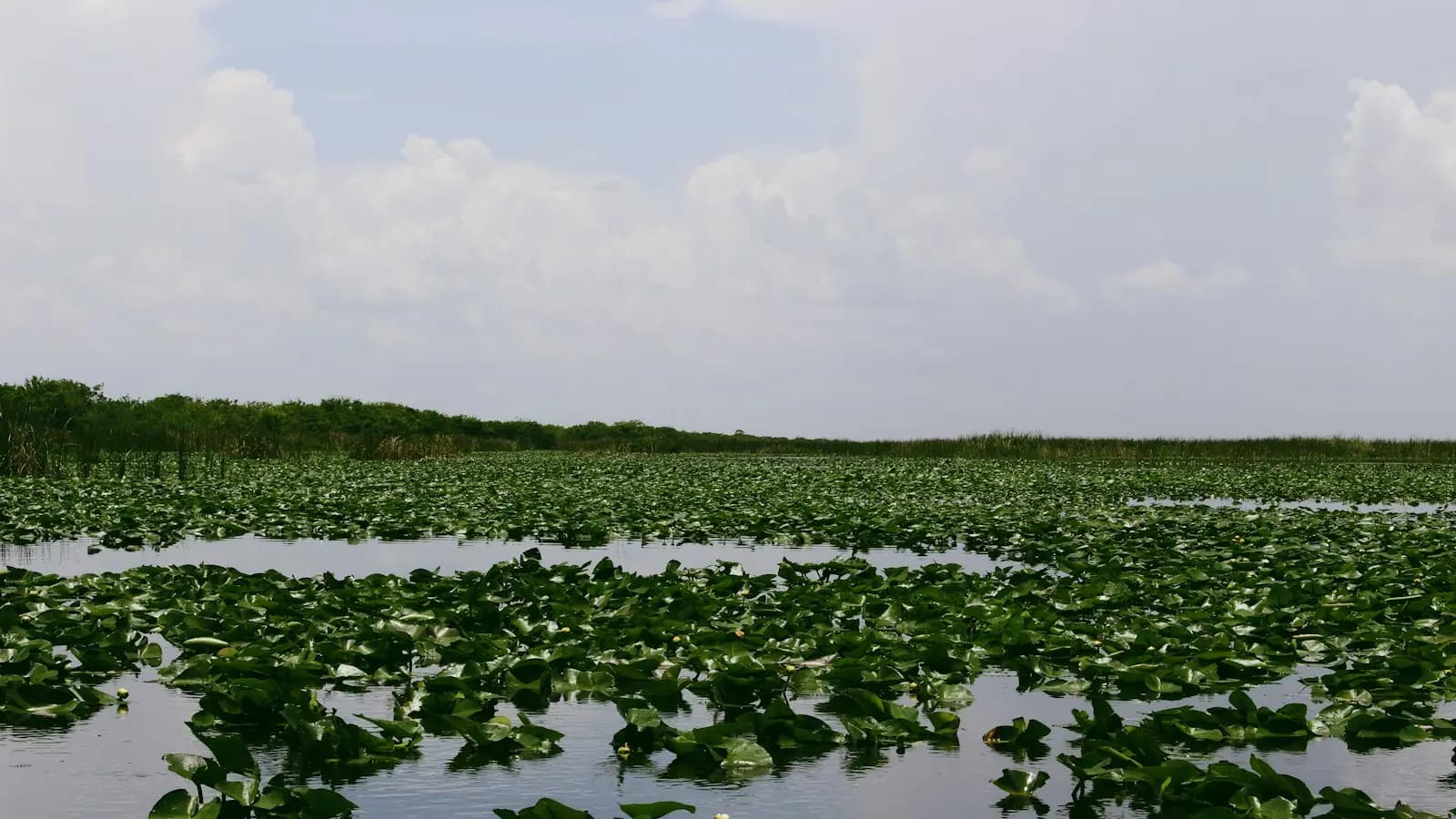
  • Open sawgrass prairie stretching flat to the horizon under a tall sky of building cumulus cloud

    Nature preserve

    Everglades National Park

    A river 60 miles wide moving at the speed of a walking ant, with three entrances that do not connect to each other.

    4–10 hoursA single vehicle pass covers all three entrances for seven consecutive days. Expect somewhere in the region of $30–35 per vehicle, with lower rates for motorcycles and for arriving on foot or by bike.

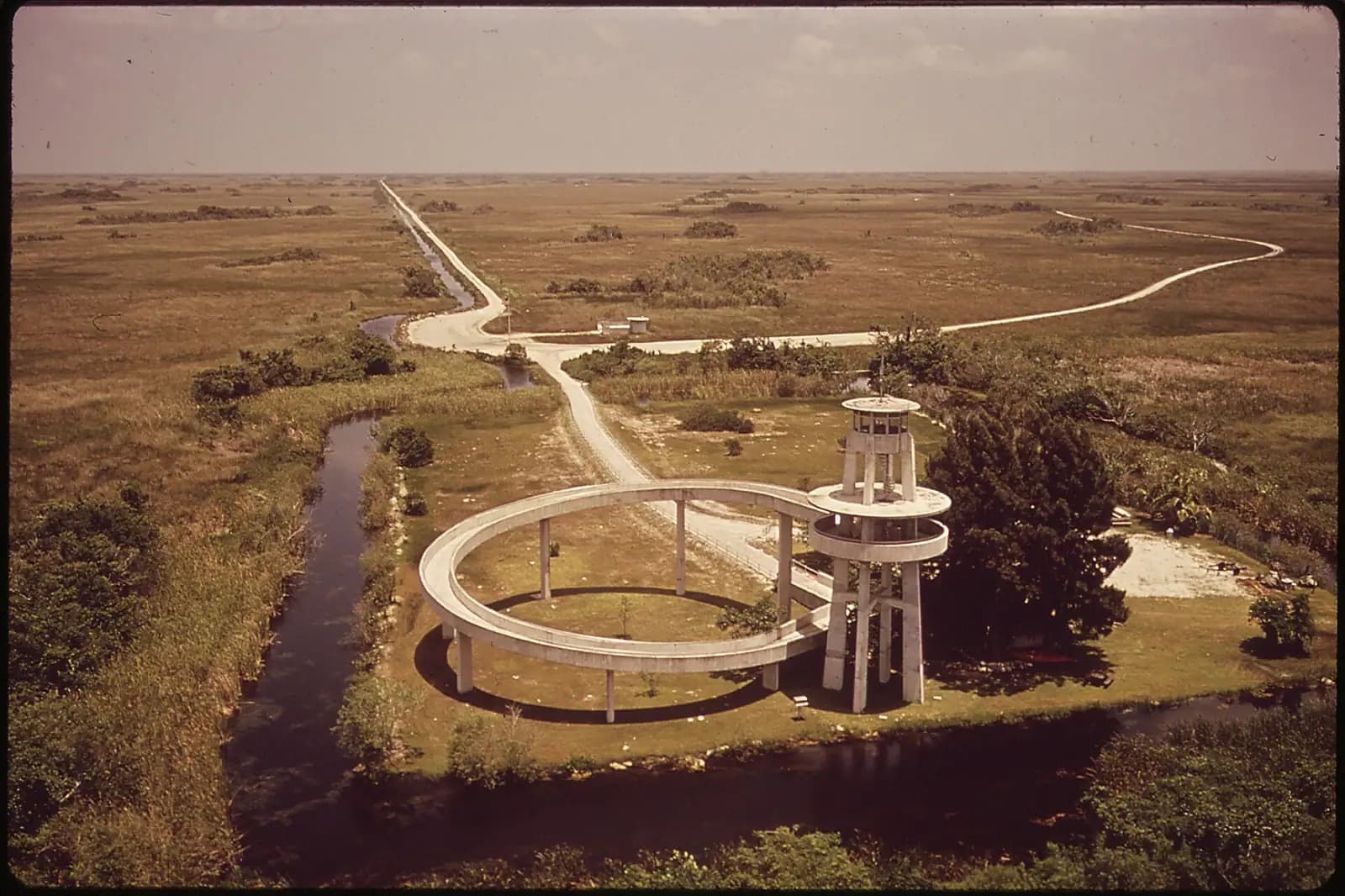
  • A narrow paved road running straight through flat open wetland grass towards a distant horizon

    Trail

    Shark Valley

    A flat 15-mile loop road into open sawgrass with an observation tower at the far end and alligators lying on the verge.

    2.5–5 hoursEverglades National Park entrance pass required — typically in the region of $30–35 per vehicle, valid seven days at all three park entrances. The tram tour is a separate concessionaire ticket.

  • A long causeway bridge curving across shallow bay water towards a low green island
    Free

    Neighbourhood

    Key Biscayne

    One causeway, two big parks and a village in between — the island Miami drives to when it wants the ocean without the noise.

    3–8 hoursThe village and its streets are free. You pay an eastbound causeway toll to drive on, and a per-vehicle entry charge at each of the two parks.

  • A narrow street shaded by a heavy canopy of live oak and banyan trees in a residential Miami neighbourhood
    Free

    Neighbourhood

    Coconut Grove

    Miami's oldest continuously inhabited neighbourhood, settled by Bahamians and Yankee pioneers two decades before the city existed.

    2–5 hoursFree to walk. The Barnacle Historic State Park charges a small state-park admission, and the Kampong operates by appointment with its own fee.

  • A small elevated train running on a raised concrete guideway between city office towers
    Free

    Landmark

    Metromover

    Free, driverless and elevated: 21 stations and the cheapest skyline tour in Miami, provided you know which loop you are on.

    0.5–1.5 hoursFree. No ticket, no tap, no fare gates — the entire system is free to ride at all times.

  • A Mediterranean Revival building with barrel-tile roof, arcades and stucco walls under palms
    Free

    Neighbourhood

    Coral Gables

    A whole city planned and sold in the 1920s to one Mediterranean design code, and still enforcing it a century later.

    2.5–6 hoursFree to visit the city, Miracle Mile and the residential streets. The Venetian Pool, the Coral Gables Museum and Fairchild Tropical Botanic Garden each charge their own admission.

  • A giraffe standing in an open grassy enclosure with no visible fencing in the foreground

    Wildlife

    Zoo Miami

    Florida's largest zoo: 750 acres of moated, cage-free habitat where the animals are tropical and the walking is the hard part.

    4–6 hoursExpect roughly $25 for an adult and a few dollars less for a child, with very young children free. Parking, tram, safari cycle hire and animal encounters are extra.

  • Glass residential and office towers rising above a tree-lined street in Miami's Brickell district
    Free

    Neighbourhood

    Brickell

    Miami's most walkable neighbourhood: towers, a free elevated train, and a two-thousand-year-old Tequesta site at the river mouth.

    1.5–5 hoursFree. Walking the district, riding the Metromover and visiting the Miami Circle all cost nothing.

  • A dense cluster of downtown towers seen across water at the end of the day
    Free

    Neighbourhood

    Downtown Miami

    The original Miami: a railway terminus that became a city in 1896, now a downtown of towers, museums and a free elevated railway.

    3–8 hoursFree to walk, and the Metromover that connects it costs nothing. Museums, the Freedom Tower galleries, bay cruises and events are ticketed separately.

  • A narrow urban river running between city towers with a drawbridge crossing it
    Free

    Trail

    Miami Riverwalk

    The short, busy, unglamorous river Miami was built on — freighters, drawbridges and a 2,000-year-old circle cut into the bedrock.

    1–2.5 hoursFree. The Riverwalk and the Miami Circle site are both public and open to the street.

  • Boats moored at a downtown marina with a city skyline of towers rising behind
    Free

    Shopping

    Bayside Marketplace

    Downtown Miami's bayfront mall, best understood as the dock most Biscayne Bay cruises leave from rather than as somewhere to shop.

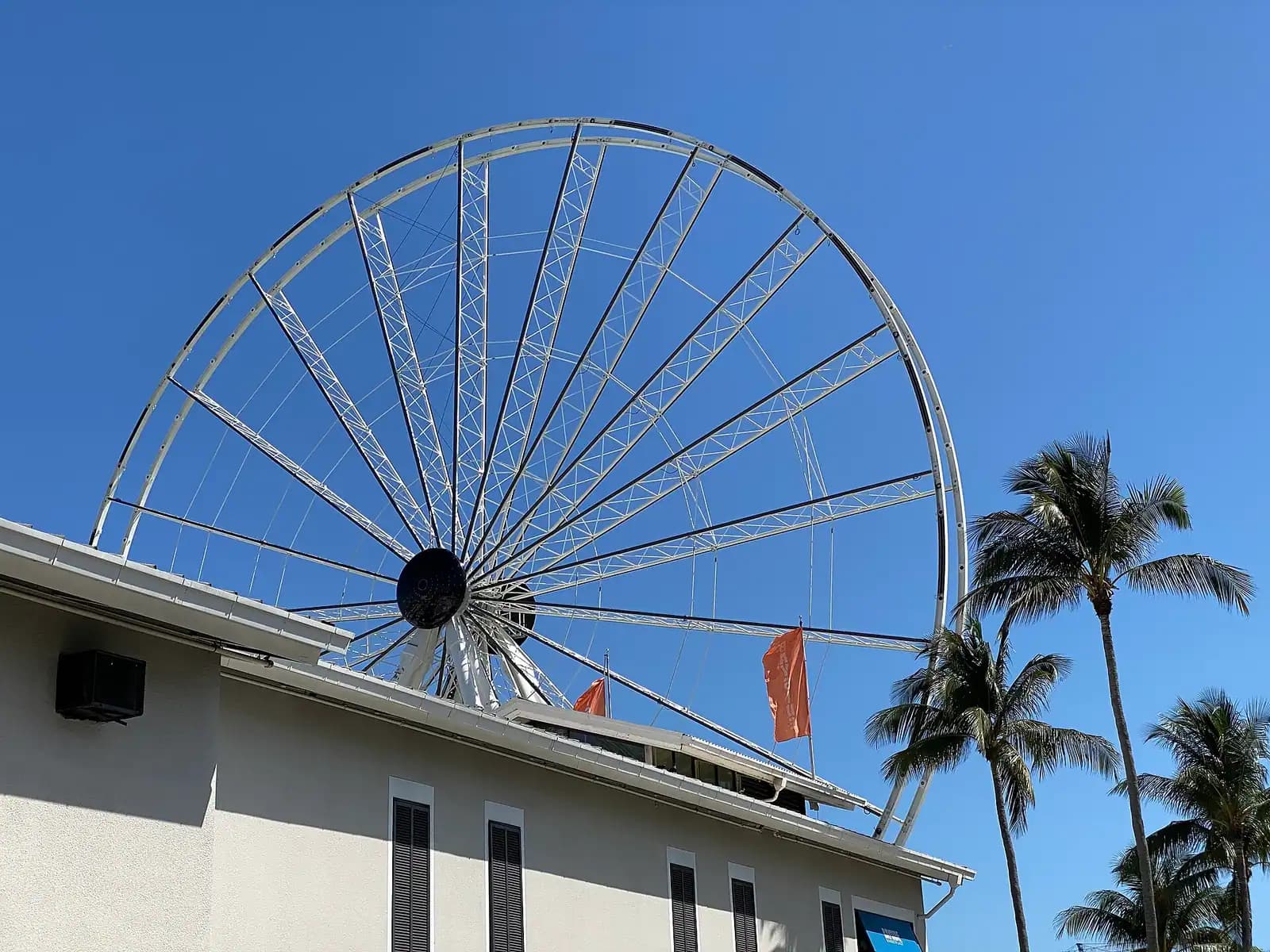
    1–3 hoursFree to enter and to walk the waterfront. Boat trips, the Skyviews observation wheel and Bayfront Park concerts are each ticketed separately.

Straight answers

Questions people actually ask

Do you need a car in Miami?

For some days, not all. A car is genuinely useful for the Everglades, Key Biscayne, Fairchild, the Deering Estate, Zoo Miami and Homestead, none of which transit reaches usefully. It is a liability in South Beach, Wynwood, Brickell and downtown, where parking runs $20 to $30 a day and meters around $4 an hour. Most visitors do best renting for two days of a week and using rideshare and the free Metromover otherwise.

Is the Metromover free in Miami?

Yes, entirely. The Metromover is a driverless elevated people-mover running three loops through downtown Miami and Brickell with no fare, no ticket and no tap, from early morning until around 10pm daily. It reaches the bayfront museum park, Bayside Marketplace, the Freedom Tower, Brickell City Centre and MiamiCentral station, and it connects free to Metrorail at Government Center and Brickell.

How do you get from Miami airport to South Beach?

Rideshare is the practical default, typically $30 to $50 depending on traffic and time of day, and takes 25 to 45 minutes via the Julia Tuttle or MacArthur causeway. By transit it is slow: the free MIA Mover to the Intermodal Center, Metrorail to downtown, then a Metrobus across the causeway. A rental car makes sense only if you plan to leave the island; South Beach parking will cost you $20 to $30 a day.

How much are tolls in Miami and how do rental cars handle them?

Cashless, all of them. A gantry reads your SunPass transponder or photographs the plate, and the individual charges are small — a couple of dollars in most cases. The expensive part is the hire company's toll product, which attaches an administration fee to each day you have the car rather than to each day you actually used a tolled road. Ask at the counter what that adds up to. Twelve dollars of real tolls can reach the invoice as sixty.

What is the best way to get between Miami and Miami Beach?

By car or rideshare across one of three causeways. The MacArthur, carrying I-395 from downtown to Fifth Street, is the main route and the one that clogs. The Julia Tuttle, I-195 from Wynwood and the Design District into Mid-Beach, is usually faster. The Venetian is tolled, slow and the nicest, with a path for walking and cycling. Metrobus routes cross as well. Plan the day so you cross once.

Can you take a train from Miami to Orlando or Fort Lauderdale?

Yes, on Brightline from MiamiCentral downtown. Fort Lauderdale is around 40 minutes, West Palm Beach further north, and Orlando about three and a half hours, with the cheapest advertised Miami to Orlando tier starting near $39. MiamiCentral connects directly to the free Metromover and to Metrorail, so a car-free day trip north is practical. Book ahead: walk-up fares are considerably higher than advance ones.

How much is parking in South Beach?

Street meters run around $4 an hour in the South Beach core, city garages are roughly $20 to $30 for a day with some 24-hour rates nearer $25, and hotel valet is routinely $30 to $50 a night. Residential zones are permit-only and enforced by towing rather than ticketing. Rates rise during major events such as Art Basel and the wine and food festival. Pay by the city's app where you can.

Is Miami walkable?

In patches. South Beach, Lincoln Road, Wynwood, the Design District, Brickell, downtown, Coconut Grove's village centre and the Calle Ocho strip in Little Havana are all comfortable on foot. The distances between them are not walkable, and the roads in between are fast, wide and unshaded. Use the free Metromover within downtown and Brickell, and rideshare between neighbourhoods at $15 to $30 a trip.