Skip to content
Search
Menu

We earn a commission if you book through this link. You pay the same price.

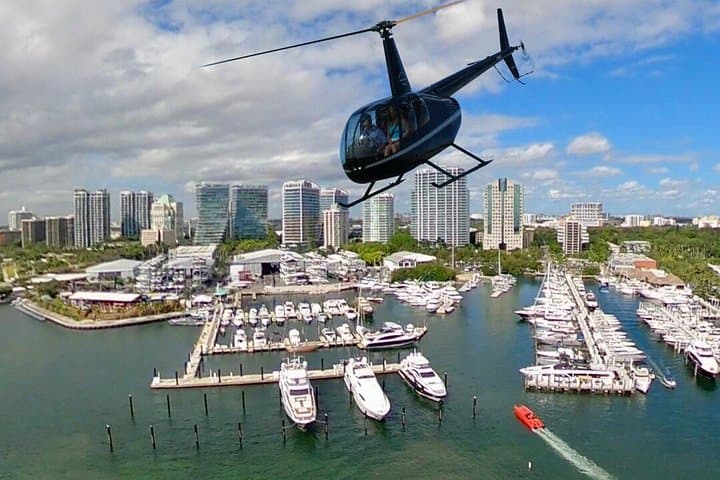
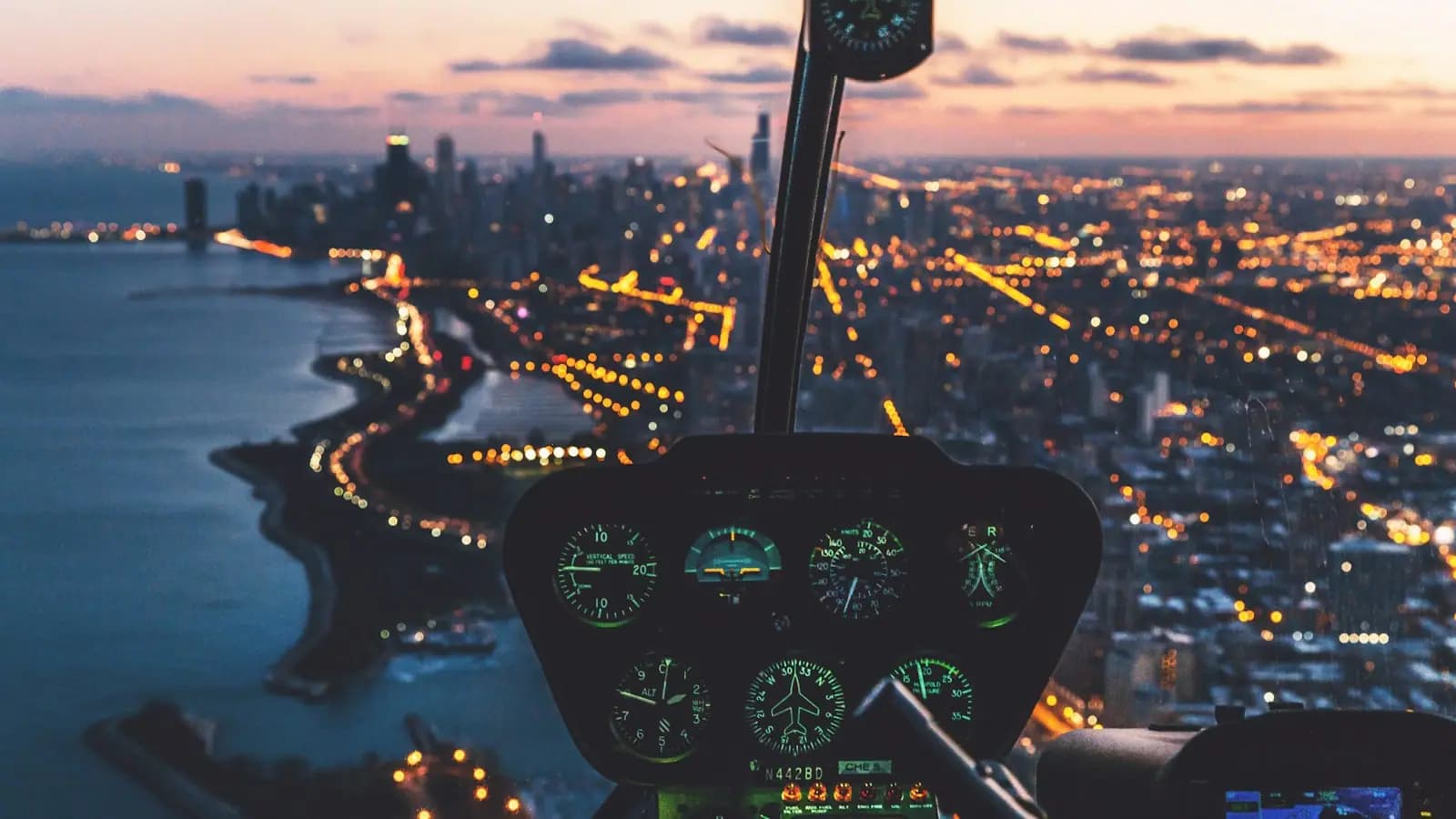
The view forward from a helicopter cockpit over a waterfront city and open water

Tours

Helicopter Tours in Miami

Last updated

Miami helicopter tours compared: what you see over Biscayne Bay, what 15 and 30 minutes in the air costs, and why the departure field is rarely downtown.

Miami is a city that makes more sense from a thousand feet than from the ground. At street level the place is a series of separate neighbourhoods with causeways and traffic between them. From the air it resolves into what it actually is: a mainland edge, a shallow bay dotted with dredged islands, a barrier island with a grid of hotel pools along its spine, and a green horizon to the west where the Everglades starts. Fifteen minutes in a helicopter will teach a first-time visitor more about Miami's geography than three days of driving.

It is also, by a distance, the most expensive way to spend a quarter of an hour here. A median bookable tour in this market is about $89, and a 30-minute flight is commonly three times that per seat. Roughly eight per cent of Miami's tour inventory sits above $250, and helicopter flights are most of that band along with private charters. Worth saying plainly: this is a splurge, not an itinerary item, and the bay looks good from a $40 boat too.

What you are paying for is the specific set of things only altitude shows. The three residential islands off the MacArthur Causeway read as a shape rather than as a wall of hedges. PortMiami's cruise ships look like the industrial operation they are. The barrier island's pools line up. Stiltsville, the cluster of wooden houses standing on pilings out on the flats of Biscayne Bay, is essentially invisible from land and obvious from the air. And the line where the suburbs stop and the sawgrass begins, which is the real story of this city, is a single clean edge you can photograph.

Two practical points, both covered in detail below because both regularly go wrong. Most operators fly from general aviation airports rather than from downtown, which means a drive of thirty to forty-five minutes each way that nobody mentions in the listing. And from June to November, afternoon thunderstorms cancel flights with little notice, so a morning slot early in a trip gives you a second chance later in the week.

Our picks

The ones we would book

  • Editor's Pick

    Best 30-minute bay and beach flight

    Why we chose it

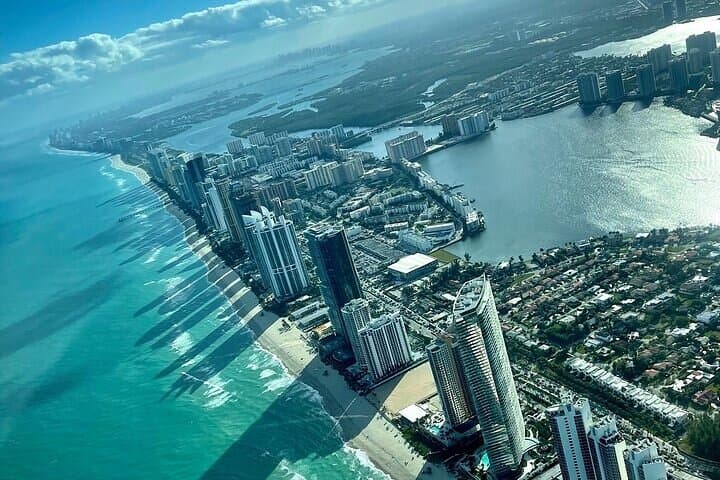
    The standard route is the one that earns its money: mainland skyline, the port, the three residential islands, the barrier island's pool-lined spine and a turn back over the bay. Thirty minutes is long enough to stop gripping the seat and start looking. Confirm the departure field before booking, because it is usually a long way from downtown.
  • Best Value

    Best short flight on a budget

    Why we chose it

    The 10 to 20 minute skyline hops are the cheapest way into a helicopter here, and they cover downtown, Brickell, the river mouth and the near causeways. You spend a decent share of that time climbing and turning, so treat it as an introduction rather than a tour. Still cheaper than a single table at a club.

What you actually see from the air

Every route starts with the same reveal: the bay. Biscayne Bay is shallow, pale and green-blue over the flats, and from a few hundred feet you can read the sandbars, channels and seagrass as clearly as on a chart. That is the thing photographs of Miami never capture from ground level.

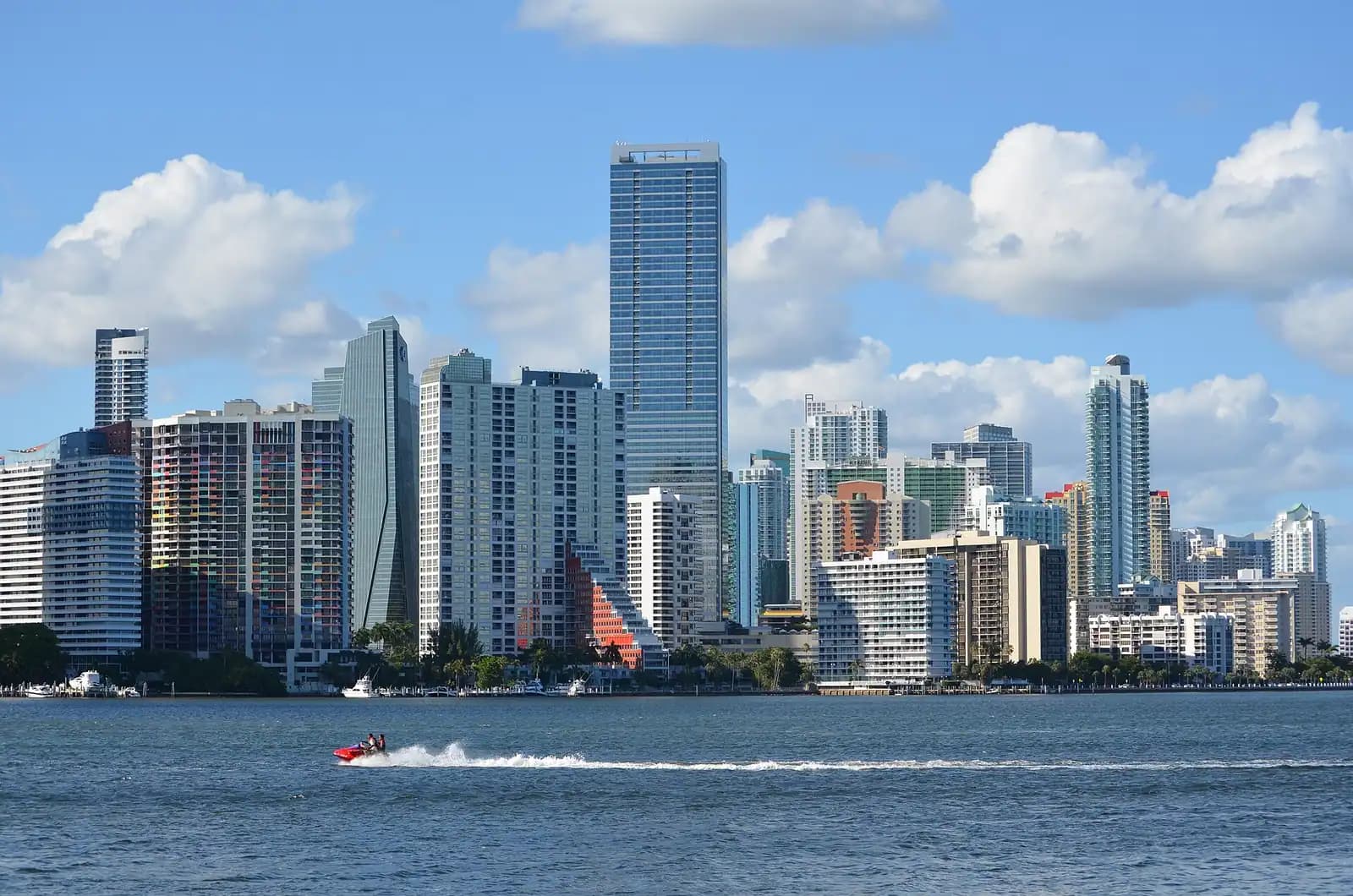
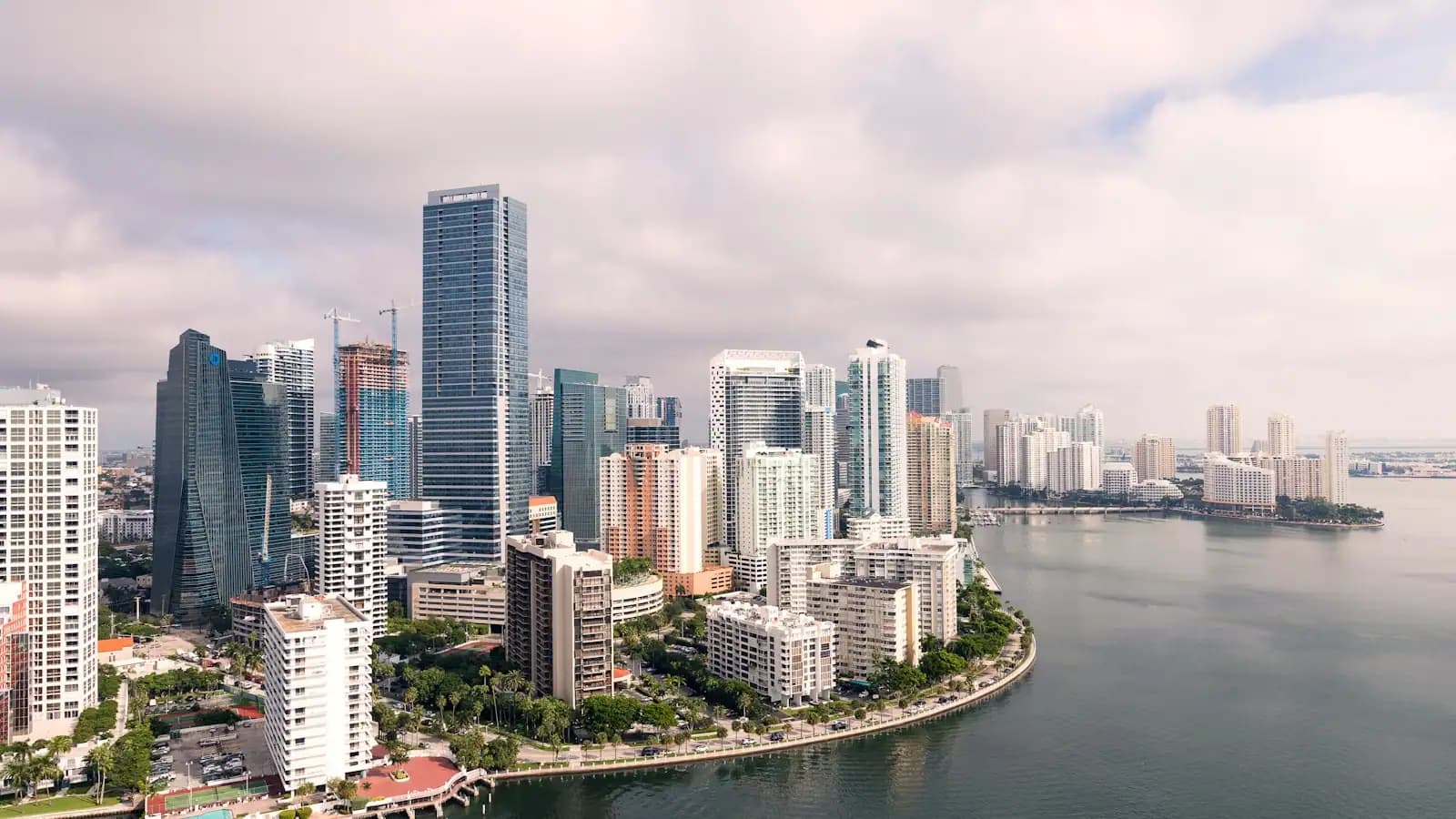
Heading north and east from most departure fields you cross the mainland edge, the Brickell tower cluster and the mouth of the Miami River, then PortMiami with cruise ships alongside and the container terminal behind them. Off the MacArthur Causeway sit Star, Palm and Hibiscus Islands, dredged in the 1920s and now the addresses everyone photographs from a boat. Fisher Island, reachable only by ferry, is immediately south.

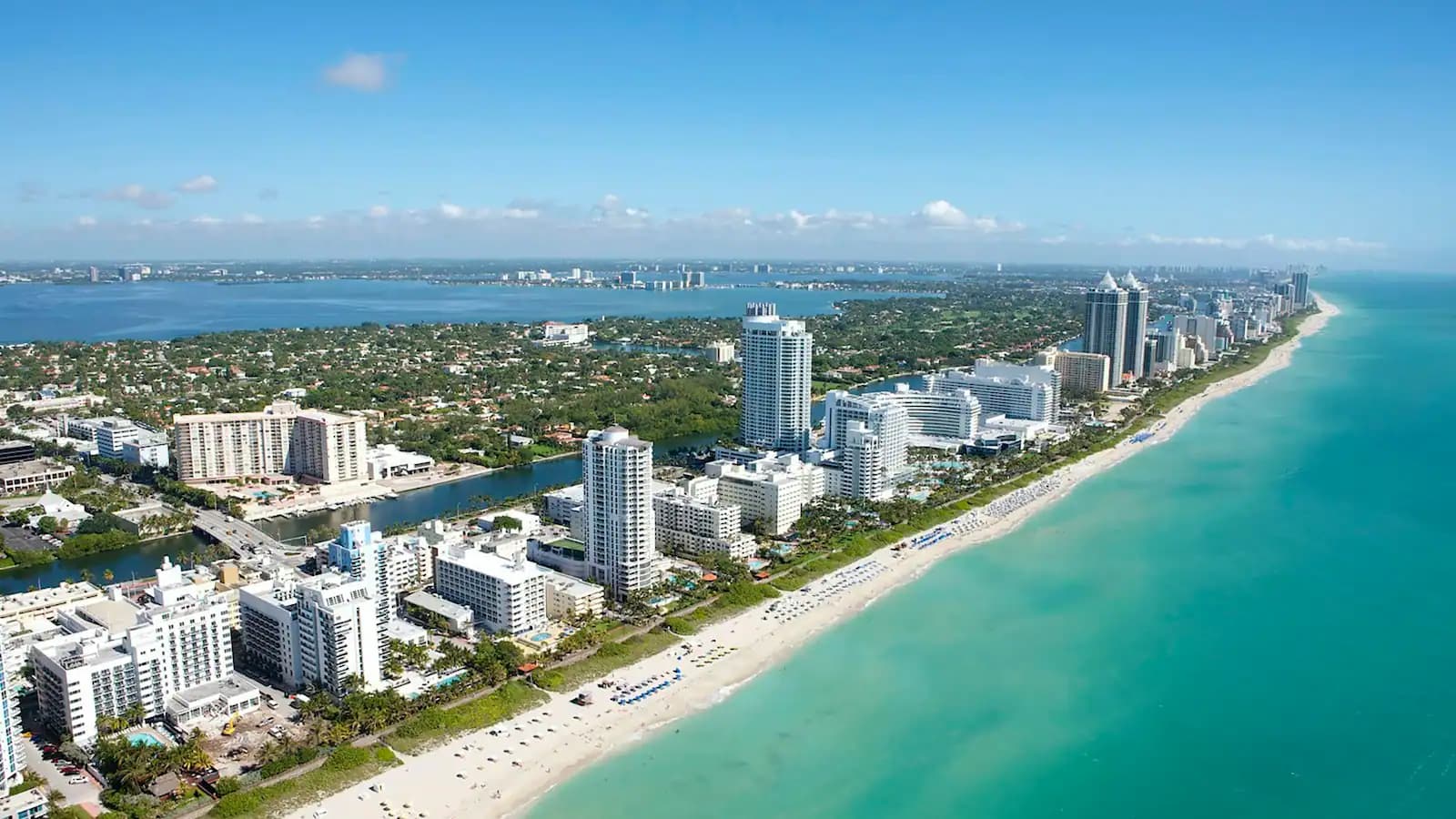
Over the barrier island, the Art Deco district reads as a rhythm of small white buildings and a line of hotel pools running up Collins Avenue. From above, the contrast between South Beach's low deco blocks and Mid-Beach's tower wall is obvious in a way it is not from Ocean Drive.

Turn south and the interesting flying starts. Vizcaya and its stone barge sit on the bay edge. The derelict Miami Marine Stadium on Virginia Key, Crandon Park's sandbars and the Cape Florida lighthouse at the end of Key Biscayne follow. Out on the flats beyond them, Stiltsville.

Longer flights push west until the grid stops dead against the sawgrass, which is the single most informative thing you can see about how this city sits inside a wetland.

What a Miami helicopter tour costs

What it costs

Bands rather than quotes. Prices move with fuel, season and how far in advance you book, and holiday weekends and Art Basel week in early December carry a premium.

  • Short shared skyline flight, 10 to 20 minutes: commonly $100 to $180 per person.
  • Standard 30-minute bay and beach tour: commonly $230 to $300 per person, with published rates around the $280 mark being typical.
  • Extended 45 to 60 minute flights: $350 and up per person.
  • Private charter by the hour: four figures, usually with a one-hour minimum, which starts to make sense for a group of four or five.
  • Doors-off photography flights: priced at or above the extended flights, sometimes with a photographer's harness fee on top.
  • Extras: onboard photo and video packages typically $30 to $100, and some operators charge a fuel surcharge separately.

Two costs that are easy to miss. Most flights require a minimum of two passengers, so a solo traveller pays for two seats or waits for another booking. And the drive to the departure field is real: budget an hour of round-trip driving or a rideshare fare from wherever you are staying.

Against a citywide median tour price near $89, the 30-minute flight is roughly a three-tour purchase. It is the right splurge for a specific kind of traveller and a poor default recommendation, which is why the bay cruise sits on this page's related links.

When to fly

When to go

Time of day. The first flights of the morning have the calmest air and the cleanest light, and in summer they are the only slots that reliably operate. Sunset flights are the most photogenic and the most oversubscribed; book those a week or more ahead. Middle of the day gives you flat overhead light and, in summer, heat haze.

Season. December through April is the clear, dry, reliable window, and it is also the busiest and most expensive. June to November is hurricane season, with the peak from August to October, and the pattern that matters day to day is the short violent afternoon thunderstorm rather than all-day rain. A storm cell that grounds flights at 3pm has often cleared by 5pm, but the schedule behind it does not always recover.

Book early in your trip. This is the single most useful piece of planning advice on this page. If your flight cancels for weather on day one, you have the rest of the week to rebook. If you booked it for the morning of your departure, you have lost it.

Cancellation terms. Weather cancellations by the operator are normally refunded or rebooked, and free-cancellation windows for customer changes are typically 24 hours. Read which is which, because the two policies are not the same thing.

Art Basel week, 4 to 6 December 2026 with satellite fairs from 30 November, takes capacity out of the market and raises prices across both cities. Book before the end of October if your trip falls in that window.

Book it

Everything else we track

We could not find tours matching this right now

Nothing came back for helicopter tour. Operators add and retire experiences constantly, so this list changes week to week. Try a broader category, or come back in a day or two.

The four flights, compared

How they compare

Operators name their routes differently, but the products sort into four shapes.

Short skyline hopBay and beach loopExtended southDoors-off photo flight
Air time10 to 20 minutesAbout 30 minutes45 to 60 minutes30 to 60 minutes
Typical price per seatRoughly $100 to $180Roughly $230 to $300$350 and up$350 and up
CoversDowntown, Brickell, the port, the near causewaysAdds South Beach, the residential islands, Fisher IslandAdds Key Biscayne, the lighthouse, Stiltsville, sometimes the Everglades edgeRoute varies; the point is the camera
Best forDeciding whether you like helicoptersThe standard first flight, and the best value of the fourPhotographers and anyone who wants the geographySerious photography only
Weak pointOver before you have settledStill short for the moneyPriceCold, loud, and not for nervous flyers

Most operators require a minimum of two passengers, price per seat, and impose weight limits of roughly 250 pounds per person and about 500 pounds combined for a two-seat cabin, with heavier passengers charged for an extra seat. Confirm the limits at booking rather than at the desk.

If you are choosing between a short hop and the 30-minute loop, take the loop. The short flight spends most of its air time climbing, turning and descending, and you see the same five buildings twice.

The departure field is probably not downtown

Before you book

This catches people out more than anything else about Miami helicopter tours.

Sightseeing helicopters here fly from general aviation airports, not from a downtown heliport. Miami Executive Airport, out in Kendall southwest of the city, is the field several operators use, and others fly from airfields north of the city. From South Beach or Brickell either of those is a thirty to forty-five minute drive, longer in rush hour, and a rideshare fare each way on top of the ticket.

What to do about it:

  • Confirm the exact departure address before you book, not after. A listing that says Miami is not telling you where you are meeting.
  • Add the drive to your plan. A 30-minute flight is a three-hour commitment door to door.
  • Arrive 30 minutes early. Operators brief, weigh and manifest passengers before boarding, and a late arrival forfeits the slot.
  • Check whether parking is free. At the general aviation fields it usually is, which is a small consolation.
  • Ask how the operator is certificated. Commercial air tours in the United States are flown under specific FAA rules, and a reputable operator will answer the question about which certificate it holds without hesitation.
  • Ask about seating. On a shared flight, seat allocation is usually by weight and balance rather than preference, so nobody can promise you the front left seat.

What to wear and bring

What to bring

  • Photo ID for every passenger, and your accurate weight when booking. Operators weigh passengers at check-in and a discrepancy can cost you the flight.
  • Dark clothing. Light colours reflect in the window glass and will appear in every photograph you take.
  • No polarising filter on a window flight. Aircraft windows are plastic and polarisers produce coloured banding across the frame. Save the polariser for doors-off.
  • A wrist strap or tethered camera. Phones held loosely near an open window are lost phones, and on doors-off flights loose items are a safety issue rather than an inconvenience.
  • A jacket for doors-off. Air at 90mph is cold even in Miami, and it is loud.
  • Motion sickness medication taken an hour beforehand if you are prone to it. Helicopter flights are smooth in the morning and less so in gusty afternoon air.
  • Sunglasses and sunscreen for the wait on the apron, which is unshaded tarmac.
  • Almost nothing else. Cabins are small, and most operators require bags to be left in a locker.

Children are usually welcome but are charged a seat and counted in the weight and balance, and some operators set a minimum age. Ask before booking rather than arriving with a toddler and an argument.

On the ground

Where to go

Every place below has its own page — hours, parking, what it costs and what to expect when you get there.

  • The east facade of an Italianate villa facing across formal terraces to open water

    Historic site

    Vizcaya Museum & Gardens

    A 1916 Italian villa built on the edge of a mangrove shore, with formal gardens running down to a carved stone barge in Biscayne Bay.

    2–3.5 hoursTicketed, with adult admission recently around $25 and reduced rates for children roughly 6–12; under-6s free. Timed entry is standard.

  • A tall white brick lighthouse standing above low coastal scrub against a clear sky

    Park

    Bill Baggs Cape Florida State Park

    A state park at the tip of Key Biscayne built around an 1825 lighthouse, a mile of east-facing sand and a harbour full of boats.

    2.5–6 hoursFlorida state park entry, charged per vehicle. Expect around $8 for a car with two to eight people, roughly half that for a single occupant or motorcycle, and a small per-person fee for pedestrians and cyclists.

  • A long causeway bridge curving across shallow bay water towards a low green island
    Free

    Neighbourhood

    Key Biscayne

    One causeway, two big parks and a village in between — the island Miami drives to when it wants the ocean without the noise.

    3–8 hoursThe village and its streets are free. You pay an eastbound causeway toll to drive on, and a per-vehicle entry charge at each of the two parks.

  • A small boat on flat shallow turquoise water with low green islands on the horizon
    Free

    Nature preserve

    Biscayne National Park

    A national park that is 95 percent water: mangrove shoreline, a bay, the northernmost Florida Keys and a living coral reef.

    1.5–7 hoursFree. There is no entrance fee for Biscayne National Park and parking at Convoy Point costs nothing. Boat trips, snorkelling, diving and island camping are charged separately.

  • A quiet empty beach with calm shallow water and a line of pines along the back of the sand

    Beach

    Historic Virginia Key Beach Park

    The beach Miami's Black residents won by protest in 1945, reachable only by boat until the causeway arrived two years later.

    2–5 hoursFree to enter on foot or by bicycle. A modest per-vehicle parking charge applies at the gate. The carousel and miniature train are separately ticketed at a small charge.

  • Glass residential and office towers rising above a tree-lined street in Miami's Brickell district
    Free

    Neighbourhood

    Brickell

    Miami's most walkable neighbourhood: towers, a free elevated train, and a two-thousand-year-old Tequesta site at the river mouth.

    1.5–5 hoursFree. Walking the district, riding the Metromover and visiting the Miami Circle all cost nothing.

  • A dense cluster of downtown towers seen across water at the end of the day
    Free

    Neighbourhood

    Downtown Miami

    The original Miami: a railway terminus that became a city in 1896, now a downtown of towers, museums and a free elevated railway.

    3–8 hoursFree to walk, and the Metromover that connects it costs nothing. Museums, the Freedom Tower galleries, bay cruises and events are ticketed separately.

  • Boats moored at a downtown marina with a city skyline of towers rising behind
    Free

    Shopping

    Bayside Marketplace

    Downtown Miami's bayfront mall, best understood as the dock most Biscayne Bay cruises leave from rather than as somewhere to shop.

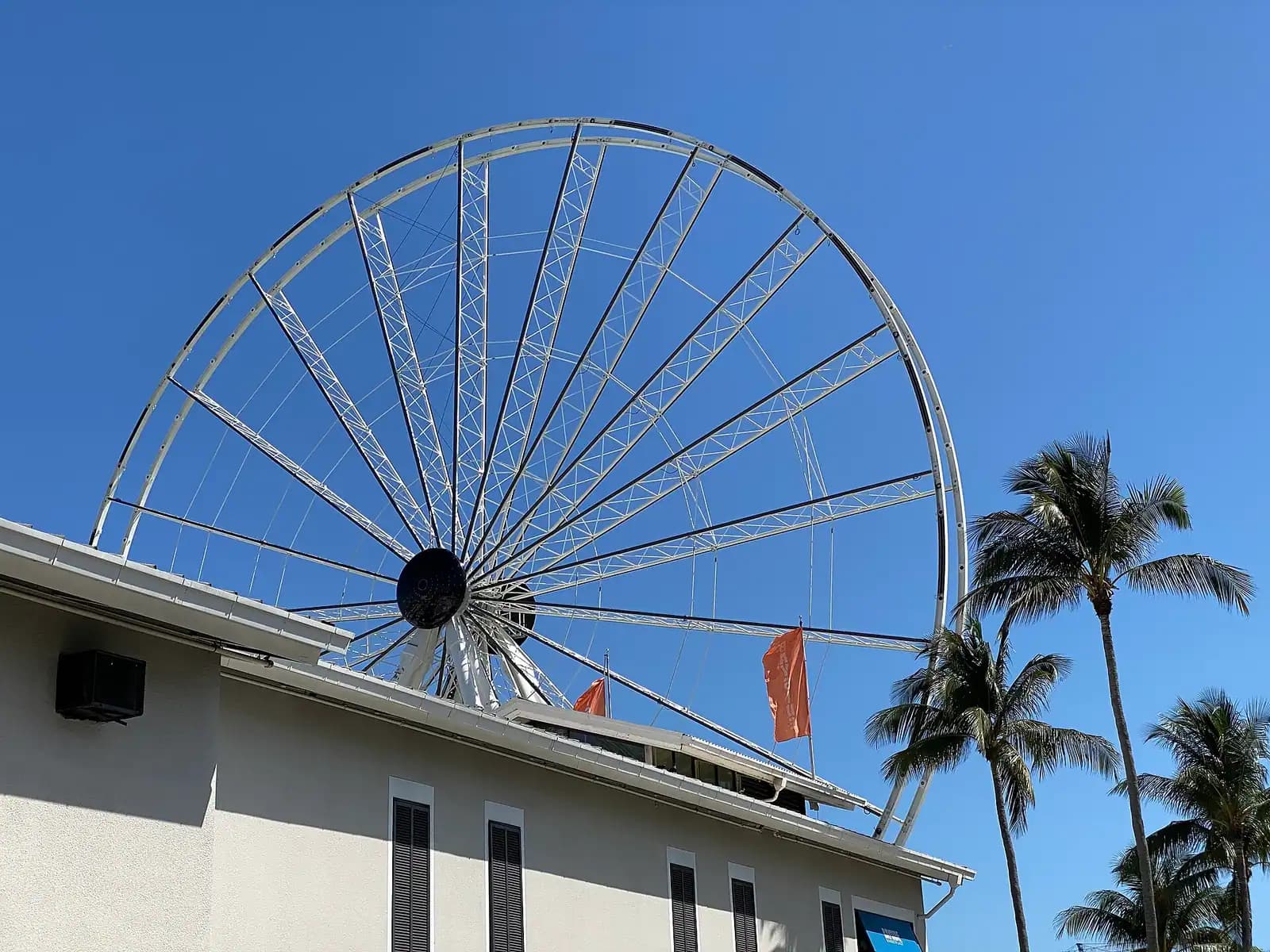
    1–3 hoursFree to enter and to walk the waterfront. Boat trips, the Skyviews observation wheel and Bayfront Park concerts are each ticketed separately.

Straight answers

Questions people actually ask

How much is a helicopter tour in Miami?

Short 10 to 20 minute skyline flights commonly run $100 to $180 per person, the standard 30-minute bay and beach tour sits around $230 to $300, and 45 to 60 minute flights start near $350. Private charter is priced by the hour and runs into four figures. Most operators require a minimum of two passengers, so a solo traveller usually pays for two seats.

Where do Miami helicopter tours take off from?

Not downtown, in most cases. Operators fly from general aviation airports, with Miami Executive Airport out in Kendall the most commonly used, and others operating from fields north of the city. From South Beach or Brickell that is a 30 to 45 minute drive each way, which nobody mentions in the listing. Confirm the exact departure address before you book and add the drive to your plan.

How long is a Miami helicopter tour?

Air time runs from about 10 minutes for the cheapest skyline hop to an hour for extended southern routes, with 30 minutes the standard product. Door to door, allow three hours for a 30-minute flight: the drive to the field, a 30-minute check-in for weighing and briefing, the flight itself, and the drive back. Sunset slots book out first.

Is a helicopter tour in Miami worth it?

It depends what you want from it. The flight shows you things nothing on the ground can: the bay's sandbars and channels, the dredged residential islands as shapes, Stiltsville out on the flats, and the clean edge where the suburbs stop and the Everglades begins. But at three times the city's median tour price, it is a splurge. A bay cruise gives you the same skyline for a fraction of it.

What is the best time of day for a Miami helicopter tour?

Early morning for the calmest air and the clearest visibility, especially between June and November when afternoon thunderstorms routinely ground flights. Sunset flights are the most photogenic, because the bay faces west and the light comes across the water towards the mainland skyline, but they sell out first. Midday gives flat overhead light and, in summer, heat haze.

Do Miami helicopter tours get cancelled for weather?

Regularly, from June to November. The pattern here is a short violent afternoon thunderstorm rather than a day of rain, and flights do not operate through it. Operators normally refund or rebook weather cancellations, which is a different policy from the customer-initiated free cancellation window, usually 24 hours. Book your flight early in your trip so you have days left to rebook.

Can you do a doors-off helicopter flight in Miami?

Yes, several operators offer them, usually at or above the price of the extended flights and sometimes with a harness fee added. They are the right choice for photography, because the aircraft windows are plastic and produce reflections and polariser banding. They are also cold, extremely loud and unsuitable for nervous flyers. Everything in the cabin must be tethered, including your phone.