Skip to content
Search
Menu

We earn a commission if you book through this link. You pay the same price.

A pastel Art Deco lifeguard tower on wide pale sand in Miami Beach with the Atlantic behind it

Things to Do

The Beaches of Miami and Miami Beach

Last updated

Miami beaches explained: South Beach to Sunny Isles, Key Biscayne and Virginia Key, with parking costs, sargassum season, lifeguard flags and quiet sand.

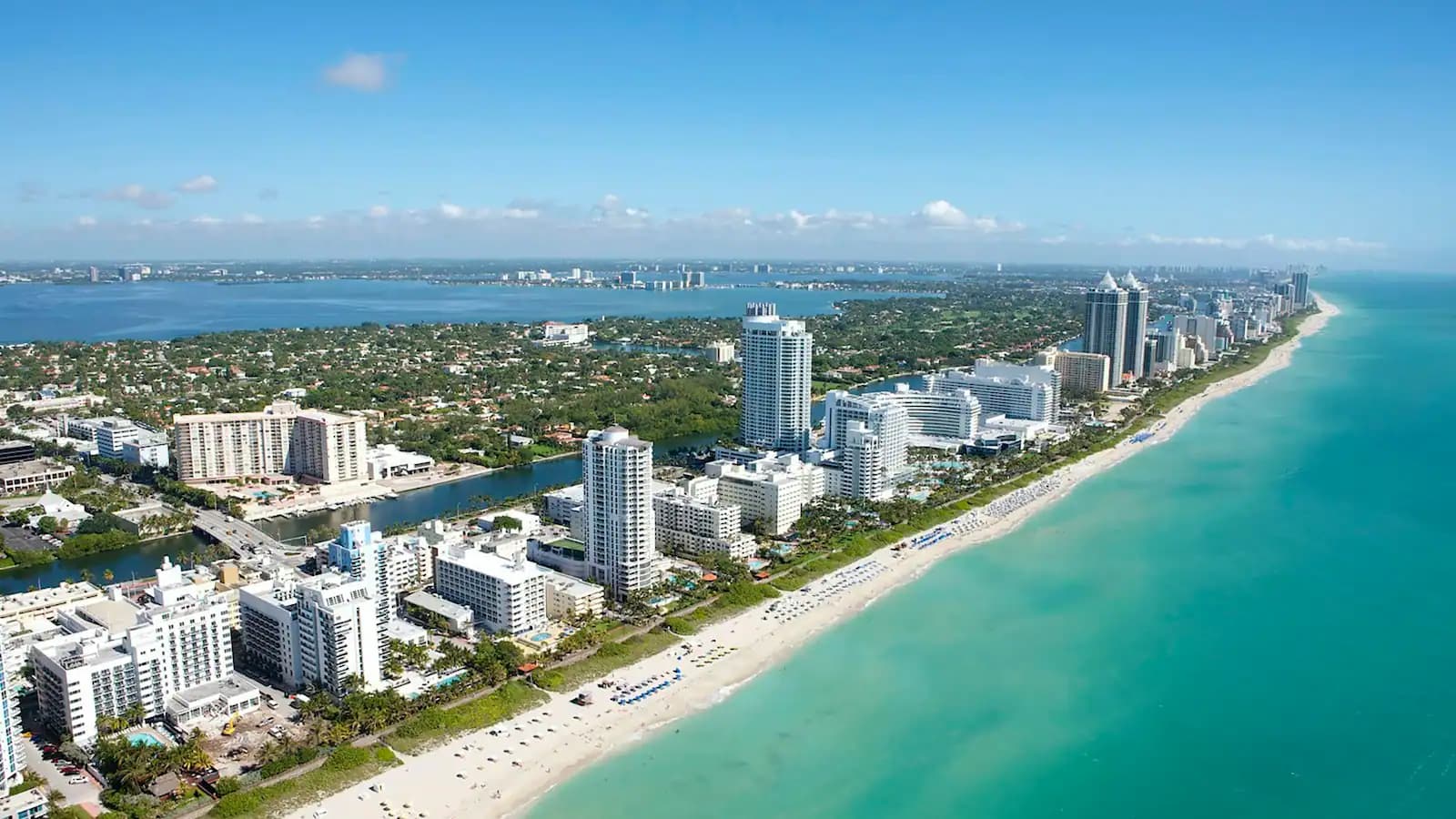
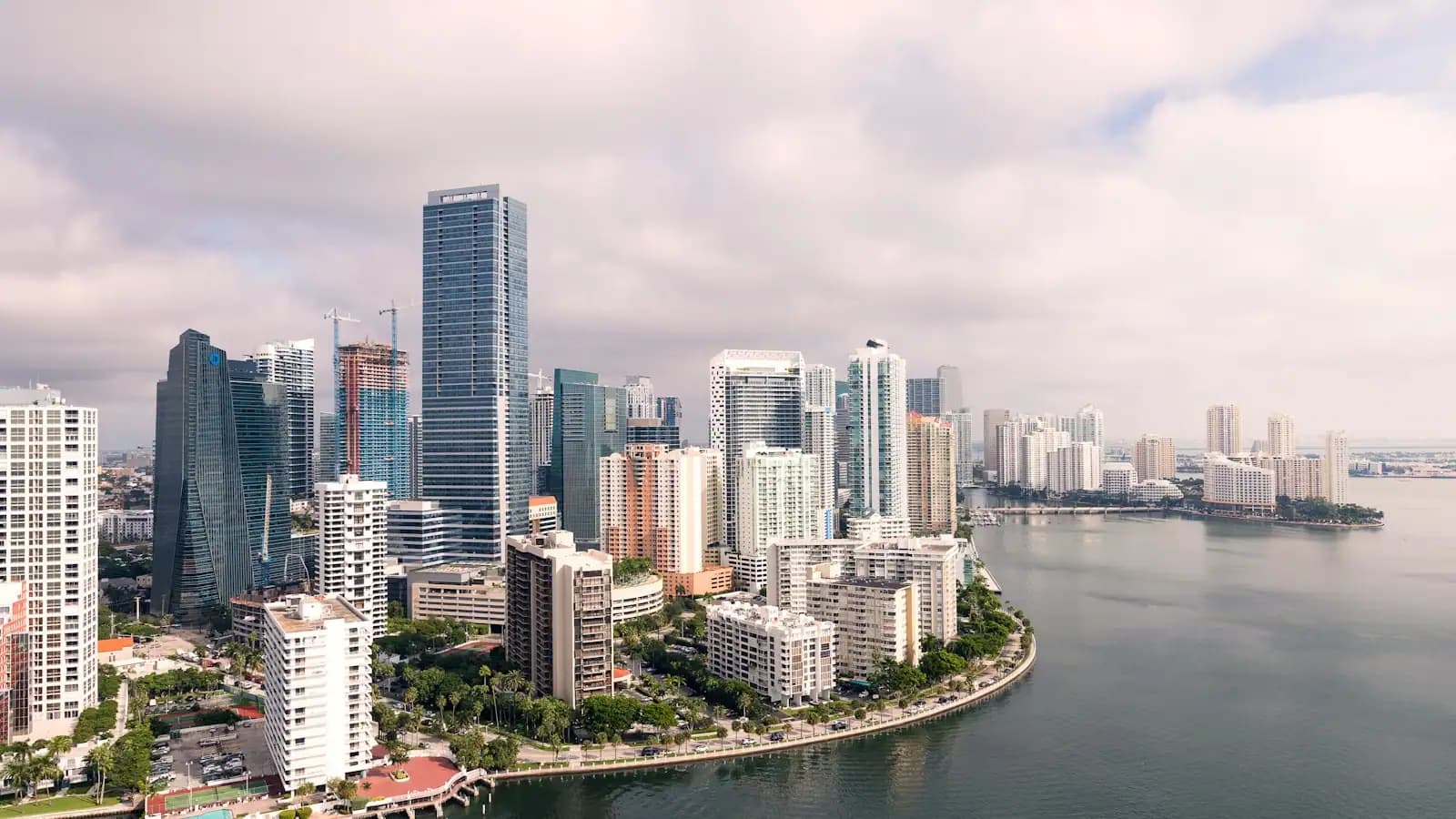
Start with the thing that derails half the beach plans made for this city: the beaches are mostly not in Miami. Miami and Miami Beach are two separate municipalities on opposite sides of Biscayne Bay, joined by the MacArthur, Julia Tuttle and Venetian causeways, and the long Atlantic strand in every photograph belongs to Miami Beach and the barrier-island towns north of it: Surfside, Bal Harbour, Sunny Isles. The City of Miami's own waterfront is bay, not ocean. Its swimming is out on Key Biscayne and Virginia Key across the Rickenbacker Causeway, and at Matheson Hammock below Coral Gables. Which side of the bay you stand on decides your drive, your parking bill and whether the water in front of you is clear Atlantic or green bay.

The barrier island itself divides into three stretches that behave very differently. South Beach runs from the tip at South Pointe up to roughly 23rd Street: the widest, loudest, most rebuilt sand in Florida, with the Art Deco district a block inland and the highest concentration of people per square metre anywhere on this coast. Mid-Beach, roughly 24th to 63rd, is where the enormous 1950s resorts sit and where the crowd thins noticeably; the Beachwalk, a continuous paved path, runs behind the dune line and is the best free thing on the island. North Beach, above 63rd, is residential, Latin American in its weekend crowd, shaded by Australian pines at North Shore Open Space Park, and quiet in a way South Beach has not been in forty years. Keep going and you reach Haulover, then Sunny Isles under its wall of new towers.

Across the bay, Key Biscayne is the other choice, and it is a genuinely different day. The Rickenbacker Causeway is tolled, currently $3.25 by SunPass transponder and more by plate, with cash not accepted for years, and it lands you first on Virginia Key and then on the key itself. Crandon Park has a shallow, sheltered shelf that is the calmest ocean swimming close to the city. Bill Baggs Cape Florida State Park at the southern tip has the Cape Florida Light, rebuilt in 1846 and the oldest standing structure in Miami-Dade County, plus a beach that looks south across open water toward Stiltsville and Biscayne National Park. Neither has a nightclub, and on a Tuesday in February both can feel close to empty.

Two practical truths apply everywhere. First: the sand is free, the parking is not. Florida beaches below the high-water line are public, every one of them, including the sand in front of the Bal Harbour condominium towers. What you pay for is a space to leave the car, and in South Beach that is metered kerbside at the top of the scale or a municipal garage, while county parks like Haulover and Crandon charge a flat per-vehicle rate that is far better value for a full day. Second: sargassum. The floating brown seaweed that has plagued the Atlantic basin since 2011 lands here roughly April through August, peaks in May and June, and 2026 has been a heavy year. It is harmless, it smells strongly as it rots, and crews clear the main tourist stretches first — which is one of the few arguments for South Beach over a quiet park in early summer.

Then the flags, which people ignore and should not. Lifeguard towers fly a colour system: green for calm, yellow for moderate surf or current, red for high hazard, double red for closed water, and purple for dangerous marine life. Purple in Miami usually means Portuguese man o' war, blown in on winter and spring easterlies, and the sting is genuinely painful. Rip currents here are most common on windy days at the inlets, particularly either side of Haulover Cut and Government Cut, where the tide moves hard through a narrow gap.
Our picks

The ones we would book

  • Editor's Pick

    Best way to see the shoreline from the water

    Why we chose it

    The barrier island reads completely differently from a boat: you see how thin it is, how the Deco blocks sit behind one dune line, and where Government Cut slices through. A half-day bay cruise past Star Island and up the Intracoastal costs less than most beach club day passes and covers ground no beach towel can. Look for afternoon departures from Bayside or Sea Isle Marina.

  • Best for Families

    Best calm-water day for small children

    Why we chose it

    Crandon's sheltered shelf is the right water for under-sevens, and the trips that pair it with a bay cruise or a kayak paddle keep older siblings occupied. Choose operators that launch on Key Biscayne or Virginia Key rather than from South Beach, which saves an hour of causeway traffic at both ends of the day.

  • Best Value

    Best cheap day on the water

    Why we chose it

    Miami's median tour price is $89, and the bay boats sit comfortably below it. A 90-minute Biscayne Bay sightseeing cruise gets you the skyline, the causeway islands and a breeze for roughly the price of a South Beach lunch, and it runs hourly enough that you can decide on the morning rather than booking weeks ahead.

Key Biscayne and Virginia Key: the local answer

A white-painted lighthouse tower above palms and sea grape at the end of a Florida barrier island

Cross the Rickenbacker and the register changes completely. This is where people who live in Miami go on a Saturday, and it is a barrier island in the true sense: two parks, a small village and almost no commercial strip.

Virginia Key comes first. Historic Virginia Key Beach Park opened on 1 August 1945 as Miami's designated "Colored Only" beach, after Black Miamians staged a wade-in at Haulover to protest a county in which they were barred from every stretch of sand. It was reachable only by boat until the Rickenbacker opened in 1947. The city closed it in 1982, and it reopened in 2008 after a long restoration campaign. Eighty-two acres, a restored carousel, a mini-train, deep shade and a beach that faces the bay rather than the open ocean. It is one of the few places in the city where the history is the reason to go and the swimming is a bonus.

Crandon Park is next, three miles of sand on a shelf so shallow and so sheltered by an offshore reef line that the water stays warm and flat when everything else is choppy. It has cabanas, a family amusement centre, and enough parking to absorb a holiday weekend.

Bill Baggs Cape Florida State Park occupies the southern point. The lighthouse standing there now was rebuilt in 1846 after the original 1825 tower was burned during the Second Seminole War, and rangers run climbs on a limited schedule rather than continuously. Look south from the beach and the low silhouettes on the horizon are Stiltsville, seven surviving houses on pilings in the shallows of Biscayne National Park, which begins a few miles further down.

Haulover, and the clothing-optional stretch

Haulover Beach Park sits on the barrier island between Bal Harbour and Sunny Isles, and it is the most natural-feeling ocean beach in the county: real dunes, sea grape, no towers overhead on the sand side, and a mile and a half of shoreline under Miami-Dade Parks rather than a city.

The northern portion of the beach, at the top end near the marked lifeguard towers, is a legal clothing-optional section. It has operated openly for decades, it is signposted, it is patrolled and lifeguarded like the rest of the park, and volunteer beach ambassadors hand out an etiquette card at the entrance. Photography is not permitted there. The southern two-thirds of Haulover is an ordinary swimsuit beach, and the two do not overlap by accident — the boundary is obvious when you are standing on it. Families use Haulover constantly without ever going north of the line.

The park also holds Haulover Marina and Bill Bird Marina on the bay side, which is where a large share of the city's boat rentals, drift-fishing headboats and sandbar charters leave from, and the Haulover Inlet bridge above it is the internet's favourite place to watch boats misjudge a rough inlet.

Parking is a flat per-vehicle fee, materially cheaper than South Beach for a full day, and the lots are large. Weekend and holiday rates run higher than weekdays. Kite surfers use the northern end when the wind is up.

What a beach day actually costs

What it costs

Bands, not quotes. Rates change and every operator posts current pricing on site.

  • The beach itself: free. Everywhere. Florida's wet sand is public, and both Miami Beach and Miami-Dade maintain signed public access points between buildings.
  • South Beach kerbside meters: the most expensive parking in the county, charged by the hour with a high daily ceiling, enforced hard. Municipal garages are usually cheaper for anything over two hours.
  • Miami-Dade county parks (Haulover, Crandon, Matheson Hammock): a flat per-vehicle charge in the region of $5 to $10, higher at weekends and on holidays, with bus and RV rates above that. For a full day this is the best-value parking on the coast.
  • Bill Baggs Cape Florida State Park: a Florida State Parks vehicle entry fee, in the same single-digit band per car with a lower rate for a single occupant, paid at the gate.
  • Rickenbacker Causeway toll: currently $3.25 each way by SunPass transponder, roughly double by toll-by-plate. Cash is no longer collected, so a rental car without a transponder will be billed by plate.
  • Chair and umbrella hire: $30 to $60 a day for a set on the Miami Beach sand from a concession, less at the county parks, nothing if you bring your own.
  • Hotel beach clubs and day passes: Mid-Beach resorts sell day access at widely varying rates; expect a meaningful minimum spend rather than a small ticket.

Verify current fees before you go. County and state park rates are reviewed periodically and the causeway toll was last raised in October 2025.

Sargassum, seasons and the water itself

When to go

The beach year here has a shape, and it is not the one visitors assume.

December to April is the high season and the best swimming weather: dry, low humidity, air in the high 70s Fahrenheit, water around 73 to 77. It is also when easterly winds push Portuguese man o' war onto the sand and when purple flags appear most often.

April to August is sargassum season. The seaweed arrives in pulses driven by currents rather than on a schedule, peaks in May and June, and 2026 has been among the heaviest years measured. Miami Beach and the county clear the main tourist frontage with tractors; quiet parks and Key Biscayne get cleared less often, which inverts the usual advice.

June through November is hurricane season, with the highest risk August to October. The day-to-day reality for most visitors is not a storm: it is a violent afternoon thunderstorm that arrives around three or four, empties the beach for forty minutes, and clears. Morning beach, afternoon museum is the correct summer plan.

Water temperature never drops enough to stop swimming. February is the coolest month at roughly 73F, August the warmest at around 86F, which is bath-warm and offers no relief at all from the heat.

For clarity, mornings win. The Atlantic off Miami Beach is clearest before the wind builds, and the same is true on Key Biscayne. By mid-afternoon on a breezy day the inshore water turns milky and the sargassum line churns.

Where to go when you want the beach to yourself

Local tips

Everyone who has spent a season here has a list. These are the honest ones.

North Shore Open Space Park, roughly 79th to 87th on Miami Beach, has Australian pines, picnic tables, an outdoor gym and a fraction of the crowd four miles south. Street parking is often possible.

Mid-Beach at 53rd Street has a public access point, a small lot and a long empty stretch between resorts.

Bill Baggs' southern beach, past the lighthouse, requires a ten-minute walk from the car park and thins out immediately.

Crandon's northern end towards Bear Cut is a long walk from the main lots and the shallow shelf goes out a hundred metres. On a weekday it is close to deserted.

Virginia Key Beach Park on a weekday is one of the quietest swimmable beaches in the county, and the shade is the best of any of them.

Any beach before 9am. This is not a trick answer. Miami is a late city; the ocean at eight in the morning in South Beach belongs to swimmers, runners and a handful of people who have not been to bed.

What will not be quiet, ever: South Beach between 5th and 15th on a weekend, Haulover on a public holiday, or anywhere on the island during Art Basel week in early December or spring break in March.

Book it

Everything else we track

We could not find tours matching this right now

Nothing came back for Biscayne Bay cruise. Operators add and retire experiences constantly, so this list changes week to week. Try a broader category, or come back in a day or two.

Which beach, in one table

How they compare

The choice is really between crowd, water clarity and how far you are willing to drive.

BeachWhereWaterParkingBest for
South Beach (1st–23rd)Miami BeachClear, wide, busyMetered and garages, priciest in the countyPeople-watching, Deco a block inland, walking everywhere
South Pointe ParkTip of Miami BeachClear, strong current at the cutSmall garage nearby, fills earlyWatching ships transit Government Cut, the pier, the lawn
Mid-Beach (24th–63rd)Miami BeachClear, calmer crowdHotel garages and some metersThe Beachwalk, big-hotel day passes, fewer people
North Beach (63rd–87th)Miami BeachClear, quietCheap lots, street parking possibleShade under the pines, family picnics, weekend Latin music
Haulover Beach ParkNorth of Bal HarbourClear, open AtlanticFlat county fee per vehicle, good valueA proper undeveloped dune beach, and a legal clothing-optional section
Crandon ParkKey BiscayneShallow, sheltered, warmFlat county fee, large lotsSmall children, calm water, the best swimming shelf near the city
Bill Baggs Cape FloridaKey BiscayneClear, open, breezyState park vehicle feeThe 1846 lighthouse, bike paths, a beach with a view of nothing built
Virginia Key Beach ParkVirginia KeySheltered, bay-influencedFlat park feeHistory, shade, kayaking, quiet weekdays
Matheson HammockCoral GablesBay water, not clearCounty lot feeThe tidal atoll pool, toddlers, mangrove shade, skyline views

The short answer for most first visits: South Beach once for the spectacle, then Crandon or Bill Baggs for the day you actually want to swim.

Flags, rips and the things that actually hurt people

Before you book

Miami's beaches are lifeguarded along the main frontage and unguarded at the margins, and most incidents cluster in predictable places.

  • Know the flag colours. Green calm, yellow moderate, red high hazard, double red closed, purple dangerous marine life. Purple almost always means man o' war here, most often December to April.
  • Rip currents form at the inlets. Government Cut at the south end of Miami Beach and Haulover Cut at the north end move enormous volumes of water on a falling tide. Swim between the flags, not near a jetty.
  • If you are caught in a rip, swim parallel to the shore, not against it. Rips are narrow and they release.
  • Man o' war stings are common and painful. Rinse with seawater, not fresh water, remove tentacles without bare hands, and use hot water if you can get it. Lifeguards carry vinegar at the main towers.
  • The sun is stronger than it feels in a sea breeze. Miami sits at 25 degrees north, closer to the tropics than any other major US city.
  • Do not leave anything in a visible car at any beach lot in the county, including the state park.
  • Swimming is prohibited in Government Cut and the marina basins for obvious reasons involving cruise ships.
  • Alcohol is prohibited on Miami Beach sand and enforcement rises sharply during spring break, when the city has repeatedly imposed curfews, causeway closures and beach entry restrictions in March.

What to bring to a Miami beach

What to bring

Short list, but two items on it are specific to this coast.

  • Reef-safe mineral sunscreen with zinc oxide or titanium dioxide. Florida has no statewide ban, unlike Hawaiʻi, but Biscayne National Park and the reef tract start a few miles offshore and the boats you might take tomorrow will ask for it.
  • Cash or a card that works at a pay station. County lots take cards; some machines are temperamental and a $10 note has never failed.
  • A SunPass-equipped rental or an awareness that you will be billed by plate if you are heading to Key Biscayne.
  • Shade. South Beach sand has none at all. North Beach, Crandon, Matheson and Virginia Key have mature trees, which is a real differentiator in July.
  • Water shoes if you are going to Bill Baggs' rockier southern end or planning to walk the Crandon shelf at low tide.
  • A dry bag for phone and keys if you are swimming without a companion to watch the towel.
  • Vinegar in a small bottle from any pharmacy, if you are here in man o' war season with children.
  • A rubbish bag. Bins overflow by Sunday afternoon at the county parks.

Leave behind: glass of any kind, which is banned on most sand here; and a drone, unless you have checked the rules for the specific park, because the state parks and the county parks treat them differently.

On the ground

Where to go

Every place below has its own page — hours, parking, what it costs and what to expect when you get there.

  • A tall white brick lighthouse standing above low coastal scrub against a clear sky

    Park

    Bill Baggs Cape Florida State Park

    A state park at the tip of Key Biscayne built around an 1825 lighthouse, a mile of east-facing sand and a harbour full of boats.

    2.5–6 hoursFlorida state park entry, charged per vehicle. Expect around $8 for a car with two to eight people, roughly half that for a single occupant or motorcycle, and a small per-person fee for pedestrians and cyclists.

  • A long causeway bridge curving across shallow bay water towards a low green island
    Free

    Neighbourhood

    Key Biscayne

    One causeway, two big parks and a village in between — the island Miami drives to when it wants the ocean without the noise.

    3–8 hoursThe village and its streets are free. You pay an eastbound causeway toll to drive on, and a per-vehicle entry charge at each of the two parks.

  • A large cruise ship passing close to a shoreline park along a narrow shipping channel
    Free

    Park

    South Pointe Park

    The southern full stop of Miami Beach, where a shipping channel runs so close that cruise ships pass within a stone's throw.

    1–3 hoursFree. The park, the pier, the splash pad and the beach access cost nothing. Parking does not.

  • Shallow flat turquoise water over pale sand with no breaking waves, stretching far from shore

    Beach

    Crandon Park

    Two miles of beach behind a sandbar that kills the swell, plus a carousel, a nature centre and the cages of a zoo that left in 1980.

    3–7 hoursA modest per-vehicle entry fee at the gate, higher at weekends and holidays. Pedestrians and cyclists enter free. Cabanas, chairs and watercraft hire are extra.

  • A small boat on flat shallow turquoise water with low green islands on the horizon
    Free

    Nature preserve

    Biscayne National Park

    A national park that is 95 percent water: mangrove shoreline, a bay, the northernmost Florida Keys and a living coral reef.

    1.5–7 hoursFree. There is no entrance fee for Biscayne National Park and parking at Convoy Point costs nothing. Boat trips, snorkelling, diving and island camping are charged separately.

  • A quiet empty beach with calm shallow water and a line of pines along the back of the sand

    Beach

    Historic Virginia Key Beach Park

    The beach Miami's Black residents won by protest in 1945, reachable only by boat until the causeway arrived two years later.

    2–5 hoursFree to enter on foot or by bicycle. A modest per-vehicle parking charge applies at the gate. The carousel and miniature train are separately ticketed at a small charge.

  • A wide open stretch of Atlantic beach with breaking surf and a lifeguard tower in the distance
    Free

    Beach

    Haulover Beach Park

    A mile and a half of county beach north of Bal Harbour, with a legal clothing-optional section at the northern end.

    2–6 hoursThe beach is free to enter. Parking is charged per vehicle and is higher at weekends; expect somewhere in the high single digits to low teens.

  • A calm circular saltwater pool ringed by sand and mangrove with a distant city skyline

    Park

    Matheson Hammock Park

    A man-made tidal pool cut into the mangrove edge in the 1930s, flushed by the bay and framed by the downtown skyline.

    2–5 hoursA per-vehicle parking charge at the gate, higher at weekends. Entry on foot or by bicycle is free. Boat ramp and marina use are charged separately.

Straight answers

Questions people actually ask

Is South Beach in Miami?

Not exactly. South Beach is a neighbourhood of Miami Beach, which is its own city on a barrier island across Biscayne Bay from Miami. The two are connected by causeways and the drive between downtown Miami and Ocean Drive takes 15 to 30 minutes depending on traffic. It matters for hotels, taxis and parking rules, which are set by Miami Beach and not by the City of Miami.

Which is the best beach in Miami?

It depends on what you want. For the spectacle and the Art Deco district behind it, South Beach. For calm shallow water with small children, Crandon Park on Key Biscayne. For a natural dune beach with big lots and cheap parking, Haulover. For quiet with shade, North Beach or Virginia Key. Bill Baggs Cape Florida combines a good beach with the 1846 lighthouse and bike trails, and it is the one locals name most often.

Are Miami beaches free?

The sand is free everywhere. Florida law keeps the beach below the high-water line public, including the frontage of the most expensive hotels. What costs money is parking: South Beach meters are the priciest in the county, while Miami-Dade parks like Haulover and Crandon charge a flat per-vehicle fee, usually in the $5 to $10 range with higher weekend rates. Bill Baggs charges a state park entry fee per car.

Is there a nude beach in Miami?

Yes. The northern section of Haulover Beach Park, between Bal Harbour and Sunny Isles, is a legal clothing-optional beach. It is signposted, lifeguarded and patrolled like the rest of the park, and volunteer ambassadors explain the etiquette at the entrance. Photography is not allowed in that section. The southern two-thirds of Haulover is an ordinary swimsuit beach and families use it constantly.

When is seaweed worst on Miami beaches?

Sargassum generally arrives between April and August and peaks in May and June, with 2026 among the heaviest years on record. It comes in pulses rather than continuously, so a bad week can be followed by a clean one. Miami Beach and the county clear the main tourist frontage with tractors; quieter parks and Key Biscayne get cleared less often. December through March is usually clear of it.

Can you swim in Miami in winter?

Comfortably, yes. Sea temperature bottoms out around 73F in February, which most visitors find fine and most locals find cold. December to April is the driest, least humid stretch and the best beach weather of the year. The trade-off is that easterly winter winds blow Portuguese man o' war onto the sand, so watch for the purple flag at the lifeguard towers.

Do you have to pay a toll to reach Key Biscayne?

Yes. The Rickenbacker Causeway is the only road to Virginia Key and Key Biscayne and it is tolled in the eastbound direction, currently $3.25 with a SunPass transponder and roughly double that by toll-by-plate. Cash has not been accepted for several years. A rental car without a transponder will be photographed and billed to the rental company, usually with an administration fee added.

Which Miami beach is best for families with toddlers?

Crandon Park on Key Biscayne, for the shallow sheltered shelf that stays flat when the ocean is choppy, plus cabanas, showers and a family amusement centre. Matheson Hammock in Coral Gables is the other answer: its man-made atoll pool is flushed by the tide, waist deep and completely enclosed, though the water is bay water rather than clear Atlantic. Both have shade, which South Beach does not.

Can you drink alcohol on the beach in Miami Beach?

No. Alcohol is prohibited on the sand in Miami Beach and enforcement is real, particularly in March. During recent spring break seasons the city has gone further with curfews, causeway closures, beach entry restrictions and towing zones announced with little notice. If you are visiting in March, check the city's current rules before planning a beach evening.

How far is South Beach from Miami International Airport?

About 12 miles, which is 25 to 45 minutes by car depending on traffic and which causeway you take. There is no direct train. Rideshare is the practical default and typically runs $25 to $45. The Miami Beach Airport Express bus, route 150, runs from the airport along the MacArthur Causeway and down Collins Avenue for a couple of dollars, and takes roughly an hour.