Skip to content
Search
Menu

We earn a commission if you book through this link. You pay the same price.

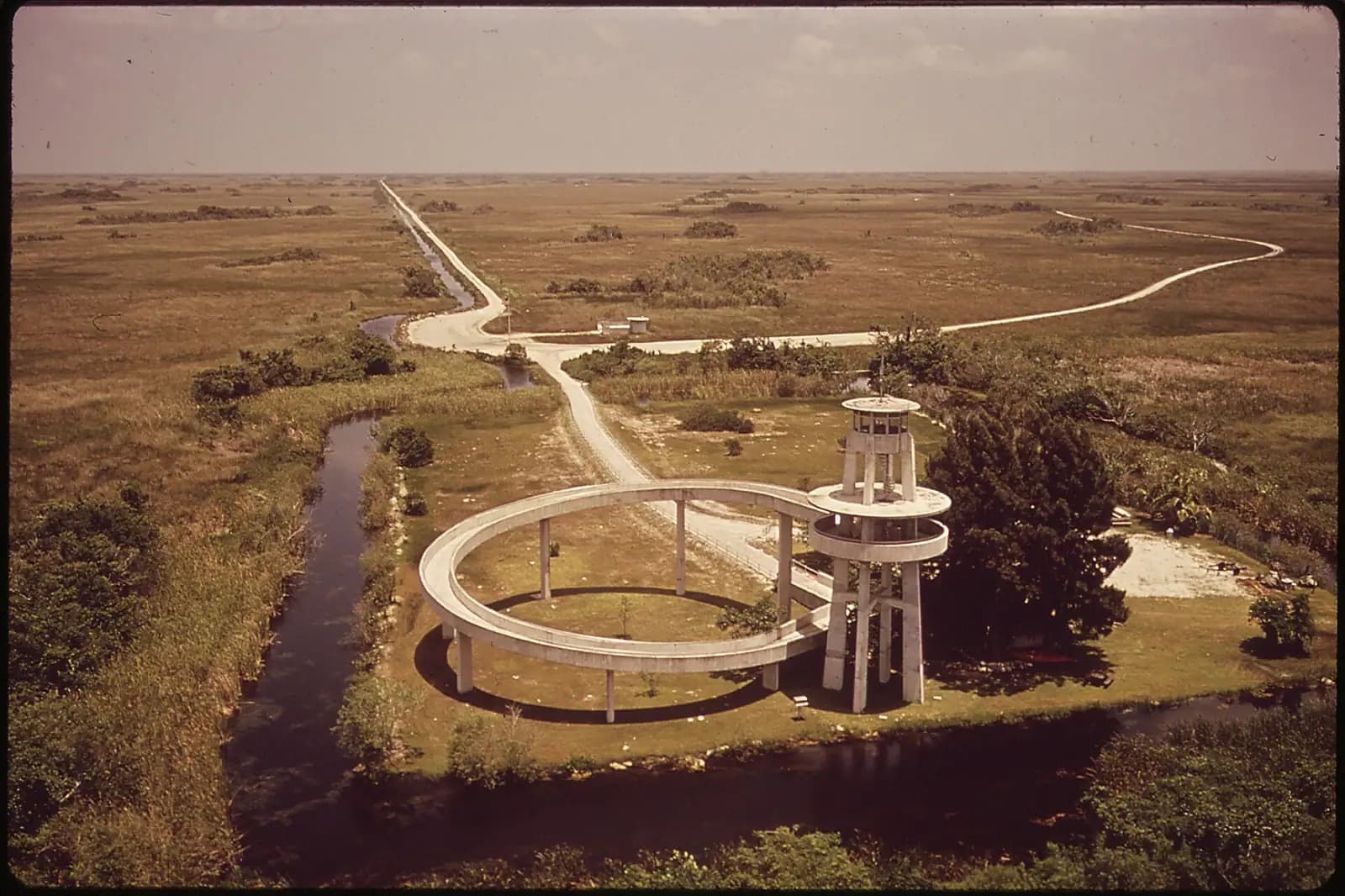
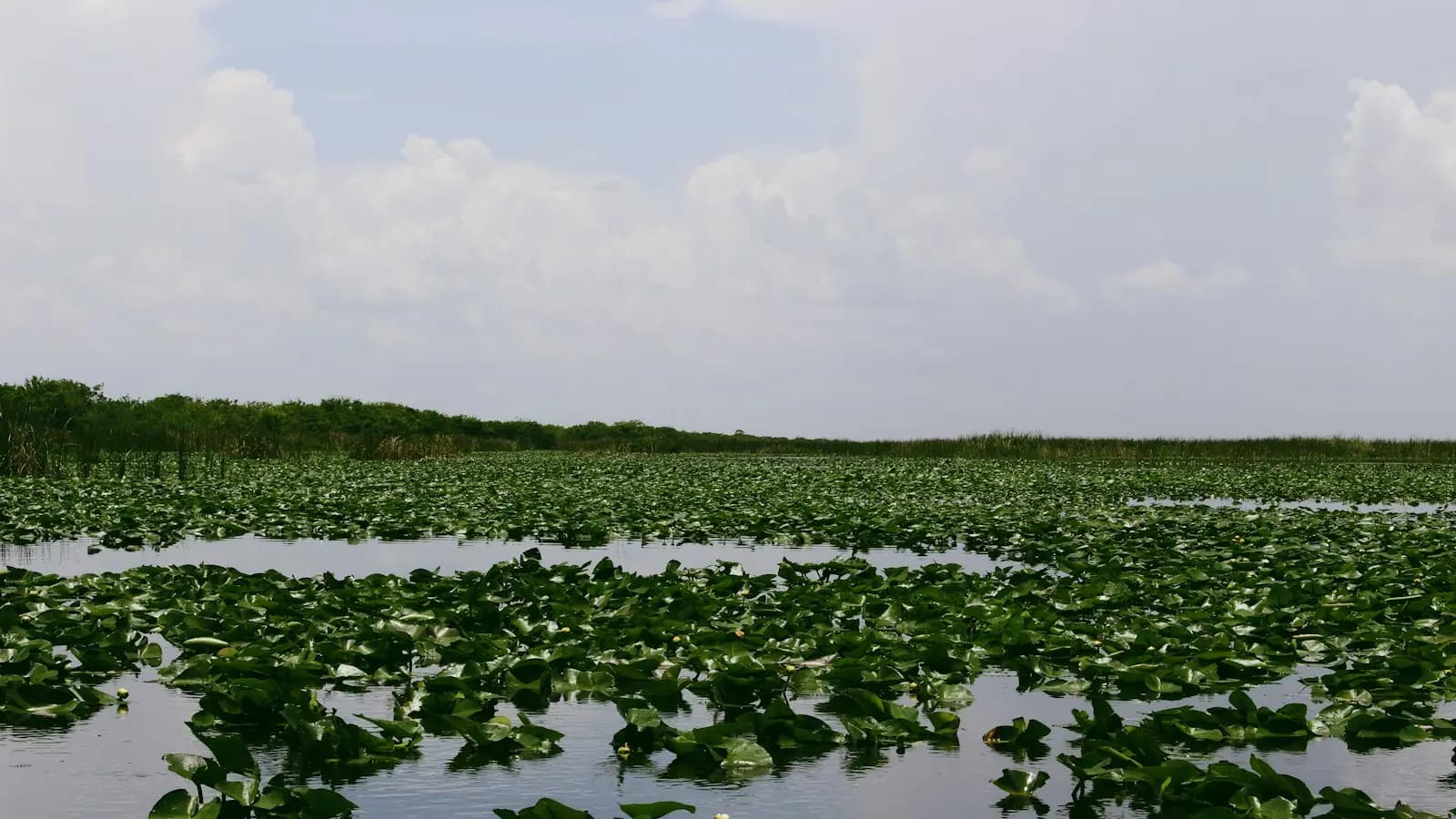
Open sawgrass prairie stretching flat to the horizon under a tall sky of building cumulus cloud
Fred Ward

Nature preserve

Everglades National Park

Last updated

A river 60 miles wide moving at the speed of a walking ant, with three entrances that do not connect to each other.

Photo: Fred WardPublic domain

The Everglades is not a swamp, and the distinction matters more than it sounds like it should. It is a river — freshwater spilling out of Lake Okeechobee and sliding south across a limestone shelf so flat that the whole sheet drops only a couple of inches per mile. Marjory Stoneman Douglas gave it the phrase that stuck, River of Grass, in 1947, the same year the park was dedicated. Standing on the Anhinga Trail boardwalk you are looking at water that is moving, just not at any speed you can see.

At roughly 1.5 million acres it is the largest subtropical wilderness in the United States, and it carries three international designations at once: World Heritage Site, International Biosphere Reserve and Wetland of International Importance. It is also the only place on earth where American alligators and American crocodiles share a range. Alligators want the fresh water inland; crocodiles want the brackish edges around Florida Bay. At Flamingo, at the park's southern tip, you can see both in an afternoon.

Here is the thing Miami visitors most often discover too late. The park has three entrances and they do not connect to one another by road inside the park. Shark Valley sits on the Tamiami Trail about 45 minutes west of downtown. The Homestead entrance — Ernest F. Coe Visitor Center, Royal Palm and the 38-mile road down to Flamingo — is about an hour south. The Gulf Coast entrance at Everglades City is a different day entirely, closer to Naples than to Miami. Picking one is the trip-planning decision; there is no loop that takes in two.

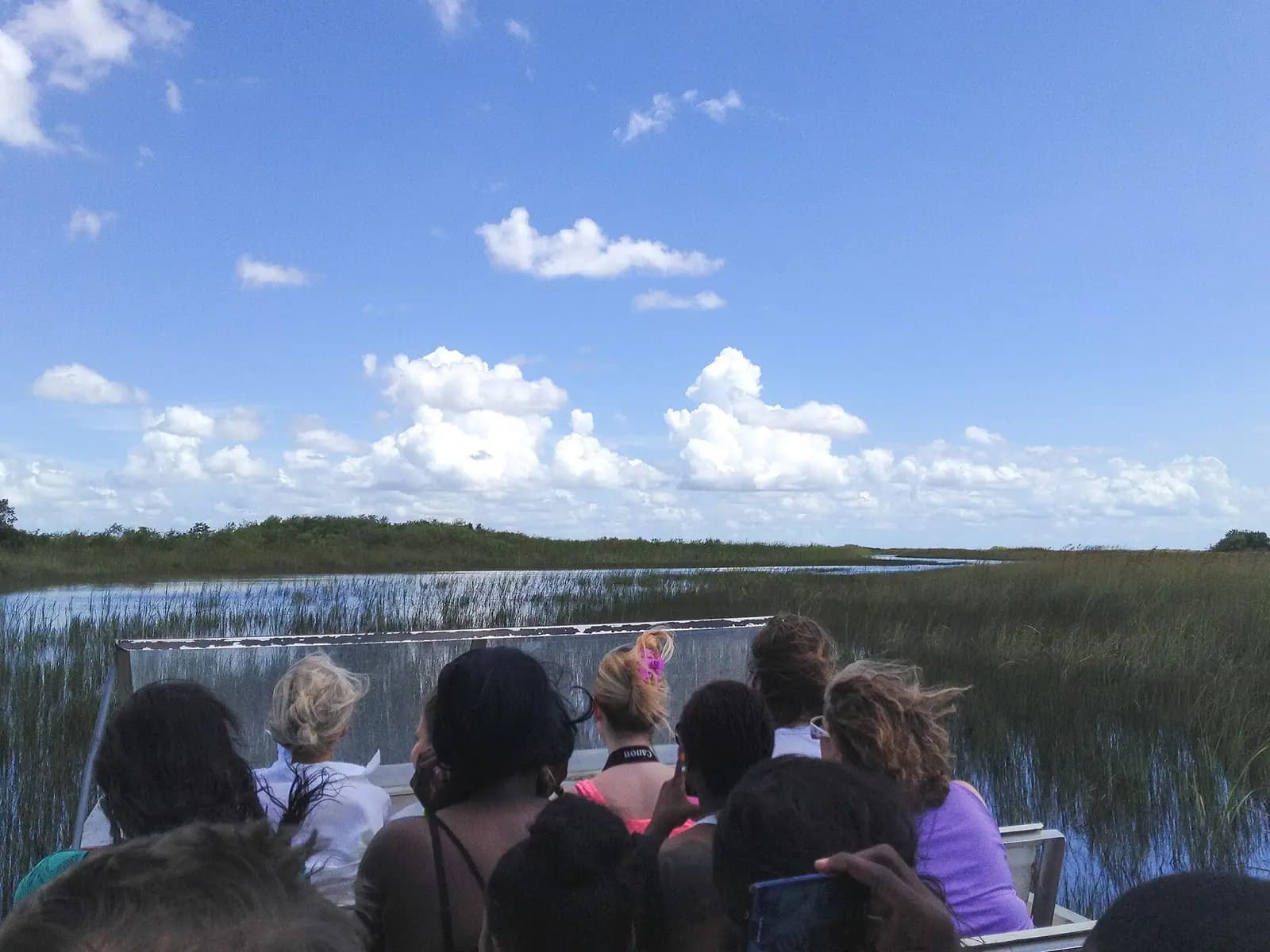
The second thing people get wrong is airboats. No commercial airboat operates inside Everglades National Park. The airboat tours advertised all over Miami run on private land and Miccosukee tribal land along the Tamiami Trail, and in Big Cypress National Preserve north of the park boundary. Those rides are legitimate and often good. They are just not the national park, and a booking site that implies otherwise is being loose with you.

Come in the dry season if you can. December through April concentrates wildlife around the remaining water and knocks the mosquitoes down to something survivable.

Getting there and parking

Homestead entrance (Ernest F. Coe, Royal Palm, Flamingo). From downtown Miami take the Florida Turnpike south to its end at Florida City, then follow the brown park signs west onto State Road 9336. About an hour without traffic. Royal Palm is a few minutes past the entrance station; Flamingo is another 38 miles and roughly an hour beyond that, so budget the full day.

Shark Valley. Take the Dolphin Expressway (SR-836) west, then the Turnpike south briefly to the Tamiami Trail (US-41) and head west. Roughly 45 minutes from downtown. The entrance is on the south side of US-41 and the lot is small; on a winter weekend the gate holds cars until spaces free up.

Gulf Coast (Everglades City). Two hours or more from Miami via US-41 or I-75 (Alligator Alley). Practical as an overnight or as part of a Naples trip, not as a Miami day out.

There is no bus, train or shuttle to any entrance. Rideshare will drop you at Shark Valley but will not reliably collect you.

Three entrances, no connecting road

You cannot "do the Everglades" in one stop, and you cannot drive between the gates once you are inside. Choose before you leave Miami.

  • Shark Valley, on US-41 (Tamiami Trail), roughly 45 minutes west of downtown. A 15-mile paved loop into open sawgrass prairie with a 65-foot observation tower at the halfway point. Tram tour, bike rental, or walk the first mile. The highest density of roadside alligators in the park, and the easiest half-day from the city.
  • Homestead / Ernest F. Coe, about an hour south via the Turnpike. This is the deep park: Royal Palm with the Anhinga and Gumbo Limbo trails, then a 38-mile road through pineland, cypress and coastal prairie to Flamingo on Florida Bay. Allow a full day. Flamingo alone is another hour from the gate.
  • Gulf Coast / Everglades City, on the far western side. Boat access to the Ten Thousand Islands. From Miami this is a two-hour drive each way and is realistically a Naples-side trip, not a Miami one.

One vehicle pass covers all three for seven days, which is the only sense in which they are connected. If you have a single day and no strong preference, take Shark Valley. If you want the park to feel like wilderness rather than a viewing gallery, take Homestead and go all the way to Flamingo.

The airboat question, answered properly

Airboats are the image Miami sells of the Everglades, and they are not part of the national park experience. Commercial airboat operations are not permitted inside park boundaries. The tours you see advertised at hotel desks and on booking sites run in three places, all of them outside the park:

  • Miccosukee tribal land along the Tamiami Trail, west of Krome Avenue.
  • Privately held wetland north of US-41, some of it grandfathered in and some simply outside the boundary.
  • Big Cypress National Preserve, which borders the park to the north and allows uses the park does not.

None of that makes them a bad afternoon. An airboat is loud, fast and genuinely fun, the guides are often second- or third-generation glades people, and the wildlife is real. Just book it as what it is, and do not expect the operator's map to match the park's.

What you cannot do on an airboat is quiet. If you want the Everglades to sound like itself — wading birds, wind through sawgrass, the pop of a gar taking air — you want the Anhinga Trail at dawn, a bike on the Shark Valley loop, or a kayak. Several Miami operators will sell you an airboat and a park visit on the same day trip, which is the honest version of the package.

Dry season and wet season are different parks

This is the strongest seasonal swing of anywhere in South Florida, and it works opposite to how people assume.

Dry season, roughly December to April. Water levels drop, and everything that needs water piles into whatever is left. Alligators stack up in gator holes, wading birds work the shrinking pools in numbers, and a tram or a boardwalk delivers wildlife without much effort. Mosquitoes are tolerable. This is also Miami's high season, so Shark Valley's small lot fills by mid-morning and tram seats sell out; reserve.

Wet season, roughly May to October. Afternoon thunderstorms most days, water spread across the whole sheet, and the wildlife dispersed with it. Mosquitoes at Flamingo and on the shaded hammock trails go from a nuisance to a legitimate reason to turn around — rangers do not exaggerate this. On the other hand the sky is enormous, the sawgrass is green rather than straw-coloured, and you may have a boardwalk to yourself.

Either way, go early. Dawn and the two hours after it are when the birds feed and before the heat flattens everything. Midday in July on an unshaded loop road is a genuinely bad idea.

What to bring, and what the park does not have

The Everglades is an hour from a city of six million and feels much further once you are in it. Plan accordingly.

  • Water, more than you think. There is no shade on the Shark Valley loop and none on much of the main park road. Fill up before you enter.
  • Insect repellent with DEET or picaridin. From May onward, treat this as equipment rather than an option. Long sleeves help more than repellent alone at Flamingo.
  • A full tank. Fuel inside the park is limited and there is nothing between the Homestead gate and Flamingo.
  • No mobile signal to rely on. Download your map. Coverage on the main park road is patchy at best and gone entirely in places.
  • Sun protection. Hat, long sleeves, reef-safe sunscreen. The glare off open water is relentless.
  • Cash is unnecessary but a card is essential — entrance stations and concessions are card-based, and the vehicle pass can be bought in advance online.

Food is thin everywhere. There is a concession at Flamingo and a café at Shark Valley's visitor centre, both with limited hours. Bring lunch rather than planning around one.

Drones are prohibited. Feeding any wildlife, including throwing bread to fish, is prohibited and enforced.

Doing it from Miami without a car

There is no public transport into any Everglades entrance. If you are not driving, you have three options and one non-option.

Organised day trips are the default, and the Miami market has hundreds of them. Most bundle an airboat ride on tribal or private land with a wildlife show and, sometimes, a stop inside the park. Read the itinerary for the words "national park" and check which gate; plenty never cross the boundary.

Rideshare will get you to Shark Valley from downtown in about 45 minutes, and then you are standing at a visitor centre with no reliable way back. Drivers do not cruise the Tamiami Trail. If you try this, pre-arrange the return.

A rental car for one day is usually the cheapest and easiest answer if there are two or more of you, and it is the only way to reach Flamingo on your own schedule.

The non-option is cycling from the city. The Tamiami Trail is a two-lane highway with heavy truck traffic and no shoulder worth the name. Bring or rent a bike at Shark Valley for the loop itself instead — that ride, on a flat paved road closed to private cars, is one of the best things you can do in South Florida.
Tours that visit The Everglades

Operators run these trips past The Everglades, or stop there as part of a longer route. We list what the booking data supports — not everything that mentions the name.

Some links below go to Viator, our booking partner. We earn a commission on bookings made through them — at no extra cost to you, and with no influence on what we recommend.

Shared departurespriced per seat, best value for one or two

Private and small-group optionsoften cheaper per head for a family or a group of six

Near The Everglades

Straight-line distances, so allow more on the road — the island is long and has one main parkway.

  • A narrow paved road running straight through flat open wetland grass towards a distant horizon

    Trail

    Shark Valley

    A flat 15-mile loop road into open sawgrass with an observation tower at the far end and alligators lying on the verge.

    2.5–5 hoursEverglades National Park entrance pass required — typically in the region of $30–35 per vehicle, valid seven days at all three park entrances. The tram tour is a separate concessionaire ticket.27.5 mi away

  • A small boat on flat shallow turquoise water with low green islands on the horizon
    Free

    Nature preserve

    Biscayne National Park

    A national park that is 95 percent water: mangrove shoreline, a bay, the northernmost Florida Keys and a living coral reef.

    1.5–7 hoursFree. There is no entrance fee for Biscayne National Park and parking at Convoy Point costs nothing. Boat trips, snorkelling, diving and island camping are charged separately.16.3 mi away

  • A giraffe standing in an open grassy enclosure with no visible fencing in the foreground

    Wildlife

    Zoo Miami

    Florida's largest zoo: 750 acres of moated, cage-free habitat where the animals are tropical and the walking is the hard part.

    4–6 hoursExpect roughly $25 for an adult and a few dollars less for a child, with very young children free. Parking, tram, safari cycle hire and animal encounters are extra.18.7 mi away

  • A stone Mediterranean-revival house with arched loggias seen across a lawn under palms

    Historic site

    Deering Estate

    Charles Deering's bayfront estate: an 1896 pioneer hotel, a 1922 stone house, and a Paleoindian fossil site in the pine rockland behind.

    2–4 hoursAround $18 for adults and roughly $10 for children, including the house tours and the guided nature walk when running. Young children generally free.22.9 mi away

The Everglades: common questions

Can you take an airboat ride inside Everglades National Park?

No. Commercial airboats do not operate inside the national park. Every airboat tour sold in Miami runs either on Miccosukee tribal land, on private wetland along the Tamiami Trail, or in Big Cypress National Preserve to the north. They are real Everglades habitat and often excellent, but they are outside the park boundary. If you want both, book an airboat on US-41 and add Shark Valley, which is on the same road.

How far is Everglades National Park from Miami?

It depends which entrance. Shark Valley, on the Tamiami Trail, is about 45 minutes west of downtown Miami. The Homestead entrance, with Royal Palm and the road to Flamingo, is about an hour south via the Turnpike — and Flamingo itself is another hour past the gate. The Gulf Coast entrance at Everglades City is two hours or more. The three do not connect by road inside the park, so pick one per day.

What is the best time of year to visit the Everglades?

The dry season, December through April. Falling water levels concentrate alligators and wading birds into the pools that remain, so you see far more with far less walking, and the mosquitoes are manageable. The trade-off is that this is also Miami's high season: Shark Valley's parking lot fills early and tram tours book out. Summer brings daily thunderstorms, dispersed wildlife and mosquitoes that can genuinely end a walk.

Do you need a car to visit the Everglades from Miami?

Effectively, yes — or a booked tour. No bus, train or shuttle serves any park entrance. Rideshare can get you to Shark Valley in about 45 minutes, but drivers do not circulate on the Tamiami Trail and getting back is a real problem unless you pre-arrange it. For two or more people a one-day rental car is usually cheaper than a coach tour and is the only way to reach Flamingo on your own schedule.

Are there crocodiles in the Everglades as well as alligators?

Yes, and this is the only place in the world where the two species overlap. American alligators hold the fresh water inland, which is what you see at Shark Valley and on the Anhinga Trail. American crocodiles need brackish and salt water, so they concentrate around Florida Bay at the park's southern edge, particularly near the Flamingo marina. Telling them apart is easy from a safe distance: crocodiles are greyer, narrower-snouted and show teeth with the mouth closed.