Miami does not have four seasons. It has a dry season and a wet season, and the difference between them is bigger than the temperature difference implies. Understanding which one you are booking into decides your budget, your daily rhythm, and how much of the city you actually see.
Dry season runs roughly from December to April. Days sit in the high 70s and low 80s Fahrenheit, humidity drops to something a northern European or a New Englander would call pleasant, rain is rare, and the sky is blue for weeks at a time. This is also when the rest of North America wants to be here. Hotel rates peak, popular restaurants need booking, the beaches fill, and the traffic on the causeways is at its worst. A January cold front can drop the city into the 50s for a day or two, which is the only time of year you might want long sleeves after dark, and locals complain about it disproportionately.
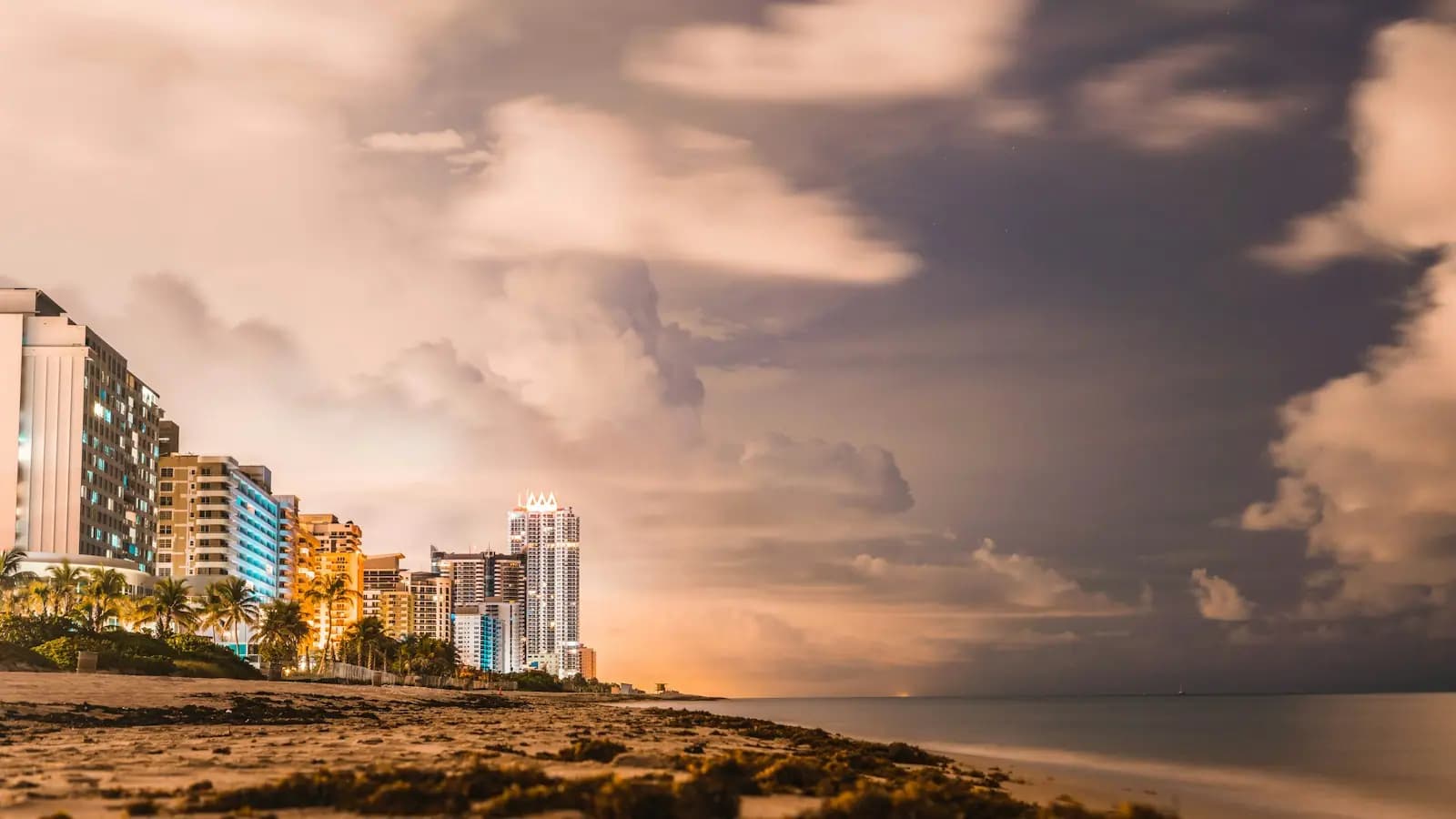
Wet season runs roughly from May to October. Highs in the high 80s and low 90s, overnight lows that barely drop below the high 70s, and humidity that makes those numbers feel considerably higher. The rain is the part visitors misread: a typical day is bright and hot through the morning, cumulus builds inland through lunchtime, and a violent thunderstorm arrives between two and five in the afternoon for thirty to sixty minutes. Then it clears. It is not an all-day washout, and mornings are reliably good. Hotel rates in August and September are at their annual floor, sometimes half what the same room costs in February.
Hurricane season runs 1 June to 30 November, peaking from August through October. That is a genuine factor rather than a footnote: most trips in that window are entirely unaffected, storms are tracked days in advance, airlines issue waivers early, and Miami-Dade publishes evacuation zones that your hotel knows the answer to. But it is the reason August and September are cheap, and travel insurance in those months is worth buying rather than declining.
Then there is the calendar, which in this city moves prices more than the weather does. Four events reshape availability across the whole of Miami and Miami Beach. Art Basel Miami Beach in early December, which brings the fair to the convention centre and around twenty satellite fairs, parties and installations to the rest of the city, and roughly doubles hotel rates for a fortnight. Spring break in March, which fills South Beach and brings city restrictions that change from year to year. Miami Music Week and Ultra in late March, which fills downtown. And the South Beach Wine & Food Festival in February, which fills the island's restaurants.
The short answer, if you want one: late April, May, and the first half of November. Warm water, dry-season-adjacent weather, prices well off their peak, and none of the four events. What follows is the year month by month, with what each one actually costs and what is in the water.