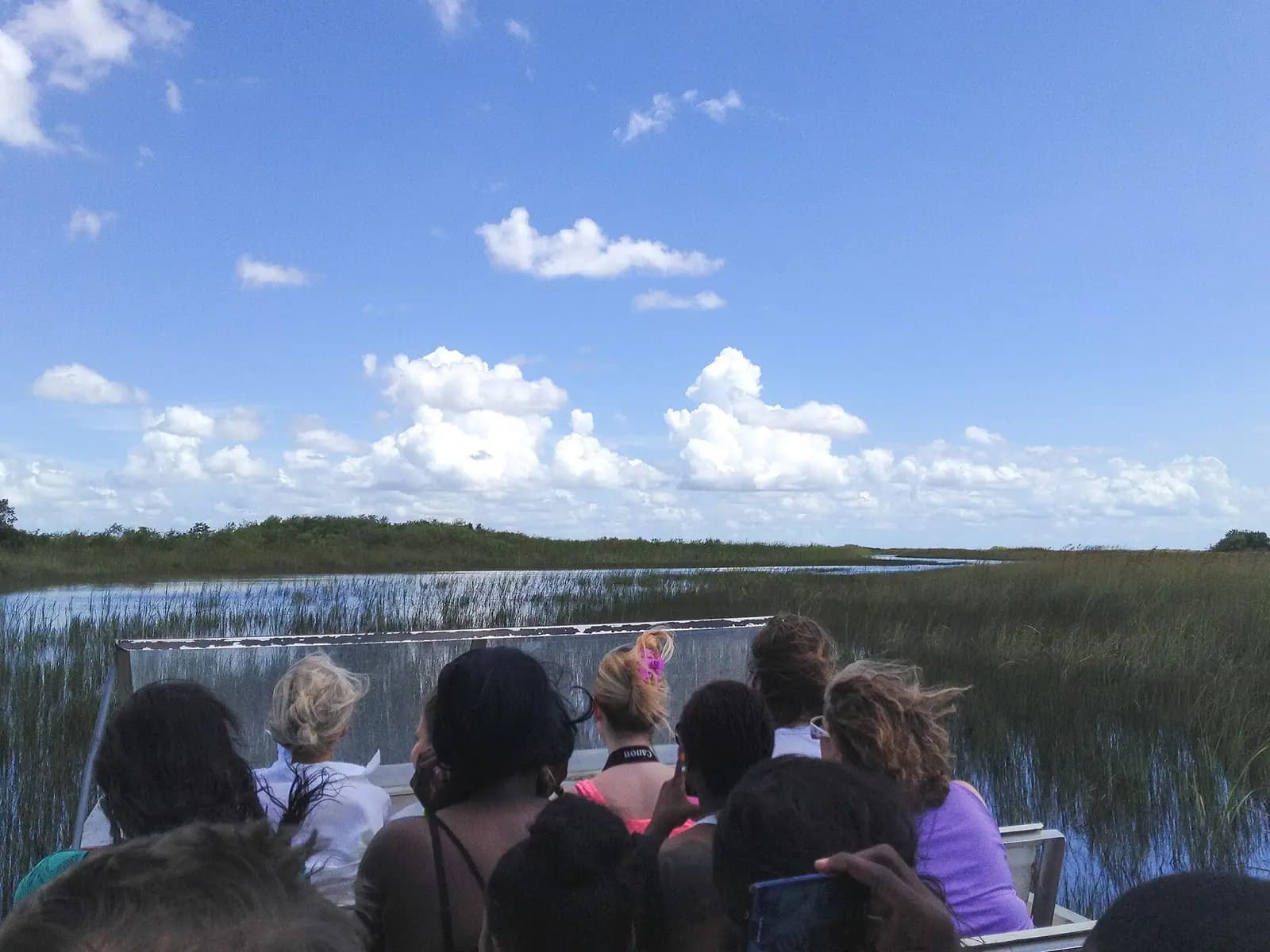
An airboat is a flat-bottomed hull with an aircraft propeller bolted to the back of it and no propeller in the water at all. That single design decision is why it exists: the Everglades is a river a few inches deep running over a limestone shelf, and nothing with a submerged prop or a keel can cross it. An airboat can run over sawgrass, floating vegetation, wet marl and open water without changing gear, and it can do it at speed. The design goes back to the early 1900s and it became a South Florida signature because South Florida is where the problem it solves is.
It is also extremely loud. A big unmuffled V8 turning a propeller a metre behind your head produces noise in the range where hearing protection stops being a courtesy, and every legitimate operator hands out ear defenders before you sit down. If you have a small child, or anyone in the group is sensitive to noise, know that going in. The ride is a sensory event first and a wildlife experience second, and operators who pretend otherwise are selling you the wrong thing.
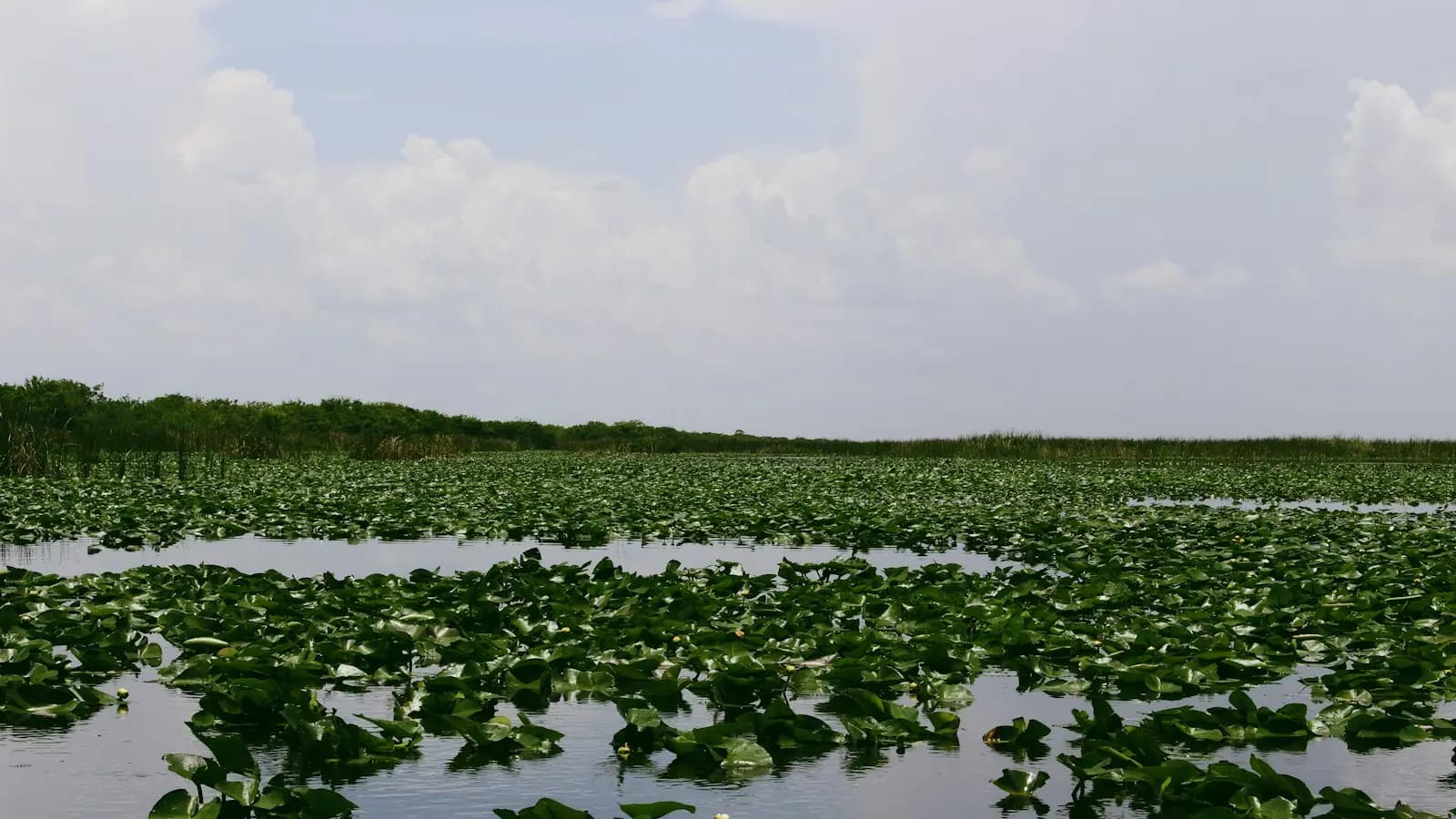
Now the part the listings obscure. Airboats are banned across nearly all of Everglades National Park, for noise and for habitat damage, and this is not a grey area. Three commercial operators along the Tamiami Trail — the ones that were already running when Congress expanded the park's boundary in 1989 — hold grandfathered concession authorisation to operate inside the East Everglades addition, and no one else does. Every other airboat you can book near Miami runs somewhere else: on Miccosukee tribal land along US-41, in Big Cypress National Preserve, or in the Water Conservation Areas north-west of the city in Broward County, where the big operations off US-27 are. All of those are real Everglades habitat. None of them is technically the national park, and a photograph taken from any of them looks identical.
So book an airboat for what it is. It is thirty to sixty minutes of moving fast across shallow water, usually with a stop at a gator hole or a cypress head, with a captain who has worked this marsh for years and will tell you more about it in half an hour than any sign will. In the dry season you will very probably see alligators, wading birds and turtles. In August you may see very little wildlife and a great deal of weather. Most tickets also include admission to a small wildlife park at the dock, with captive alligators, a handling show, and sometimes birds and snakes. The quality of those varies enormously and it is worth reading recent reviews for the specific operator rather than the package.
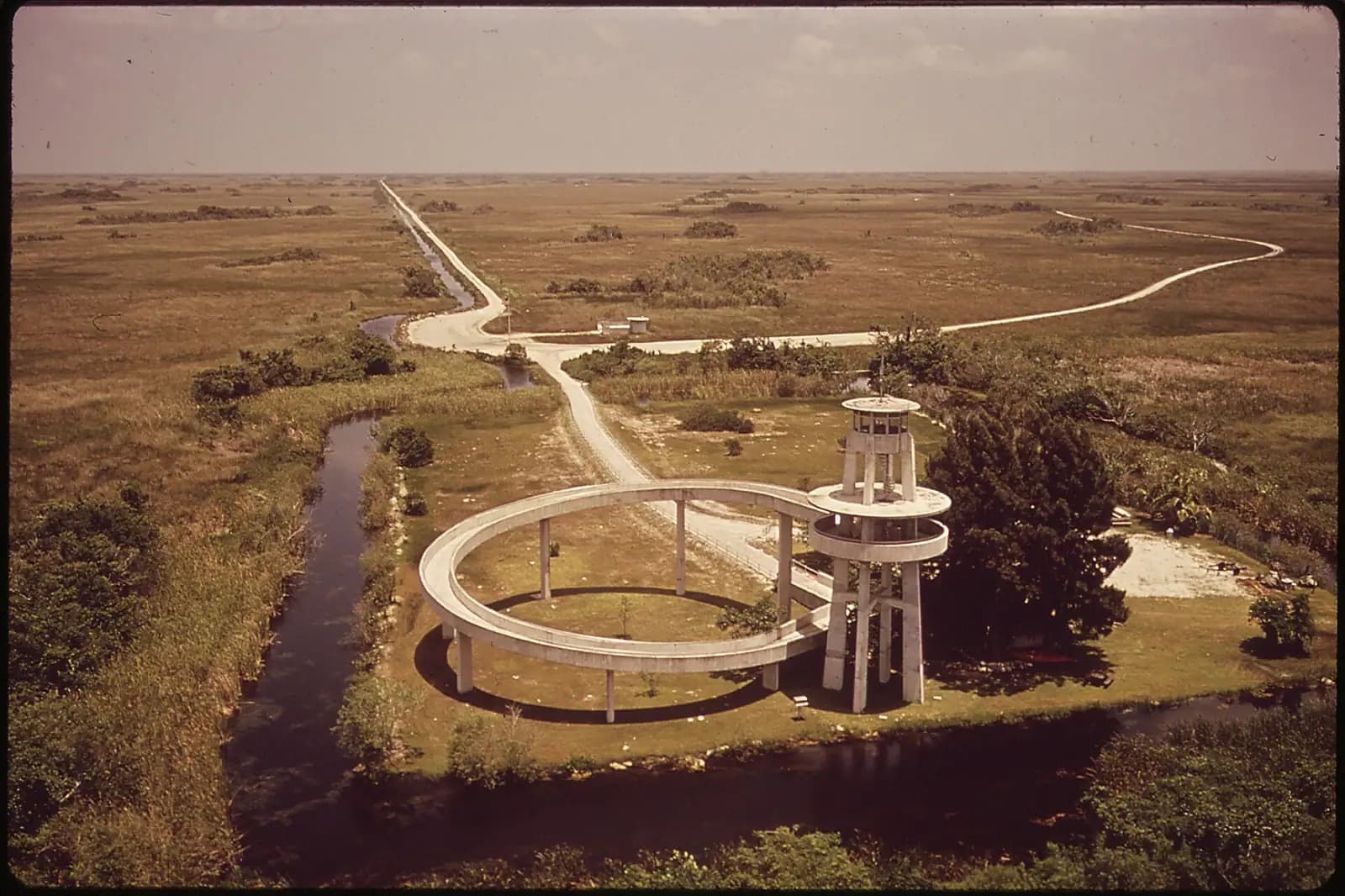
Where this fits in a Miami trip: it is a half day, it is cheap by this city's standards, and it pairs naturally with a drive further west on the Tamiami Trail or a stop at Shark Valley for the tram. What it is not is a substitute for a day in Everglades National Park. If you want both, and you should, our Everglades tours page sets out the three entrances and what each one is for.