Skip to content
Search
Menu

We earn a commission if you book through this link. You pay the same price.

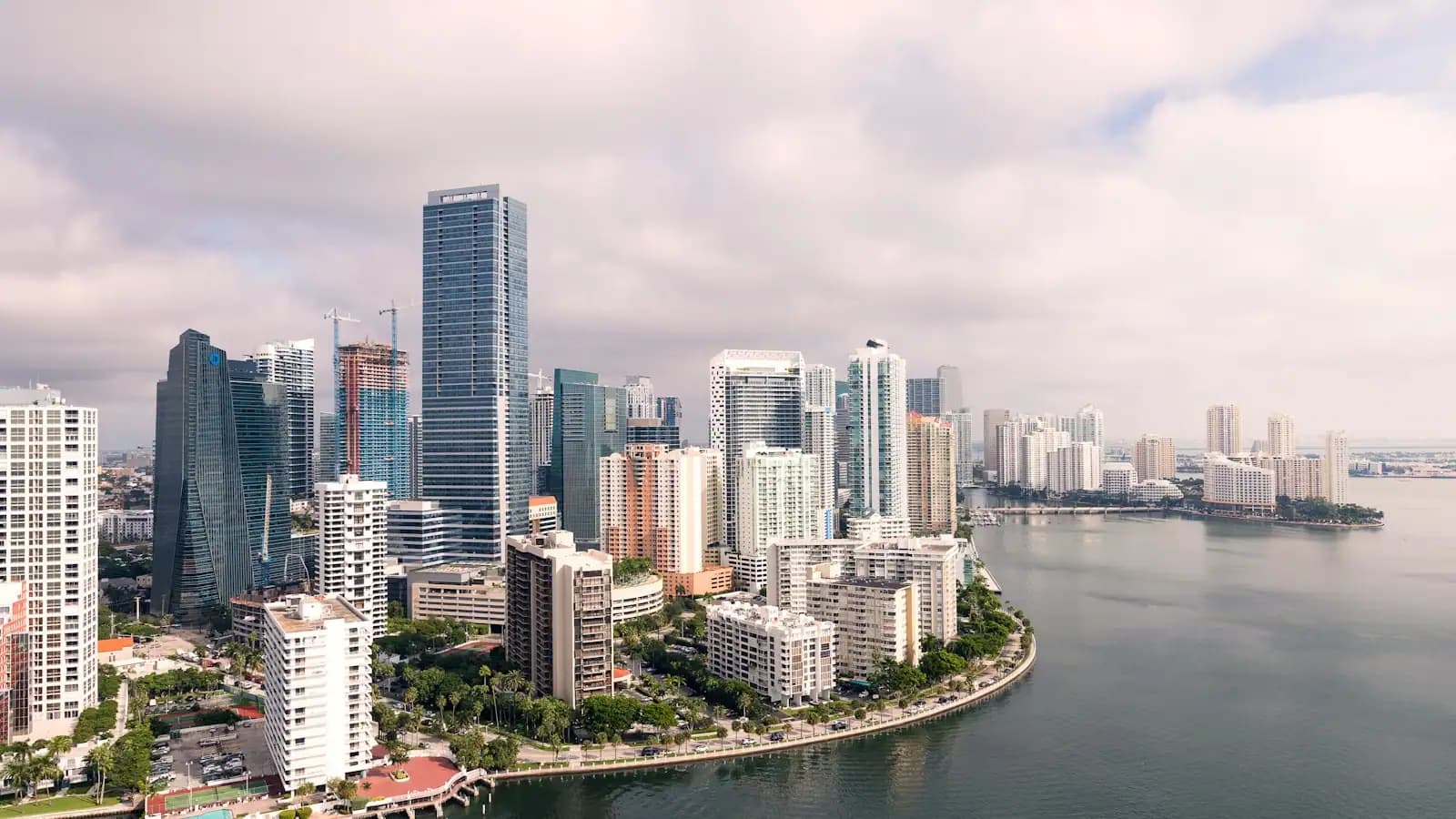
A tour boat crossing Biscayne Bay with the downtown Miami skyline and Brickell towers behind it

Tours

Boat Tours on Biscayne Bay

Last updated

Which Miami boat tour to book: Biscayne Bay sightseeing cruises, sandbar charters, party boats, sunset sails and Stiltsville, with marinas, prices and timing.

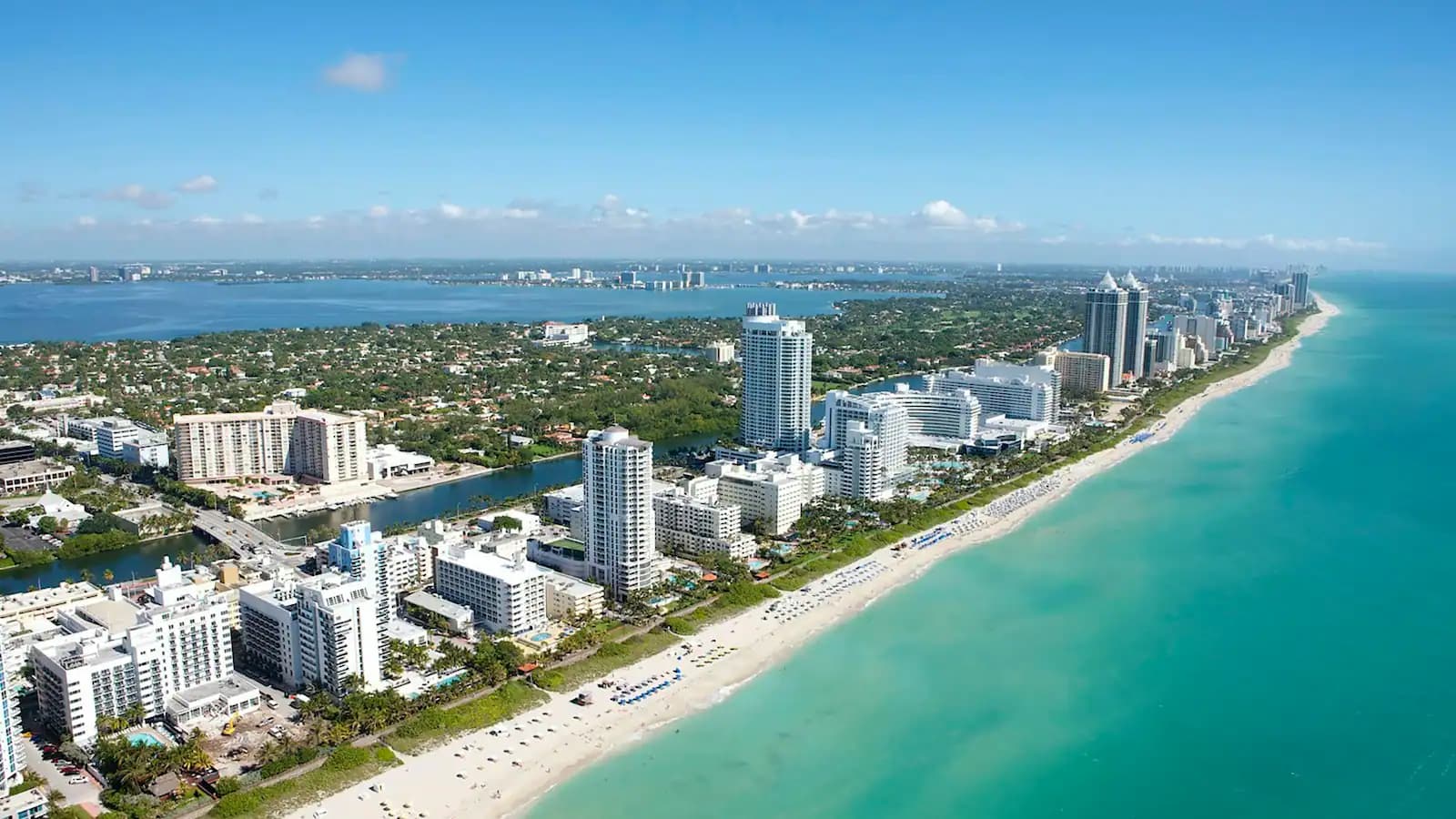
Miami is a bay city that happens to have an ocean behind it, and nothing makes that clearer than getting on a boat. Biscayne Bay is roughly 35 miles long, mostly shallow, sheltered end to end by the barrier island, and it holds almost everything a visitor is put on a boat to see: the downtown and Brickell skyline from the water, the man-made causeway islands, the Venetian and Sunset Islands, Stiltsville standing on pilings in the flats, and the sandbars where half of Miami spends a Saturday. The open Atlantic is right there through Government Cut and Haulover Cut, but most tours never go through either, and that is the correct call. The bay is flat, warm and interesting. The ocean two miles out is blue water.

Understand the five products and you will not overpay. The first is the Bayside sightseeing cruise: 90 minutes out of Bayside Marketplace or the marina beside it, cheap, hourly, narrated, and the commercial backbone of the category. The second is the party boat: a DJ, an open bar and a crowd, usually leaving from downtown or Miami Beach. The third is the sandbar charter, where a captain takes six to twelve of you to a shallow bank off Key Biscayne or behind Haulover to stand in waist-deep water beside anchored boats. The fourth is sailing, usually a catamaran, usually two hours, usually at sunset. And the fifth is the one almost nobody books: a boat into Biscayne National Park from Convoy Point in Homestead, a national park that is 95 percent water.

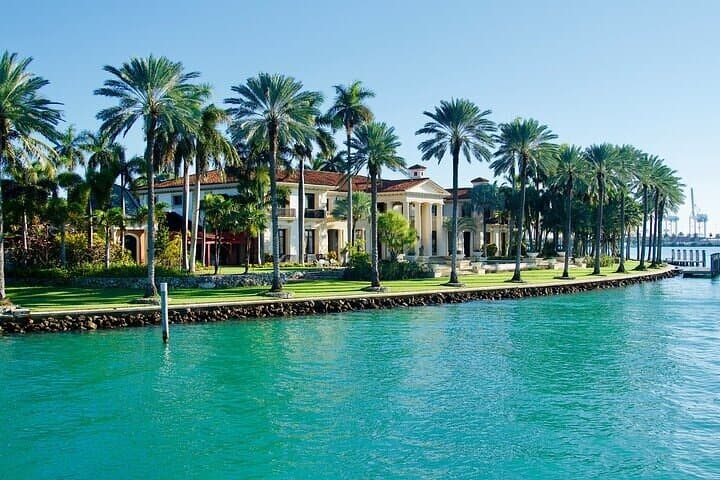
Two honest notes about the cheap cruises, because they are what most people end up on. The narration on Millionaire's Row is heavily out of date. Star Island, Hibiscus Island and Palm Island do hold large waterfront houses, and famous people have owned some of them, but the commentary about who lives where has been recycled for twenty years and much of it was never accurate. Take it as entertainment. The skyline, the causeways and the cruise terminal are genuinely worth the ticket: PortMiami handles more cruise passengers than any port on earth, and seeing four or five of those ships stacked along the terminal from water level gives you a scale no photograph does.

The second note is about the water. Biscayne Bay is not the clear blue of the Bahamas and was never meant to be: it is a shallow estuary over seagrass and mud, and its colour swings between jade and grey with wind, tide and rain. It has had a difficult decade ecologically, with seagrass die-off and a 2020 fish kill that made the front pages. The turquoise in the marketing photographs is shot at a sandbar on a calm day at high tide, which is a real thing you can experience, but it is a specific place and a specific hour rather than the default.

Prices here are the friendliest in this network. Miami's median bookable tour sits around $89 against a Maui median of $203, and the bay boats cluster well below that. Where the money goes is private charters, priced by the boat and by the hour, where a $400 difference buys shade, a working toilet and a captain who knows which sandbar is not a mudflat at low tide.
Our picks

The ones we would book

  • Editor's Pick

    Best all-round introduction to the bay

    Why we chose it

    The 90-minute Biscayne Bay cruise out of the downtown bayfront does the one thing you cannot do from land: it shows you how the city is arranged around the water, with the Brickell wall on one side, the causeway islands in the middle and the cruise terminal at the cut. At the low end of Miami's $89 median, running most of the day, and it needs no planning.

  • Best Value

    Best cheap hour on the water

    Why we chose it

    Short, frequent and inexpensive, the hourly bayfront departures are the best value on this page. You get the skyline, the Venetian Islands and Government Cut without committing an afternoon or booking ahead. Go late in the day when the light hits the downtown towers rather than at noon when there is no shade on the upper deck.

  • Sunset

    Best sunset sail

    Why we chose it

    Miami's beaches face east, so the sunset belongs to the bay. A sailing catamaran out of Coconut Grove or the Venetian marinas gives you two quiet hours with the sun going down behind the mainland skyline and no engine noise. Fewer sailing boats operate here than power boats, so this is one of the few bay trips genuinely worth booking a week ahead.

Where the boats actually leave from

Departure point matters more than the boat, because Miami traffic is the variable you cannot control.

Bayside Marketplace and Miamarina, downtown on the bayfront, is the highest-volume departure point in the city. Cheap cruises, speedboat thrill rides and a good number of party boats leave from here. It is walkable from the Metromover, which is free, and there is a large paid garage. It is also a shopping mall, so allow for crowds.

Sea Isle Marina, just north on the Venetian Causeway side of the bay, handles a lot of the mid-size charter fleet and sits close to the MacArthur Causeway.

Haulover Marina and Bill Bird Marina, inside Haulover Beach Park, are the working end: drift-fishing headboats, sandbar pontoons, jet ski operators and a large private fleet. Parking is a flat county park fee, which is the cheapest of any departure point.

Dinner Key Marina in Coconut Grove is where the sailing is. It is the largest marina in the county, the setting is genuinely handsome, and the boats that leave from here head south down the bay rather than north into the cruise terminal traffic.

Crandon Park Marina on Key Biscayne is the closest launch to Nixon Sandbar and to the flats, and the shortest run to Stiltsville.

Convoy Point, Homestead, at the Dante Fascell Visitor Center, is the only mainland access with facilities for Biscayne National Park. It is about 40 miles and an hour from downtown, and that drive is why the park gets a fraction of the Everglades' visitors.

The sandbar day, which is the real Miami boat trip

Ask anyone who lives here what they do on a boat and they will describe a sandbar, not a cruise. Biscayne Bay has several shallow banks that go waist-deep or less at the right tide, and on a summer weekend boats raft up on them by the dozen.

Haulover Sandbar, just inside Haulover Inlet on the bay side, is the biggest and the loudest. On a peak Saturday you will find 50 to 100 boats side by side with music, floating coolers and inflatable mats. It is a floating block party and it is not subtle.

Nixon Sandbar, in the bay west of Key Biscayne near Hurricane Harbor, is the other headline spot and runs a similar scene with a slightly younger crowd.

Bear Cut and the flats off Crandon are calmer, shallower and better with children.

Sandspur Island, north of the Venetian Islands, is a smaller and quieter option that regulars use when the big two are chaotic.

Three things worth knowing before you book. Tide decides everything: a sandbar at the wrong state of tide is either too deep to stand in or a mudflat you cannot reach, and a good captain plans around the tide table rather than your preferred start time. Anchoring on seagrass is damaging and increasingly enforced, so a captain who knows where the sand actually is matters. And no licence of any kind is needed to ride on a captained charter — it is self-drive rental that triggers the state's birth-date rule, under which anyone born from 1 January 1988 onwards must hold a Boating Safety Education Identification Card.

What a Miami boat trip costs

What it costs

Bands, not quotes. Confirm current pricing at the time of booking.

  • Bayside sightseeing cruise, 60 to 90 minutes: roughly $30 to $45 an adult, less for children. Frequently discounted, and rarely worth booking far ahead outside of holiday weeks.
  • Speedboat thrill ride, 45 minutes: around $40 to $70. Loud, fast, wet, and short.
  • Sunset sailing catamaran, 2 hours: roughly $50 to $95, sometimes including a drink. Book ahead in high season, because there are fewer sailing boats than power boats.
  • Party boat with open bar, 2 to 4 hours: $60 to $120 a person depending on what is included and how many DJs are involved. Read what "open bar" means on the specific listing.
  • Private captained charter: priced by the boat, not the head. A pontoon or centre console for six to twelve people typically runs $400 to $1,200 for a half day, plus fuel on some contracts and a customary 15 to 20 percent tip for the captain and mate.
  • Luxury yacht charter: from roughly $1,500 for a few hours and upward without a ceiling. Miami is one of the world's biggest yacht-charter markets and the pricing reflects it.
  • Biscayne National Park boat programmes: roughly $70 to $180 depending on whether it is a heritage cruise, a snorkel trip or a paddle. Run by the park's non-profit partner rather than a commercial fleet, with limited departures.

Two costs people forget: parking at the departure marina, which at Bayside is a downtown garage rate, and fuel surcharges on some private charters. Ask whether fuel is included when you get the quote.

When to go out, and when not to

When to go

Mornings are flatter. The sea breeze builds through the day here as the land heats, so a 10am departure is usually calmer than a 3pm one, and the bay water is clearer before the wind stirs the shallows.

Afternoon thunderstorms are a summer certainty, not a risk. From June to September a line of storms commonly forms inland and moves east in the late afternoon. They are violent, they carry lightning, and they pass in thirty to sixty minutes. Operators cancel or delay for lightning, and a reputable one will. If your only free slot is late afternoon in August, book something with free cancellation.

Sunset times swing more than people expect. Late June sunsets run past 8pm, late December sunsets fall before 5:40pm. A "sunset cruise" in winter is an after-work trip, not an evening one.

Winter fronts bring wind. December through March, a passing cold front can put 20 knots on the bay for two or three days. The bay stays runnable; the ocean side gets unpleasant, and fishing and diving trips cancel before bay cruises do.

Weekends are the sandbar. If the point is the scene, Saturday is the scene. If the point is swimming somewhere quiet, go Tuesday.

Art Basel week, early December, moves prices on everything that floats, and private charters book out. Spring break in March does the same to the party-boat end of the market, along with causeway restrictions on Miami Beach.

Stiltsville, Boca Chita and the park nobody books

Seven wooden houses stand on pilings in the shallow flats at the northern edge of Biscayne National Park, a mile or so off Key Biscayne. Stiltsville began in the 1930s as fishing shacks and gambling clubs out beyond the reach of Prohibition-era enforcement, grew to more than twenty structures, and was steadily reduced by hurricanes, Betsy in 1965 and Andrew in 1992, until seven remained. They sit inside the national park boundary now, managed under a public-benefit arrangement, and you cannot simply tie up and go inside. You can look, and from the water they are one of the strangest and best things in Miami.

Beyond them the park opens up. Biscayne National Park protects about 173,000 acres of which roughly 95 percent is water: the bay, a chain of undeveloped keys, mangrove shoreline and the northernmost living coral reefs of the Florida reef tract. Boca Chita Key has a 65-foot ornamental lighthouse built by a Honeywell heir in the 1930s, a harbour and a campground, and it is reachable only by boat. Elliott Key has the park's longest trail.

The visitor numbers tell the story: the Everglades draws well over a million people a year, Biscayne a fraction of that, and the difference is that one has a road through it and the other requires a boat. Trips run from Convoy Point in Homestead through the park's non-profit partner, with a limited schedule and small groups, and they fill in winter. It is an hour's drive from downtown Miami and it is the least crowded good thing within that radius.

Book it

Everything else we track

We could not find tours matching this right now

Nothing came back for Biscayne Bay cruise. Operators add and retire experiences constantly, so this list changes week to week. Try a broader category, or come back in a day or two.

Five boats, five completely different days

How they compare

They are all sold with the same photograph of a skyline. They are not the same trip.

TypeTypical lengthTypical priceLeaves fromSuits
Bayside sightseeing cruise60–90 min$30–$45Bayside Marketplace, MiamarinaFirst visit, families, a free afternoon, low commitment
Party boat with DJ and bar2–4 hr$60–$120Downtown, Miami Beach marinasGroups, birthdays, people who want the boat to be the night
Sandbar charter, captained3–6 hr$400–$1,200 per boatHaulover, Sea Isle, Key BiscayneSix to twelve people who want the local Saturday
Sailing catamaran, sunset2 hr$50–$95Coconut Grove, Venetian, BaysideCouples, anyone who wants quiet and no bass
Biscayne National Park boat3–6 hr$70–$180Convoy Point, HomesteadReefs, Boca Chita, Stiltsville, people who want the park

The most common planning mistake is booking a party boat expecting sightseeing, or a sightseeing cruise expecting swimming. Only the sandbar charters and the national park trips put you in the water, and only the private charters let you choose where.

The second most common is assuming a Key West day trip goes by boat. There is no passenger ferry from Miami to Key West. Day trips are by coach down the Overseas Highway, roughly three and a half hours each way, or by seaplane and small aircraft from the downtown seaplane base and Opa-locka. Budget the whole day for the coach version.

Before you get on the boat

Before you book

  • Check what "open bar" covers. On some party boats it is beer and a house spirit; on others it is a cash bar with one welcome drink. It is the single biggest source of complaints in this category.
  • Bring photo ID if alcohol is served. Florida ID checks are strict and crews do enforce them.
  • Seasickness is a bay problem only on windy days, but ocean trips through the cuts can be genuinely rough. Take medication before boarding, not after.
  • Sun on the water is roughly double what it feels like on the sand. Hat, long sleeves, mineral sunscreen.
  • Manatee and slow-speed zones are real and heavily enforced across the bay. If you are driving a rented boat yourself, learn the zones before you leave the dock; fines are substantial and manatee strikes are a chronic problem here.
  • Anchoring on seagrass damages the bay and can be penalised. Anchor on sand.
  • Glass is prohibited on most charter boats and at the sandbars.
  • Tipping is expected on captained charters, typically 15 to 20 percent, and is usually not included in the headline price.
  • Do not swim in Government Cut or the marina channels. Cruise ships and freighters use them constantly and the current runs hard.
  • Weather cancellations are the operator's call. Book with free cancellation in summer and check the refund policy for lightning delays rather than assuming it.

On the ground

Where to go

Every place below has its own page — hours, parking, what it costs and what to expect when you get there.

  • A long causeway bridge curving across shallow bay water towards a low green island
    Free

    Neighbourhood

    Key Biscayne

    One causeway, two big parks and a village in between — the island Miami drives to when it wants the ocean without the noise.

    3–8 hoursThe village and its streets are free. You pay an eastbound causeway toll to drive on, and a per-vehicle entry charge at each of the two parks.

  • A narrow street shaded by a heavy canopy of live oak and banyan trees in a residential Miami neighbourhood
    Free

    Neighbourhood

    Coconut Grove

    Miami's oldest continuously inhabited neighbourhood, settled by Bahamians and Yankee pioneers two decades before the city existed.

    2–5 hoursFree to walk. The Barnacle Historic State Park charges a small state-park admission, and the Kampong operates by appointment with its own fee.

  • A large cruise ship passing close to a shoreline park along a narrow shipping channel
    Free

    Park

    South Pointe Park

    The southern full stop of Miami Beach, where a shipping channel runs so close that cruise ships pass within a stone's throw.

    1–3 hoursFree. The park, the pier, the splash pad and the beach access cost nothing. Parking does not.

  • A small boat on flat shallow turquoise water with low green islands on the horizon
    Free

    Nature preserve

    Biscayne National Park

    A national park that is 95 percent water: mangrove shoreline, a bay, the northernmost Florida Keys and a living coral reef.

    1.5–7 hoursFree. There is no entrance fee for Biscayne National Park and parking at Convoy Point costs nothing. Boat trips, snorkelling, diving and island camping are charged separately.

  • Glass residential and office towers rising above a tree-lined street in Miami's Brickell district
    Free

    Neighbourhood

    Brickell

    Miami's most walkable neighbourhood: towers, a free elevated train, and a two-thousand-year-old Tequesta site at the river mouth.

    1.5–5 hoursFree. Walking the district, riding the Metromover and visiting the Miami Circle all cost nothing.

  • A dense cluster of downtown towers seen across water at the end of the day
    Free

    Neighbourhood

    Downtown Miami

    The original Miami: a railway terminus that became a city in 1896, now a downtown of towers, museums and a free elevated railway.

    3–8 hoursFree to walk, and the Metromover that connects it costs nothing. Museums, the Freedom Tower galleries, bay cruises and events are ticketed separately.

  • A narrow urban river running between city towers with a drawbridge crossing it
    Free

    Trail

    Miami Riverwalk

    The short, busy, unglamorous river Miami was built on — freighters, drawbridges and a 2,000-year-old circle cut into the bedrock.

    1–2.5 hoursFree. The Riverwalk and the Miami Circle site are both public and open to the street.

  • Boats moored at a downtown marina with a city skyline of towers rising behind
    Free

    Shopping

    Bayside Marketplace

    Downtown Miami's bayfront mall, best understood as the dock most Biscayne Bay cruises leave from rather than as somewhere to shop.

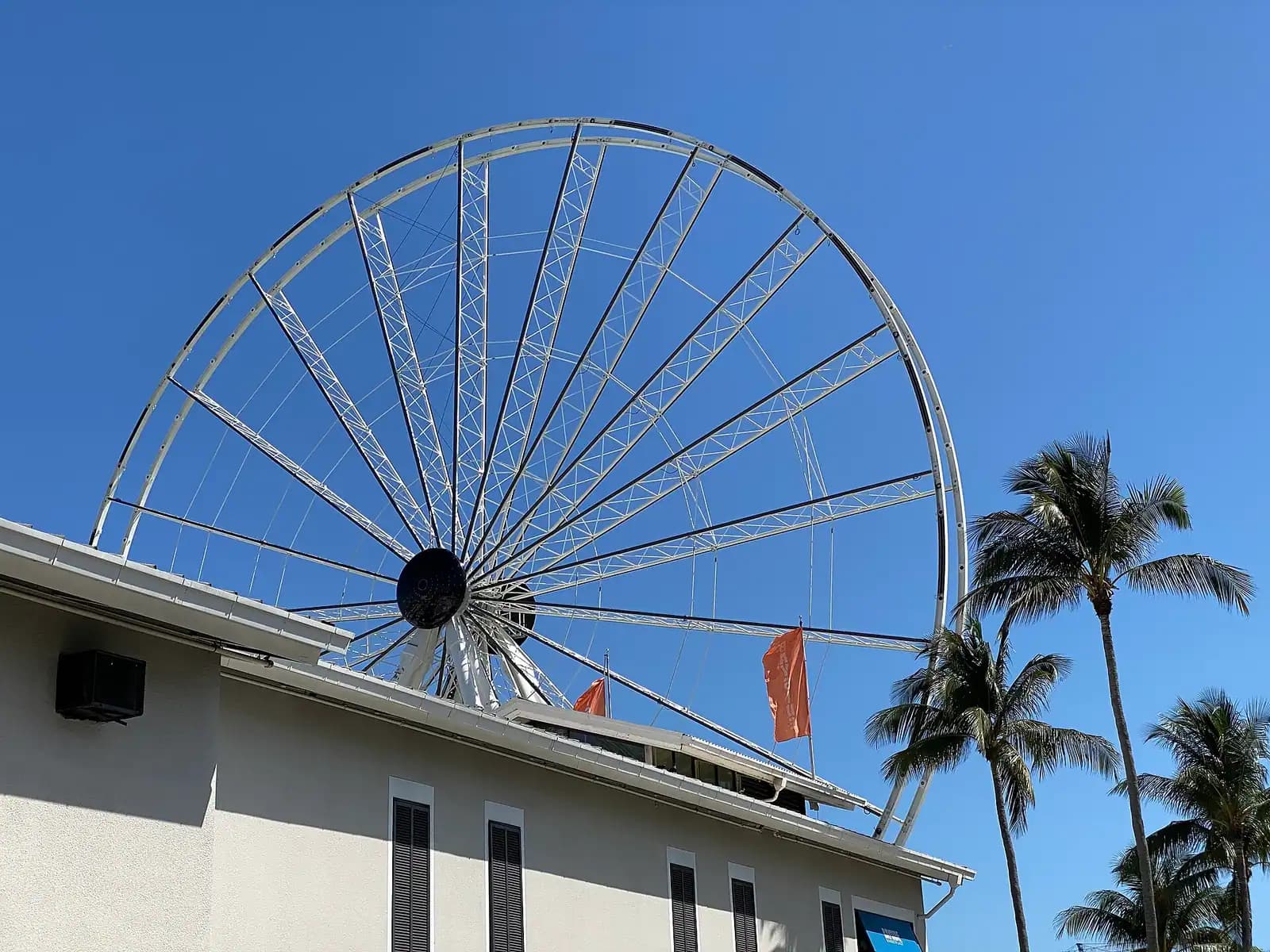
    1–3 hoursFree to enter and to walk the waterfront. Boat trips, the Skyviews observation wheel and Bayfront Park concerts are each ticketed separately.

Straight answers

Questions people actually ask

How much is a boat tour in Miami?

A 60 to 90 minute Biscayne Bay sightseeing cruise runs roughly $30 to $45 an adult, which is one of the cheapest things to do in the city. Sunset sailing catamarans are about $50 to $95, party boats with a bar $60 to $120, and private captained charters are priced by the boat at roughly $400 to $1,200 for a half day plus a customary 15 to 20 percent tip. Miami's median bookable tour overall is around $89.

Is the Miami celebrity homes boat tour worth it?

The cruise is worth it; the celebrity narration is not. Star Island, Hibiscus Island and Palm Island do hold large waterfront houses, but the commentary about who owns which has been recycled for years and much of it was never accurate. Go for the skyline, the causeway islands, the cruise terminal at Government Cut and the sense of how the city sits on its bay, and treat the who-lives-where part as entertainment.

Where do Miami boat tours leave from?

Most depart from Bayside Marketplace and the adjacent Miamarina in downtown Miami, which is walkable from the free Metromover. Sailing trips mainly leave Dinner Key Marina in Coconut Grove. Sandbar and fishing charters concentrate at Haulover and Bill Bird Marina inside Haulover Beach Park, where parking is a flat county fee. Biscayne National Park trips leave from Convoy Point in Homestead, about an hour south of downtown.

Do you need a licence to rent a boat in Miami?

Not when a captain is driving. Take the helm yourself and the state's birth-date rule applies: anyone born from 1 January 1988 onwards must hold a Boating Safety Education Identification Card, which rental desks supply as a temporary certificate, valid 90 days, after a short test on site. The minimum age to sign a rental contract is 18. Learn where the slow-speed and manatee zones sit before you leave the dock — the bay is patrolled and the fines are not nominal.

What is a Miami sandbar trip?

A sandbar trip anchors on one of Biscayne Bay's shallow banks where the water is waist-deep or less, and everyone gets out and stands in it. Haulover Sandbar inside Haulover Inlet is the busiest, with 50 to 100 boats rafted up on a summer Saturday. Nixon Sandbar west of Key Biscayne is the other main one. Tide decides whether it works, so a captain who plans around the tide table is worth paying for.

Can you take a boat from Miami to Key West?

Not as a scheduled passenger ferry. The Key West Express operates from Florida's Gulf coast, not from Miami. Day trips from Miami go by coach down the Overseas Highway, about three and a half hours each way for a very long day, or by seaplane and small aircraft from the downtown seaplane base and Opa-locka, which costs several times more and takes about 40 minutes. Private boat transfers exist but are chartered, not scheduled.

What is Stiltsville in Miami?

Seven wooden houses standing on pilings in the shallow flats off Key Biscayne, inside Biscayne National Park. The settlement started in the 1930s as fishing shacks and offshore clubs, grew past twenty structures, and was cut back by Hurricane Betsy in 1965 and Hurricane Andrew in 1992. The remaining houses are managed for public benefit and you cannot go inside on a normal tour, but several bay and park boats pass close enough to see them properly.

Is Biscayne Bay clean enough to swim in?

Generally yes at the sandbars and the park keys, with sensible caveats. The bay is a shallow estuary over seagrass and mud, so it is naturally green rather than turquoise, and it has had real ecological trouble including seagrass loss and a 2020 fish kill. Avoid swimming after heavy rain, when stormwater runoff spikes bacteria counts, and avoid marina basins and channels entirely. Miami-Dade posts water quality advisories when they apply.