Skip to content
Search
Menu

We earn a commission if you book through this link. You pay the same price.

Two personal watercraft cutting across flat bay water with a city skyline of high-rise towers in the distance

Tours

Jet Skis, Parasails and Paddles on Biscayne Bay

Last updated

Jet ski rentals and watersports in Miami: the Florida licence rules, where you can ride on Biscayne Bay, parasailing, kiteboarding, paddling and real prices.

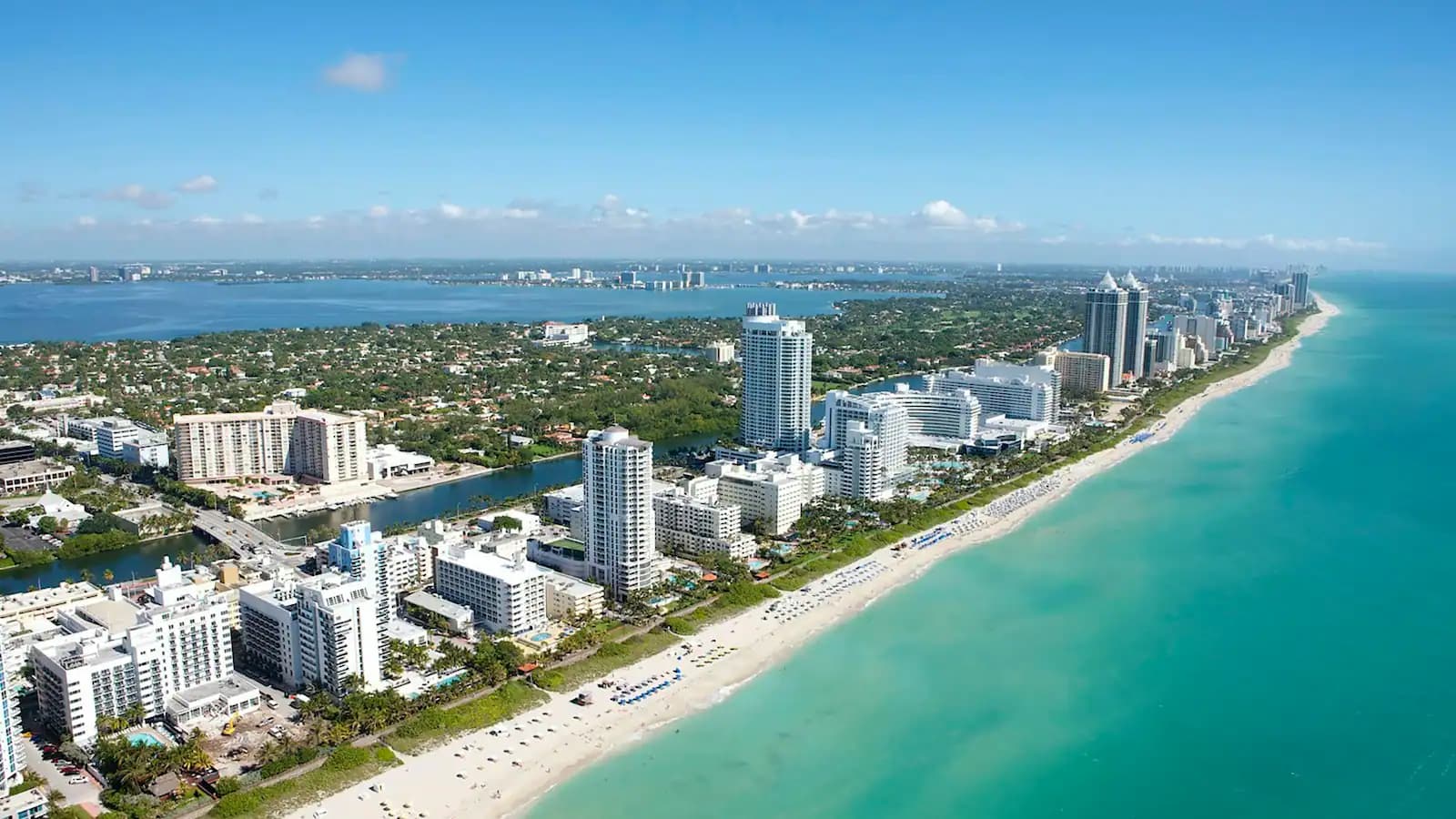
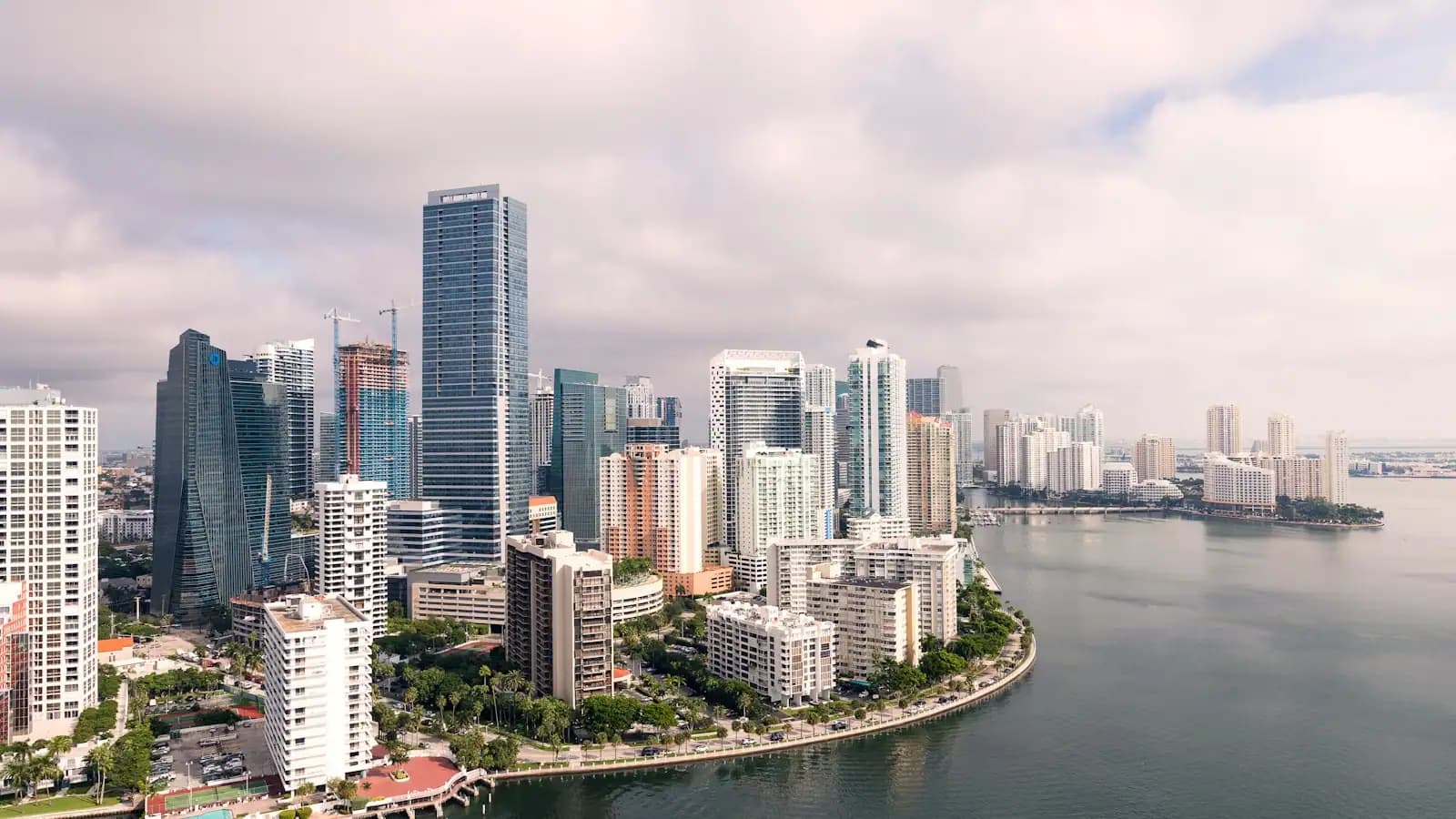
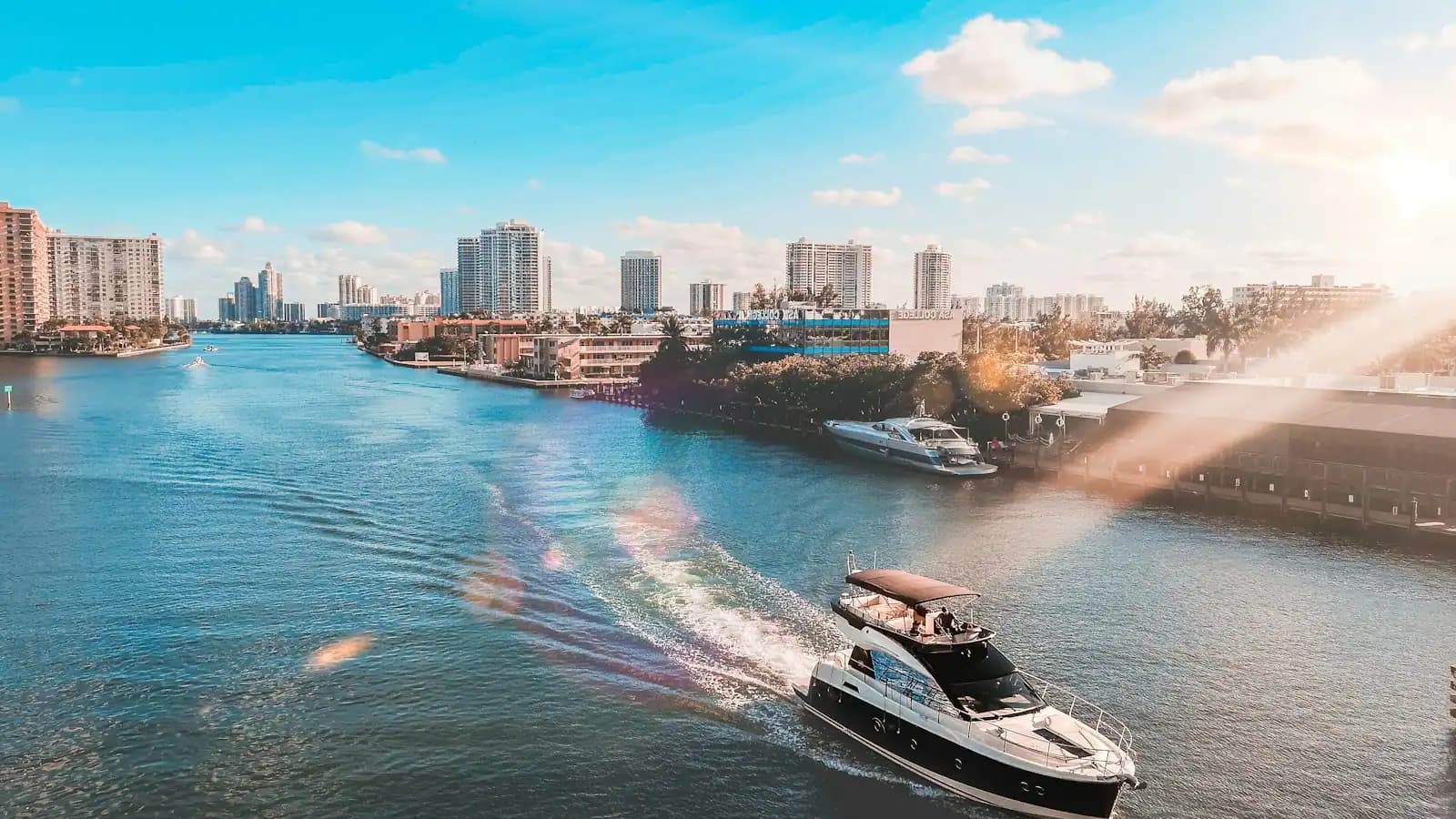
Biscayne Bay is close to a perfect jet ski environment, which is why there are so many of them on it. It is shallow, it is sheltered from ocean swell by the barrier island, it is warm all year, and it has a skyline down one side, a chain of causeway islands through the middle and open water at both ends. On a calm Saturday morning the water between the Venetian Causeway and Star Island is glassy, and you can see why this became one of the biggest personal watercraft markets in the United States.

Before anything else, the paperwork, because this is where visitors get stuck at the dock. Florida requires anyone born on or after 1 January 1988 to hold a Boating Safety Education Identification Card to operate a vessel of ten horsepower or more, and a jet ski is emphatically a vessel. If you were born before that date, a government photo ID is enough. If you were born after it and do not have a card, rental operators can issue a temporary certificate valid for 90 days after a short on-site safety test, which takes about twenty minutes and is the reason your booking says to arrive early. Separately, you must be 14 to operate a personal watercraft in Florida under any circumstances, and 18 to rent one. No adult supervision waives the age-14 floor.

Two more rules that catch people. Every person on a personal watercraft must wear a US Coast Guard approved life jacket, and an inflatable belt does not count for PWC use. And Florida prohibits operating a personal watercraft in the dark: the statute runs from half an hour after sunset to half an hour before sunrise, which in late December means the water closes to jet skis before six in the evening. Sunset tours here are genuinely sunset tours, not evening ones.

The other thing to understand is that "jet ski rental in Miami" usually means a guided tour. Large parts of Biscayne Bay are slow-speed, no-wake or manatee protection zones, the channels carry constant commercial traffic, and free-roaming rentals are restricted or supervised in most of the areas visitors want to be. What you are typically buying is 30, 60 or 90 minutes following a lead rider through a defined route, with open-throttle stretches in the designated areas. That is not a downside, but it does mean a one-hour rental is not one hour of open water, and operators who imply otherwise are overselling.

Beyond the jet ski, this city's water offers more than the marketing suggests. Parasailing runs off Miami Beach, Key Biscayne and the downtown bayfront, and 500 feet above Biscayne Bay is the cheapest aerial view of Miami by a wide margin. The Rickenbacker Causeway has a shallow, breezy stretch that is the region's windsurfing and kiteboarding school. Oleta River State Park in North Miami is the largest urban state park in Florida, with mangrove creeks you can paddle for hours and a mountain bike network alongside. And the mangrove tunnels on Virginia Key are ten minutes from downtown and feel like nowhere near a city of six million people.
Our picks

The ones we would book

  • Editor's Pick

    Best guided jet ski hour on the bay

    Why we chose it

    The route that earns its money runs from a Miami Beach marina out past the Venetian Islands and Star Island with the downtown skyline ahead of you, which is the view this city sells itself on. Go with an operator that briefs the no-wake zones properly and launches before ten, when the bay is still glass and the sandbar traffic has not started.

  • Best Value

    Best cheap thrill on the water

    Why we chose it

    Parasailing is the best-value aerial view in Miami by a distance. Eight to twelve minutes at 400 to 600 feet gives you the whole barrier island, the reef line offshore and the causeways, for roughly a tenth of a helicopter ticket. Take-off and landing are from the boat deck, so you never get wet unless you ask to.

  • Best for Beginners

    Best first time on a jet ski

    Why we chose it

    Look for a small guided group rather than a free-roam rental, a launch on the sheltered bay side rather than through an inlet, and a morning slot before the wind builds. Two riders per machine at no extra cost means a nervous first-timer can sit behind someone else for the first ten minutes and swap when they are ready.

    Little Havana Food and Walking Tour in Miami
    Best for BeginnersFree cancellationSmall group

    Small Group

    Little Havana Food and Walking Tour in Miami (opens in a new tab)

    9.9K reviews

    Join us on a culinary and cultural walking tour of Little Havana where you will discover the traditions, history, music and flavors of…

    2–3 hours

    Prices checked

    from $69.99
  • Best for Families

    Best paddle for families

    Why we chose it

    A guided mangrove paddle at Oleta River State Park or Virginia Key is the quiet counter-programming to everything else on this page: flat protected water, rays and juvenile fish visible under the board, and no minimum age beyond being able to sit still. Morning trips are glassy. It also costs a fraction of anything with an engine.

    Speedboat Sightseeing Adventure of Miami
    Best for FamiliesFree cancellationInstant confirmation

    Short term availability

    Speedboat Sightseeing Adventure of Miami (opens in a new tab)

    3.2K reviews

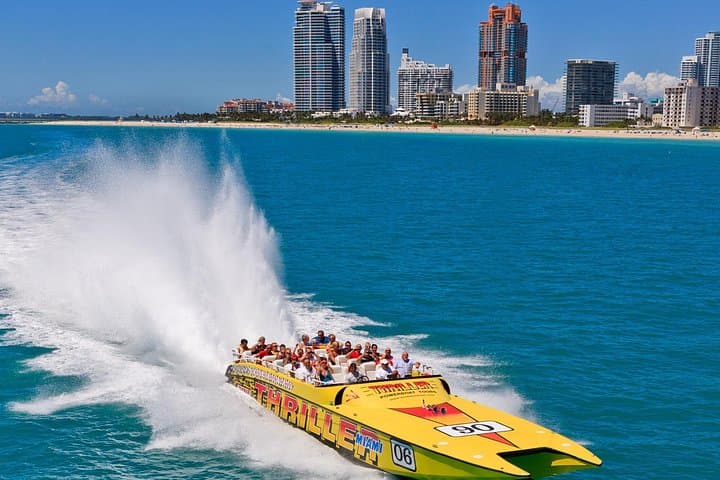
    Miami's only off-shore, speedboat tour. Experience thrills during a 45-minute speedboat ride across Miami waters. Soar along the Miami…

    45 minutes

    Prices checked

    from $42
  • Small Group

    Best small-group watersports package

    Why we chose it

    Operators bundling a jet ski hour with a banana boat, a paddleboard and time at a sandbar give a mixed group something to do while other people ride, which solves the real problem of two machines and six people. Check the group cap: six to ten works, twenty means queuing on a dock in the sun.

Parasailing, kiteboarding and the quiet end of the water

Parasailing is the best value aerial view in Miami. Boats operate off Miami Beach, Key Biscayne and the bayfront, and a typical flight puts you 400 to 600 feet up for eight to twelve minutes with the barrier island laid out below and the reef line visible offshore. Tandem and triple flights are standard, you take off and land from the boat deck rather than the water, and it is far gentler than it looks. Compare it to the price of a helicopter tour and it is not close.

Windsurfing and kiteboarding happen on the Rickenbacker. The shallow, consistently breezy stretch on the causeway, known to everyone here as Hobie Beach or Windsurfer Beach, is where the schools operate, and Crandon Park's northern end is the kite launch when the wind is right. Winter and spring fronts bring the most reliable wind; summer is often too light until a storm builds.

Paddleboarding and kayaking are the underrated category. Oleta River State Park in North Miami covers around 1,000 acres and is the largest urban state park in Florida, with mangrove creeks, a protected lagoon and rentals on site. Virginia Key has mangrove tunnels a ten-minute drive from downtown. Matheson Hammock's atoll pool is flat enough for a complete beginner. Early morning is the time: glassy water, manatees and rays visible through it, and the whole city still asleep.

Flyboarding and e-foiling operate out of the same marinas as the jet skis, usually 30-minute sessions with an instructor. The flyboard is more achievable than it looks and the e-foil takes most people a full session before they stand up.

Snorkelling and diving are covered separately on our snorkeling and diving page, because the reef is offshore and it is a different day out.

What it costs on the water

What it costs

Bands, not quotes. Watersports pricing in Miami varies more between operators than almost any other category here, and the headline rate is frequently not the final one.

  • Jet ski, per machine: roughly $100 to $180 an hour, with 30-minute and 90-minute options either side. Two riders on one machine is standard and usually costs the same as one.
  • Guided jet ski tour, 60 to 90 minutes: commonly $120 to $220 per machine including the guide, fuel and life jackets.
  • Damage deposit: typically $500 to $1,500 held on a credit card. This is the single biggest variable in the category and it is not always disclosed until you arrive.
  • Fuel surcharge: some operators charge fuel on return, some include it. Ask.
  • Parasailing: about $80 to $130 a person for a flight, less per head on tandem and triple bookings.
  • Flyboard or e-foil session, 30 minutes with instruction: roughly $150 to $250.
  • Paddleboard or kayak rental: around $25 to $45 an hour, or $60 to $100 for a guided mangrove paddle.
  • Kiteboarding or windsurfing lesson: $150 to $350 for a first session, which is the honest price of a qualified instructor and a rescue boat.
  • Oleta River State Park entry: a Florida State Parks vehicle fee in the single-digit band, paid at the gate, separate from rentals inside.

Miami's median bookable tour is around $89. Jet skis sit above it, paddling well below it, and parasailing right about on it.

When the water is right

When to go

Morning is flatter, always. The sea breeze builds as the land heats through the day, so an 9am jet ski hour is glassy and a 3pm one is chop. The same is true for paddling, where afternoon wind on the bay can make the return leg genuinely hard work.

Winter fronts bring wind for two or three days at a time, December through March. Bad for jet skis and paddling, excellent for kiteboarding and windsurfing on the Rickenbacker.

Summer afternoons bring thunderstorms, most days from June through September, usually between two and five. Operators pull everyone off the water for lightning and they are right to. Book morning slots in summer.

Sunset is early in winter. Because Florida bans personal watercraft operation from half an hour after sunset, a December "sunset tour" launches around four in the afternoon and is off the water by six. In late June the same tour runs until well past eight.

Sargassum season, roughly April to August, does not affect the bay much. It is an ocean-side problem, so bay watersports are largely unaffected when the beaches are covered.

Weekends put a hundred boats on the sandbars. If the point is speed and space, go on a weekday. If the point is the scene, go Saturday and accept the traffic.

Book it

Everything else we track

Some links below go to Viator, our booking partner. We earn a commission on bookings made through them — at no extra cost to you, and with no influence on what we recommend.

Sharing, or having it to yourselves

Most of what is bookable here sells two ways, and the cheaper one is not always the cheaper one. A shared departure is priced per person; a private booking is priced for the party, so the arithmetic flips somewhere around four to six people — and it is the only version where you pick the time. Check the party size each listing actually covers before you decide.

  • Book a seat

    A shared departure, priced per person. The cheapest way to do this for one or two people.

  • Book the whole thing

    Priced for the party rather than the seat, and you choose the departure time.

The rules, in plain terms

Before you book

Get these right before you pay a deposit. They are set by Florida statute and enforced by FWC and the marine patrol, not by the rental company.

  • Age 14 minimum to operate a personal watercraft. No exceptions, no adult-supervision workaround.
  • Age 18 minimum to rent one. Rental companies are prohibited from leasing to anyone younger.
  • Boating Safety Education Identification Card required for anyone born on or after 1 January 1988 operating a vessel of 10 horsepower or more. Born before that, a photo ID suffices.
  • Temporary certificate available. FWC allows rental agencies to issue a 90-day temporary certificate after an on-site test. Allow an extra 20 to 30 minutes at the dock, and do not book a tight schedule around it.
  • US Coast Guard approved life jacket for every rider. Inflatable belts are not permitted on a PWC.
  • Engine cut-off lanyard must be attached to the operator at all times.
  • No PWC operation at night. The prohibition runs from half an hour after sunset to half an hour before sunrise.
  • No jumping the wake of another vessel within 100 feet, and no weaving through congested traffic.
  • Slow-speed, no-wake and manatee zones are everywhere in this bay and are marked with signs on pilings. Fines are substantial. Manatee strikes are a chronic problem in Biscayne Bay and the zones exist because of them.
  • Alcohol. Boating under the influence carries the same threshold and comparable penalties to driving under the influence in Florida.

Also worth knowing: launching a personal watercraft from the ocean beach is prohibited in Miami Beach. Everything goes in and out through marinas.

Where you can actually ride, and what each launch gives you

How they compare

The departure marina decides your route, and the routes are genuinely different.

Launch areaTypical routeSuits
Miami Beach marinas (Sunset Harbour, Belle Isle)Venetian Islands, Star and Palm Islands, the downtown skylineThe classic photograph, first-timers, shortest transfer from South Beach hotels
Haulover and Bill Bird MarinaNorth bay, Haulover Sandbar, the Intracoastal under Sunny IslesLonger open stretches, cheap parking, fewer crowds
Downtown and BaysidePort of Miami, the causeway islands, Brickell waterfrontSkyline close up, cruise ships, walkable from the Metromover
Key Biscayne and Virginia KeyNixon Sandbar, the flats, Stiltsville at a distanceClearer water, mangrove edges, quieter on weekdays
Oleta River, North MiamiThe Intracoastal and Maule LakePaddling rather than PWC; the calmest water in the county

Wherever you launch, expect a supervised route. Wide-open free roaming is not how this market works in Biscayne Bay, and an operator promising unrestricted access anywhere you like is either misdescribing their product or planning to ignore zone markers.

Ocean riding through Government Cut or Haulover Inlet is a different proposition entirely: real chop, commercial traffic and current. Some operators offer it, most do not, and it is not a first-timer's hour.

What to bring

What to bring

  • A credit card with headroom for the damage deposit hold, which can be four figures and is released days later.
  • Your Boating Safety Education card if you hold one, or 30 spare minutes to sit the temporary test.
  • Government photo ID. Required for every operator regardless of age.
  • Sunglasses with a retainer strap and mineral sunscreen. Reflected glare off the bay is severe.
  • A rash guard or light long sleeve. An hour at speed in direct sun burns shoulders faster than lying on a beach.
  • Water shoes if you are paddling at Oleta or Virginia Key, where the mangrove bottom is oyster shell and roots.
  • A waterproof phone pouch on a lanyard. Phones go into Biscayne Bay from jet skis constantly.
  • Dry clothes for afterwards. You will be soaked, and Miami air conditioning is arctic.
  • Nothing valuable. Lockers at the smaller marinas are limited or absent.

Skip the GoPro chest mount unless it is properly secured; the mounts that come with rental packages have a poor record, and the bay bottom off the Venetian Causeway is silt.

Read the rental contract

Before you book

This category has the worst consumer reputation of anything on this site, and it is worth ten minutes of attention before you hand over a card.

  • Know the deposit amount and the release timetable before you book, not when you arrive. Holds of $500 to $1,500 are normal; holds that take three weeks to release are not.
  • Photograph the machine before you leave the dock, all sides, including existing scratches on the hull and the rub rail. This is the single most useful thing you can do.
  • Ask whether fuel is included and how a return-with-less-fuel charge is calculated.
  • Ask what the damage liability actually is. Some contracts make you liable for the full repair value of the craft with no cap, and optional damage waivers are frequently sold at the counter at a high margin.
  • Check the time. Some operators count your hour from the moment you sign, not from when you leave the dock, and the safety briefing plus the temporary certificate test can eat twenty minutes of it.
  • Be sceptical of kerbside touts and unbranded operators on Miami Beach and at Bayside. Book with a company that has a physical marina address and a booking record.
  • Understand that you are liable for zone violations. A no-wake fine issued to you on a rented craft is yours.
  • If the wind is up and you are a beginner, cancel. A choppy bay on a first ride is how people end up injured and out of pocket.

On the ground

Where to go

Every place below has its own page — hours, parking, what it costs and what to expect when you get there.

  • A long causeway bridge curving across shallow bay water towards a low green island
    Free

    Neighbourhood

    Key Biscayne

    One causeway, two big parks and a village in between — the island Miami drives to when it wants the ocean without the noise.

    3–8 hoursThe village and its streets are free. You pay an eastbound causeway toll to drive on, and a per-vehicle entry charge at each of the two parks.

  • A large cruise ship passing close to a shoreline park along a narrow shipping channel
    Free

    Park

    South Pointe Park

    The southern full stop of Miami Beach, where a shipping channel runs so close that cruise ships pass within a stone's throw.

    1–3 hoursFree. The park, the pier, the splash pad and the beach access cost nothing. Parking does not.

  • Shallow flat turquoise water over pale sand with no breaking waves, stretching far from shore

    Beach

    Crandon Park

    Two miles of beach behind a sandbar that kills the swell, plus a carousel, a nature centre and the cages of a zoo that left in 1980.

    3–7 hoursA modest per-vehicle entry fee at the gate, higher at weekends and holidays. Pedestrians and cyclists enter free. Cabanas, chairs and watercraft hire are extra.

  • A quiet empty beach with calm shallow water and a line of pines along the back of the sand

    Beach

    Historic Virginia Key Beach Park

    The beach Miami's Black residents won by protest in 1945, reachable only by boat until the causeway arrived two years later.

    2–5 hoursFree to enter on foot or by bicycle. A modest per-vehicle parking charge applies at the gate. The carousel and miniature train are separately ticketed at a small charge.

  • A wide open stretch of Atlantic beach with breaking surf and a lifeguard tower in the distance
    Free

    Beach

    Haulover Beach Park

    A mile and a half of county beach north of Bal Harbour, with a legal clothing-optional section at the northern end.

    2–6 hoursThe beach is free to enter. Parking is charged per vehicle and is higher at weekends; expect somewhere in the high single digits to low teens.

  • A calm circular saltwater pool ringed by sand and mangrove with a distant city skyline

    Park

    Matheson Hammock Park

    A man-made tidal pool cut into the mangrove edge in the 1930s, flushed by the bay and framed by the downtown skyline.

    2–5 hoursA per-vehicle parking charge at the gate, higher at weekends. Entry on foot or by bicycle is free. Boat ramp and marina use are charged separately.

  • Boats moored at a downtown marina with a city skyline of towers rising behind
    Free

    Shopping

    Bayside Marketplace

    Downtown Miami's bayfront mall, best understood as the dock most Biscayne Bay cruises leave from rather than as somewhere to shop.

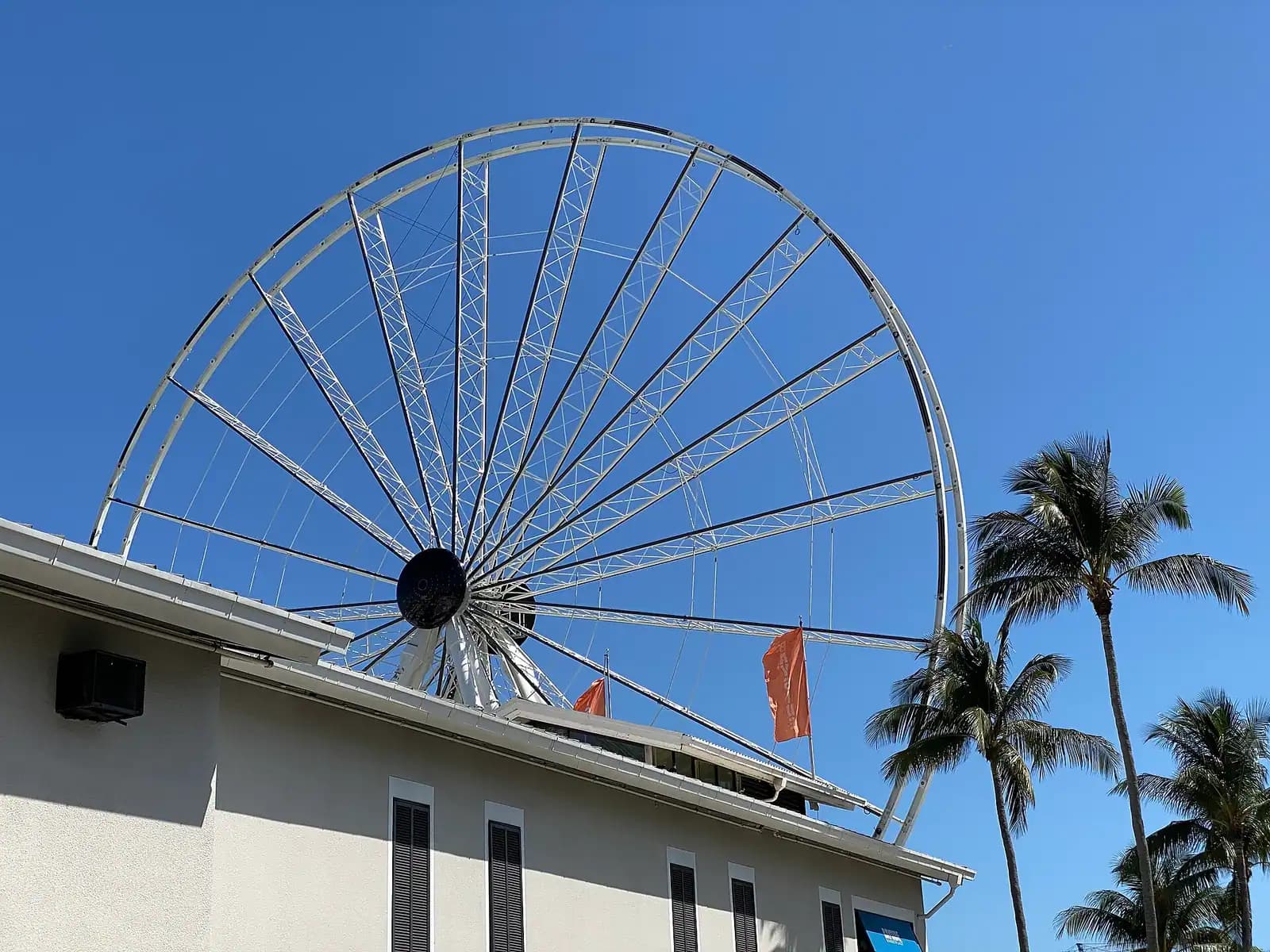
    1–3 hoursFree to enter and to walk the waterfront. Boat trips, the Skyviews observation wheel and Bayfront Park concerts are each ticketed separately.

Straight answers

Questions people actually ask

Do you need a licence to rent a jet ski in Miami?

Not a licence in the motoring sense. The Florida requirement keys off your date of birth: born from 1 January 1988 onwards, you must carry a Boating Safety Education Identification Card before taking control of anything rated ten horsepower or above, and a jet ski is well over that. Rental desks handle it with an on-site test that produces a temporary certificate good for 90 days — allow 20 to 30 minutes and turn up early. Born earlier than that and government photo ID is the only document anyone asks for.

How old do you have to be to drive a jet ski in Florida?

You must be at least 14 to operate a personal watercraft in Florida, with no exception for adult supervision, and at least 18 to rent one. A 14-year-old born after 1 January 1988 also needs the Boating Safety Education card. Passengers have no minimum age set by statute, but most Miami operators set their own, and every person aboard must wear a Coast Guard approved life jacket.

How much does it cost to rent a jet ski in Miami?

Roughly $100 to $180 an hour per machine, with two riders usually costing the same as one. Guided tours of 60 to 90 minutes typically run $120 to $220 per machine including the guide and fuel. The number that catches people out is the damage deposit, commonly $500 to $1,500 held on a credit card, plus possible fuel surcharges. Confirm both before you book.

Can you ride a jet ski at night in Miami?

No. Florida prohibits operating a personal watercraft from half an hour after sunset until half an hour before sunrise, statewide. That means a December sunset tour launches around four in the afternoon and is off the water by six, while a June one can run past eight. Any operator offering a night-time jet ski ride is offering something illegal.

Where can you jet ski in Miami?

Almost all riding happens on Biscayne Bay, launched from marinas rather than from the beach, which is prohibited in Miami Beach. The main areas are the Venetian and Star Island stretch off South Beach, the north bay from Haulover, the downtown waterfront from Bayside, and the flats off Key Biscayne. Large parts of the bay are slow-speed, no-wake or manatee zones, so most rentals are guided routes rather than free roaming.

Is parasailing in Miami safe?

It is a low-exertion, heavily regulated activity and Florida tightened its parasailing rules after a series of incidents, with requirements covering weather limits, equipment inspection and operator licensing. Flights launch and land from the boat deck, typically reach 400 to 600 feet, and last eight to twelve minutes. Operators cancel for wind and lightning. Check that your operator states its licence and insurance rather than assuming it.

Where can you kayak or paddleboard in Miami?

Oleta River State Park in North Miami is the best option: around 1,000 acres, the largest urban state park in Florida, with mangrove creeks, a protected lagoon and on-site rentals. Virginia Key has mangrove tunnels ten minutes from downtown. Matheson Hammock's enclosed atoll pool suits complete beginners. Go early, when the bay is glassy and rays and manatees are visible through the water.

Are there manatees in Biscayne Bay?

Yes, year round, with higher numbers in cooler months when they move toward warm-water refuges. That is why so much of the bay is marked as a manatee protection or slow-speed zone, and why those zones are enforced with real fines. Watercraft strikes remain a leading cause of manatee deaths in Florida. Paddlers see them most often, in the quiet mangrove edges at Oleta, Virginia Key and Matheson Hammock early in the morning.