Skip to content
Search
Menu

We earn a commission if you book through this link. You pay the same price.

Sawgrass prairie stretching to the horizon under a wide sky in the Florida Everglades with a hammock of trees in the distance

Things to Do

The Everglades, an Hour from Downtown

Last updated

Visiting the Everglades from Miami: Shark Valley, Homestead and Gulf Coast entrances compared, park fees, dry-season timing and what airboat tours really are.

The largest subtropical wilderness in the United States begins about 25 miles from downtown Miami, and most people who come to this city never see it. That is the first thing worth fixing. Everglades National Park protects roughly 1.5 million acres at the southern end of a system that once ran unbroken from Lake Okeechobee to Florida Bay, and it is one of very few places on earth carrying UNESCO World Heritage status, International Biosphere Reserve designation and Ramsar wetland listing at once. You can be standing in sawgrass with an alligator forty feet away and be back at your hotel in Brickell for dinner.

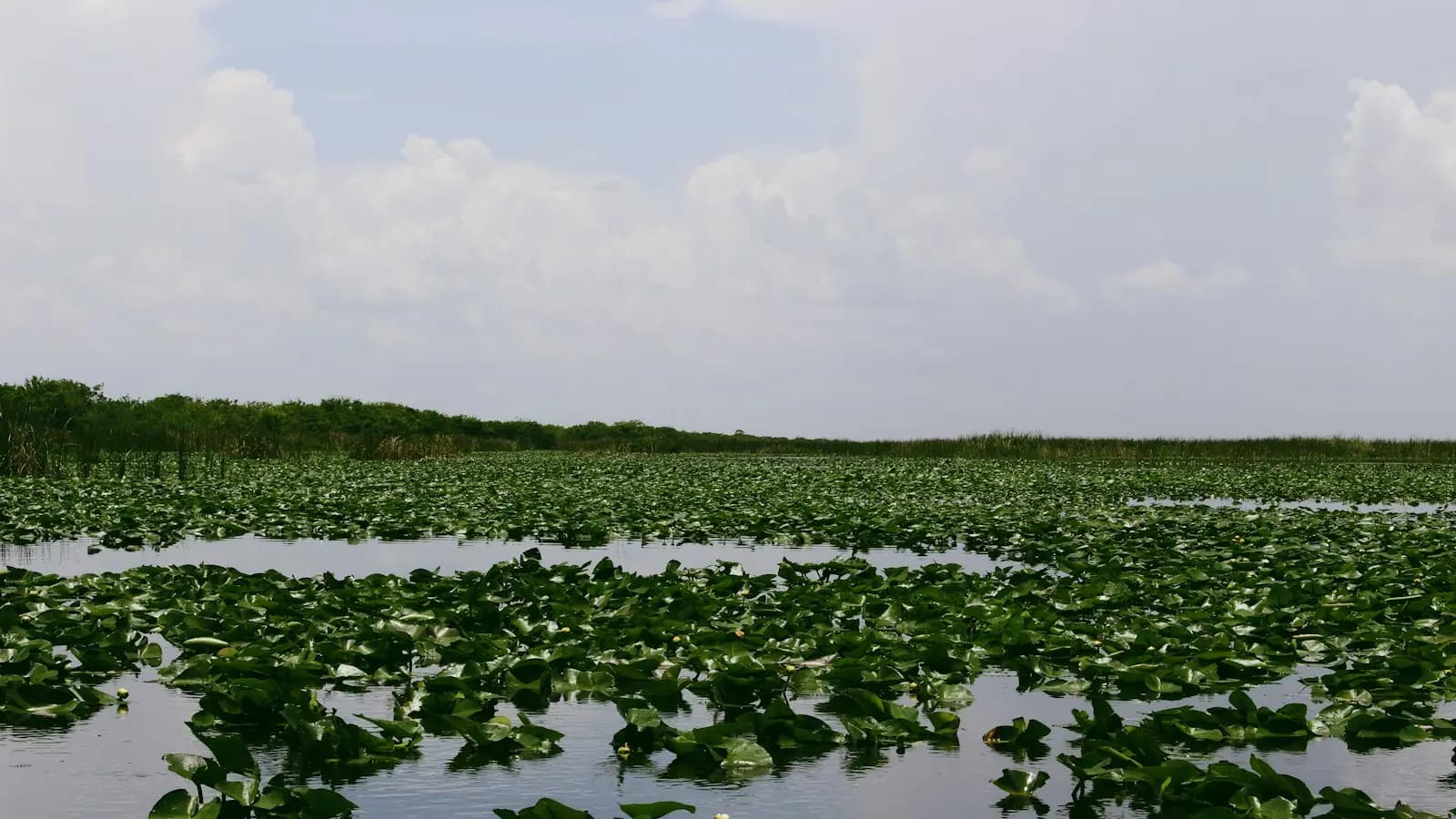
The second thing to fix is the mental image. The Everglades is not a swamp. Marjory Stoneman Douglas got the framing right in 1947 when she called it the River of Grass: a river sixty miles wide and a few inches deep, moving south across a limestone shelf at something like a hundred feet a day. Almost no gradient, almost no bank, driven by a wet season and a dry season rather than by rainfall on a mountain. Everything follows from that. Tree islands sit a few inches higher and grow hardwoods. Sloughs sit lower and hold water when everything else dries. Alligators dig gator holes that become the last water in May, which is why the dry season concentrates wildlife into places you can find.

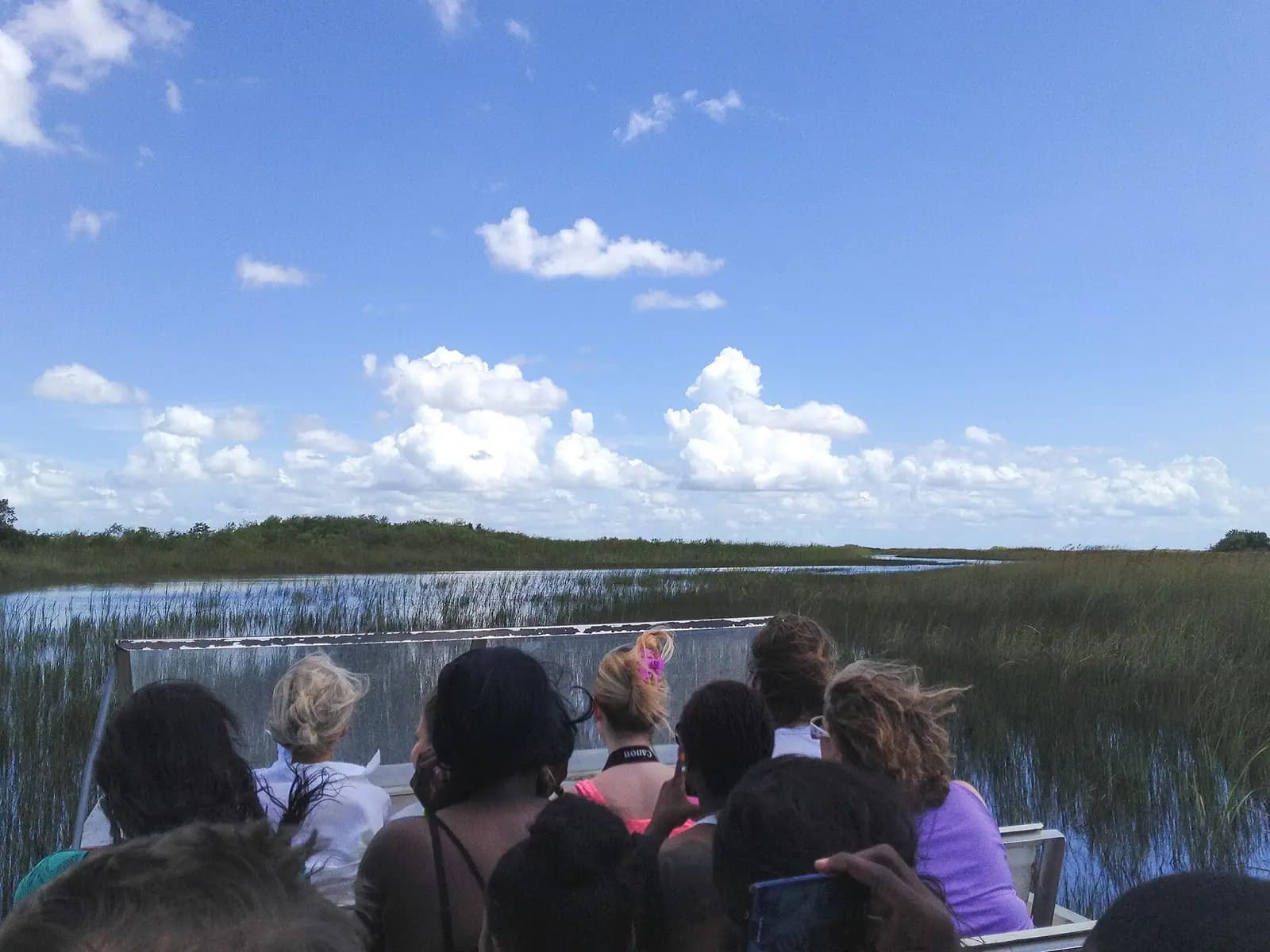
The third thing, and this is where the internet lets people down: almost every "Everglades tour from Miami" sold online is an airboat ride at a private attraction on the Tamiami Trail, US-41, not a visit to the national park. Airboats are prohibited across the overwhelming majority of Everglades National Park because of their noise and their impact on shallow habitat. Three grandfathered commercial operators along the Tamiami Trail hold concession authorisation inside the park's East Everglades addition under the 1989 expansion act, and they are the only ones. Everything else runs on Miccosukee tribal land, in Big Cypress National Preserve, or on private wetland outside the boundary. None of that makes an airboat a bad afternoon. It does mean that if you want to say you went to Everglades National Park, an airboat ticket may not qualify, and the listing will rarely say so.

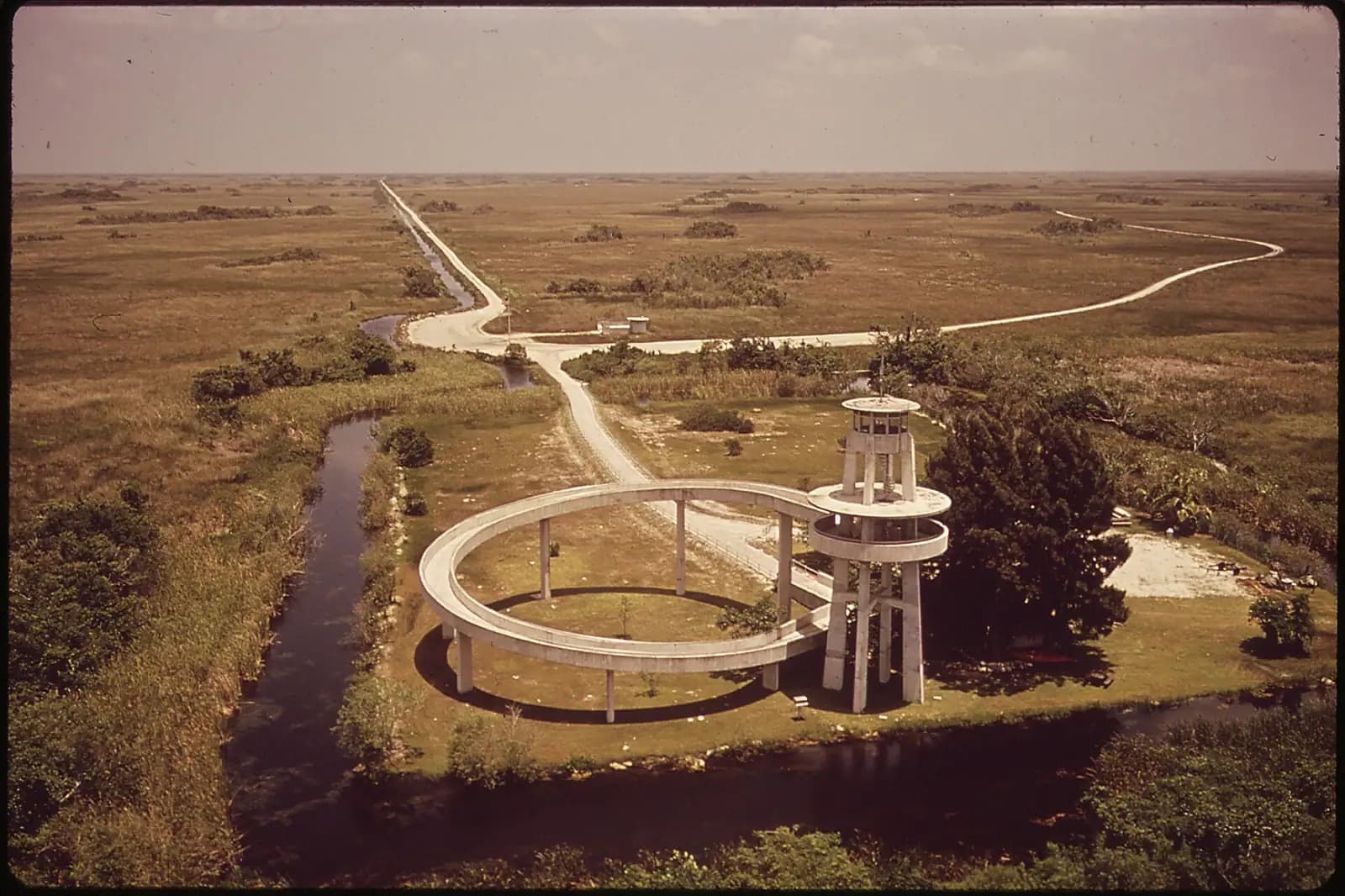
So what should you book? With half a day, Shark Valley. It sits on the Tamiami Trail 25 miles west of the city, 40 to 50 minutes on a clear run, and its 15-mile paved loop is the most reliable alligator viewing in South Florida. Ride the open-sided tram, hire a bike or walk the first mile; all three lead to a 65-foot observation tower with a 360-degree view of an ecosystem that looks like nothing else in North America. With a full day, drive to the Ernest F. Coe entrance near Homestead, walk the Anhinga Trail boardwalk at Royal Palm, then continue 38 miles to Flamingo on Florida Bay, one of the only places on earth where American alligators and American crocodiles share water.

And Biscayne National Park is the other national park on Miami's doorstep, about 95 percent of it underwater, reached from Convoy Point in Homestead. Two national parks within an hour of a major city is unusual. Two that most visitors to that city have never heard of is Miami.

Tram, boardwalk, airboat or paddle

The Shark Valley tram is a two-hour, ranger-narrated, open-sided ride around the full 15-mile loop with a stop at the observation tower. It is the highest-value thing in the Everglades for anyone who does not want to cycle in the heat. Reservations are required from December through March and it sells out; book before you drive out.

Bikes on the same loop give you the road at your own pace, and the alligators lie on the verge of it. There is no shade for most of the circuit and 15 miles in August heat is a serious undertaking. Rentals are available at the entrance.

The Anhinga Trail at Royal Palm, eight miles inside the Coe entrance, is a half-mile boardwalk over a slough and the most concentrated wildlife viewing in the park: alligators below the rail, anhingas drying their wings, herons, cormorants, softshell turtles, sometimes otters. It costs nothing beyond the entrance fee and takes 45 minutes.

Airboats are covered in full on our airboat tours page. Short version: loud, fast, fun, and mostly not in the national park.

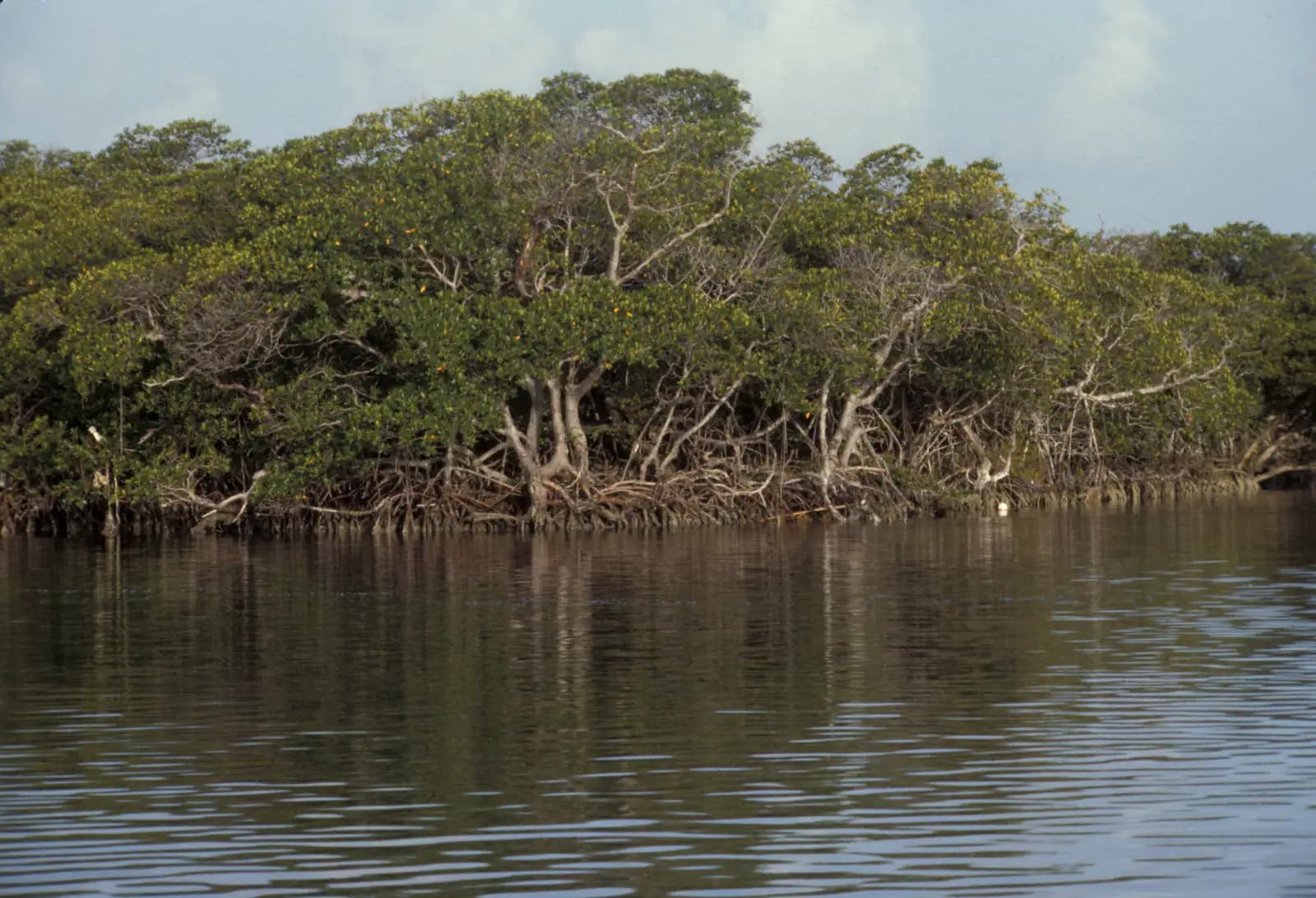
Backcountry and Florida Bay boat trips leave from Flamingo and from the Gulf Coast visitor centre at Everglades City, and they take you into mangrove tunnels and island chains you cannot reach any other way. This is where crocodiles, roseate spoonbills and manatees are most likely.

Ranger-led slough slogs are the best thing the Park Service runs here: you walk into the water in old shoes, waist deep through a cypress dome, and it changes how the place reads. Seasonal, limited, and worth arranging your day around.

Kayaking at Nine Mile Pond, Hells Bay and the Gulf Coast gives you the quiet version. Book a guide unless you can navigate mangroves competently; the trails are marked with numbered poles and people do get lost.
Dry season and wet season are different parks

When to go

This is the most important planning decision on the page, and it is not close.

Dry season, roughly December through April. Water levels drop, wildlife concentrates around the remaining gator holes and sloughs, wading birds gather in numbers, mosquitoes are tolerable and the humidity is low. Alligator sightings at Shark Valley and on the Anhinga Trail are close to guaranteed. This is also when the tram sells out, when the Flamingo road is busy and when tour prices are at their highest. Go anyway.

Wet season, roughly May through November. Afternoon thunderstorms most days, water spread across the whole system so animals disperse, and mosquitoes at a level that visitors from temperate climates consistently underestimate. Flamingo in July has a reputation among rangers that is not a joke. Trails flood. On the other hand, the sky is enormous, the thunderheads are the best show in Florida, and you will have the place to yourself.

Time of day matters more here than season for wildlife. Early morning and the last two hours of light are when animals move. Midday in the sawgrass is hot, glaring and quiet.

Mosquito reporting is official. Everglades National Park publishes a mosquito forecast by area, rated from "enjoyable" to "hysterical". Check it before a Flamingo trip. That scale exists because it is needed.

Hurricane season runs 1 June to 30 November, peaking August to October, and park roads and facilities close ahead of storms. Flamingo has been rebuilt more than once after direct hits.

What an Everglades day costs

What it costs

Bands, not quotes. Confirm before you travel; park fees are set federally and reviewed periodically.

  • Everglades National Park entrance: around $35 per private vehicle, valid seven days and at all four entrances, with lower rates for motorcycles and for individuals on foot or bicycle. An America the Beautiful annual pass covers it and also covers Biscayne and Dry Tortugas.
  • Shark Valley tram tour: roughly $30 to $35 an adult, less for children and seniors, on top of the entrance fee. Reserve December to March.
  • Bike hire at Shark Valley: around $12 to $20 for a few hours.
  • Big Cypress National Preserve: no entrance fee.
  • Guided coach day trip from Miami with an airboat: commonly $60 to $120 a person including hotel pickup, an airboat ride and a wildlife show. Read carefully whether the national park is included or whether the whole trip is at a private attraction.
  • Private or small-group guided nature tour: $150 to $400 a person for a naturalist-led day, which is a different product entirely and the one to pick if you care about birds.
  • Florida Bay or Ten Thousand Islands boat trip: roughly $40 to $100 a person for a scheduled departure.
  • Kayak rental: about $40 to $70 a day; guided paddles $90 to $180.

The cheapest good Everglades day in this list is under $50 for two people: the entrance fee, the Anhinga Trail, Pa-hay-okee, and a packed lunch. It is also one of the best.

Big Cypress, the tribes and what the water is really for

The national park is the southern third of a system, and it does not work without the rest of it. Water enters at Lake Okeechobee, moves south through the Water Conservation Areas and Big Cypress, and reaches Florida Bay — or rather, it used to. Decades of drainage canals, levees and the Tamiami Trail itself cut the flow, and the Comprehensive Everglades Restoration Plan, authorised in 2000, is among the largest ecosystem restoration projects ever attempted anywhere. Sections of the Tamiami Trail have been raised onto bridges specifically to let water pass underneath again. If you drive US-41 you will drive over one of them.

Big Cypress National Preserve covers roughly 729,000 acres north of the park and was created in 1974, in part to stop a jetport being built in the middle of it. When Congress established it, the Miccosukee, Seminole and Traditional people were guaranteed permanent rights to occupy and use the land in customary ways, along with first rights to run income-producing businesses connected to it. That legal history is why tribal airboat operations exist on this stretch of highway and why they are not a tourist conceit.

The Miccosukee Tribe of Indians of Florida has its reservation along the Tamiami Trail and runs a cultural centre, a village and airboat operations on tribal land that no outside operator may access. The Seminole Tribe of Florida holds land further north and west. Both are sovereign nations with their own governments, not an attraction, and the way to engage is to visit what they choose to open and to pay for it.

Also on this road: Shark Valley itself, the Miccosukee Indian Village, the Big Cypress Gallery of photographer Clyde Butcher at Ochopee, and the smallest post office in the United States, a converted irrigation shed at Ochopee measuring about seven by eight feet. The Tamiami Trail is a better drive than the guidebooks make it sound.

Book it

What you can book

We could not find tours matching this right now

Nothing came back for Everglades. Operators add and retire experiences constantly, so this list changes week to week. Try a broader category, or come back in a day or two.

Three entrances, three different days

How they compare

The park's entrances do not connect to each other inside the boundary. Driving between them means going back out to the highway, which takes at least an hour. Pick one per day.

EntranceFrom downtown MiamiWhat you do thereTime needed
Shark Valley (Tamiami Trail, US-41)~25 miles, 40–50 min15-mile paved loop by tram, bike or foot; 65-ft observation tower; roadside alligators at close rangeHalf day
Ernest F. Coe (Homestead)~50 miles, 60–90 minAnhinga Trail boardwalk, Pa-hay-okee overlook, Mahogany Hammock, then the 38-mile drive to FlamingoFull day
Flamingo (via Coe)~90 miles, 2 hr+Florida Bay, backcountry boat trips, crocodiles, manatees at the marina, campingFull day or overnight
Gulf Coast (Everglades City)~105 miles, 2 hrTen Thousand Islands boat trips, mangrove paddling, no sawgrass prairieFull day

A fifth option that is not the national park at all: Big Cypress National Preserve, immediately north of the park along the same Tamiami Trail, has no entrance fee, a good visitor centre, a boardwalk at Kirby Storter and the unpaved Loop Road. Cypress domes rather than sawgrass. It is the best free stop on this drive and almost nobody plans for it.

For a first visit with limited time, Shark Valley wins on every measure except solitude. For the best day in the park, Coe to Flamingo.

What to bring into the Everglades

What to bring

  • Insect repellent with DEET or picaridin, and more than you think. In the wet season, also long sleeves and long trousers in light fabric. A thermacell-style device works well on a boardwalk.
  • Water, then more water. There is no shop between the Coe entrance and Flamingo, 38 miles apart, and the Shark Valley loop has no water on it.
  • A hat and mineral sunscreen. There is no shade on the sawgrass prairie, none on the tram, and none on the tower.
  • Binoculars. This is a birding destination first and an alligator destination second. Roseate spoonbills, wood storks, snail kites and purple gallinules are all realistic sightings.
  • Closed shoes you do not mind ruining if there is any chance of a slough slog or a muddy trail.
  • A rain shell in summer. The afternoon storm is not optional and it is not gentle.
  • A full tank of fuel. Petrol stations are sparse on the Tamiami Trail west of Krome Avenue and there is none inside the park.
  • Cash for the smaller private attractions on US-41, some of which still prefer it.
  • Downloaded maps. Mobile coverage on the Tamiami Trail and the Flamingo road is patchy to absent.

Leave behind: a drone, which is prohibited in all US national parks; and any intention of feeding an animal, which is a criminal offence in Florida for alligators and a serious one.

Alligators, pythons and the rules that matter

Before you book

The Everglades is safer than its reputation, provided you behave like a guest in it.

  • Never feed an alligator. It is illegal in Florida and it is how alligators become dangerous. A fed alligator associates people with food and is usually destroyed.
  • Keep 15 feet or more from any alligator on a trail or verge, and much more from one with young. At Shark Valley they lie beside the paved loop and cyclists ride past them all day; the etiquette is to slow down, keep moving and not stop next to one.
  • Never let a small child or a dog near the water's edge. Pets are prohibited on most park trails for exactly this reason.
  • Crocodiles are here too. South Florida is the only place on earth where American alligators and American crocodiles coexist, and the crocodiles are concentrated in the brackish water around Flamingo and Florida Bay. They are shyer than alligators and no less serious.
  • Burmese pythons are established across the southern Everglades and have devastated the mammal population. You will almost certainly not see one. The state runs an annual removal challenge, and the ecosystem damage is the real story, not the risk to visitors.
  • Lightning is the genuine danger. Florida leads the United States in lightning deaths and the Everglades is a flat open plain. If a storm builds, get off the tower and off the loop.
  • Swimming is not a thing here. Not in the canals along US-41, not in the sloughs.
  • Do not drive the unpaved Loop Road in Big Cypress after heavy rain without checking conditions, and check your rental agreement before you take any car onto gravel.

On the ground

Where to go

Every place below has its own page — hours, parking, what it costs and what to expect when you get there.

  • Open sawgrass prairie stretching flat to the horizon under a tall sky of building cumulus cloud

    Nature preserve

    Everglades National Park

    A river 60 miles wide moving at the speed of a walking ant, with three entrances that do not connect to each other.

    4–10 hoursA single vehicle pass covers all three entrances for seven consecutive days. Expect somewhere in the region of $30–35 per vehicle, with lower rates for motorcycles and for arriving on foot or by bike.

  • A narrow paved road running straight through flat open wetland grass towards a distant horizon

    Trail

    Shark Valley

    A flat 15-mile loop road into open sawgrass with an observation tower at the far end and alligators lying on the verge.

    2.5–5 hoursEverglades National Park entrance pass required — typically in the region of $30–35 per vehicle, valid seven days at all three park entrances. The tram tour is a separate concessionaire ticket.

  • A small boat on flat shallow turquoise water with low green islands on the horizon
    Free

    Nature preserve

    Biscayne National Park

    A national park that is 95 percent water: mangrove shoreline, a bay, the northernmost Florida Keys and a living coral reef.

    1.5–7 hoursFree. There is no entrance fee for Biscayne National Park and parking at Convoy Point costs nothing. Boat trips, snorkelling, diving and island camping are charged separately.

  • A stone Mediterranean-revival house with arched loggias seen across a lawn under palms

    Historic site

    Deering Estate

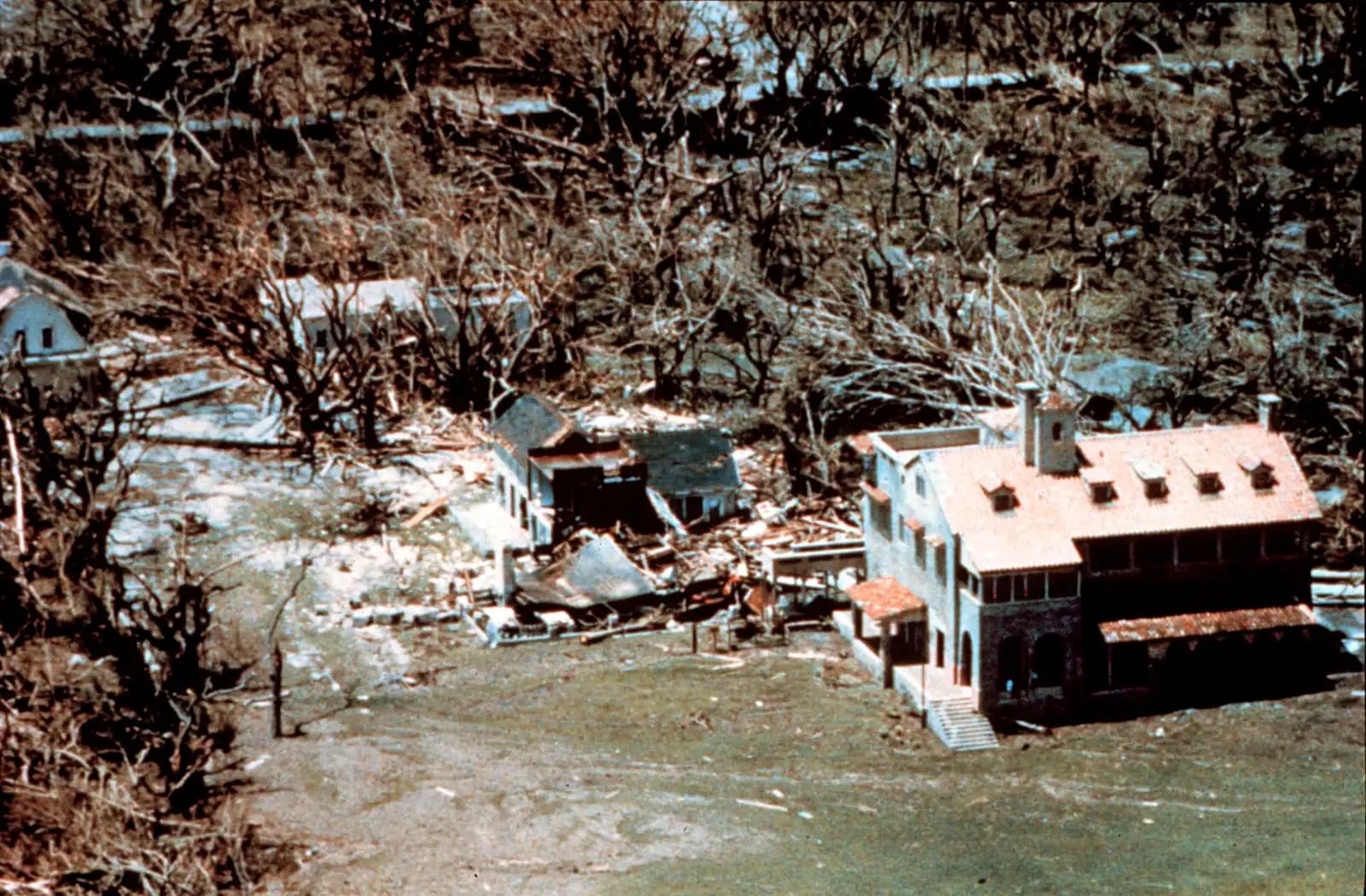
    Charles Deering's bayfront estate: an 1896 pioneer hotel, a 1922 stone house, and a Paleoindian fossil site in the pine rockland behind.

    2–4 hoursAround $18 for adults and roughly $10 for children, including the house tours and the guided nature walk when running. Young children generally free.

Straight answers

Questions people actually ask

How far is the Everglades from Miami?

Closer than most visitors expect. The Shark Valley entrance on the Tamiami Trail is about 25 miles west of downtown, roughly 40 to 50 minutes. The main Ernest F. Coe entrance near Homestead is about 50 miles south-west, 60 to 90 minutes depending on traffic. The Gulf Coast entrance at Everglades City is about 105 miles and two hours. The entrances do not connect inside the park, so pick one per day.

Do airboats go inside Everglades National Park?

Almost never. Airboats are prohibited across the great majority of the park because of their noise and their impact on shallow habitat. Three grandfathered operators on the Tamiami Trail hold concession authorisation inside the park's East Everglades addition under the 1989 expansion act, and they are the only ones. Every other airboat you can book runs on Miccosukee tribal land, in Big Cypress or on private wetland outside the boundary.

What is the best Everglades tour from Miami?

For a half day, the Shark Valley tram: 25 miles from the city, two hours, ranger-narrated, and the most reliable alligator viewing in South Florida. For a full day, drive to the Homestead entrance, walk the Anhinga Trail and continue to Flamingo on Florida Bay. For a wildlife-focused trip, book a small-group naturalist guide at first light. Coach trips with an airboat are the cheapest and the least likely to enter the park.

When is the best time to visit the Everglades?

December through April, the dry season. Water levels fall, so wildlife concentrates around the remaining gator holes and wading birds gather in numbers, mosquitoes are tolerable and the humidity drops. The wet season from May to November brings daily afternoon thunderstorms, flooded trails, dispersed animals and mosquitoes at a level visitors routinely underestimate. The park publishes its own mosquito forecast by area for good reason.

How much does it cost to enter Everglades National Park?

Around $35 per private vehicle, valid for seven days and at all four entrances. Motorcycles and individuals arriving on foot or bicycle pay less. An America the Beautiful annual pass covers entry and also works at Biscayne National Park and Dry Tortugas. The Shark Valley tram tour is a separate charge of roughly $30 to $35 an adult. Big Cypress National Preserve, immediately north, has no entrance fee.

Will you see alligators in the Everglades?

In the dry season, almost certainly. Shark Valley's paved loop and the Anhinga Trail at Royal Palm both put alligators within a few metres of the path, sometimes within one. In the wet season, water spreads across the whole system and animals disperse, so sightings are less predictable. Keep at least 15 feet away, never feed one, and keep children and pets well back from any water's edge.

Are there crocodiles in the Everglades?

Yes, and South Florida is the only place on earth where American alligators and American crocodiles live in the same waters. Crocodiles prefer the brackish and salt water at the southern end, so the Flamingo marina area and Florida Bay are where you are most likely to see one. They have a narrower snout, a paler grey-green colour, and they are considerably shyer than alligators. Give them the same distance.

Is Big Cypress worth visiting instead of the Everglades?

It is worth visiting as well. Big Cypress National Preserve sits immediately north of the park along the same Tamiami Trail, charges no entrance fee, and is cypress-dome country rather than sawgrass prairie, which looks completely different. The Kirby Storter boardwalk is excellent and takes 30 minutes. The unpaved Loop Road is a slow, rewarding drive when conditions are dry. It is the best free stop on this highway.