Short answer: rent a car for the days you are leaving the city, and skip it for the days you are not.
Miami rewards that split more than most American cities, because the things worth driving to — the Everglades, the Keys, Fairchild, the Deering Estate, Homestead — are genuinely inaccessible without one, while the things worth doing in the city are either walkable within a neighbourhood or badly served by parking.
What a car actually costs here
The rental rate is the smallest number in the equation.
Parking
Miami Beach charges by zone and by hour, with the highest rates in South Beach, and hotel valet in the same area is typically charged per night on top of the room. Municipal garages are consistently cheaper than street meters and far cheaper than valet, and they are what residents use. Residential permit zones off the main strips are enforced and towed.
Tolls
Florida's express lanes and causeways are cashless. There are no booths and no coin baskets. You either carry a SunPass transponder or the system photographs the plate and bills the registered owner.
That matters because the registered owner of a rental car is the rental company, which will bill you the toll plus a daily administrative fee for any day you incur one. Those fees vary by company and typically run a few dollars per usage day. Across a week of causeway crossings the admin fees can exceed the tolls themselves. Ask at the counter what their programme costs before you accept it.
The two causeways that toll visitors most often are the Rickenbacker, the only road to Key Biscayne, and the Venetian, the low island-hopping route into Miami Beach. Both sit in the region of one to two and a half dollars per crossing depending on how you pay. Rates change; check current ones.
Traffic
I-95 and the causeways at rush hour, US-1 through the Gables and the Grove at almost any hour, and the whole downtown grid on an arena or stadium night. Add half an hour to anything crossing the bay between 4pm and 7pm.
Two patterns catch visitors. Westbound traffic out of the beaches on a Sunday evening backs up onto the causeways themselves, so a late return from South Beach can take three times as long as the outbound trip. And event nights downtown — basketball, concerts, anything at the arena — close ramps and fill garages for several hours either side.
The free networks nobody tells you about
Miami has more free transit than almost any comparable US city, and visitors rarely use it.
| Service | Covers | Cost | Useful for |
|---|---|---|---|
| Metromover | Downtown, Brickell, Arsht Center area | Free | Getting around the urban core |
| City of Miami trolleys | Around a dozen neighbourhoods including Brickell, Wynwood, Little Havana, Coconut Grove | Free | Neighbourhood-to-neighbourhood on the mainland |
| Miami Beach trolleys | South Beach, Mid-Beach, North Beach, Collins corridor | Free | Moving up and down the island |
| Freebee | On-demand electric shuttles in several municipalities | Free, tips expected | Short hops where the trolley does not go |
| Metrorail | Airport, Downtown, Coconut Grove, Coral Gables, south to Dadeland | Low flat fare | Airport and the southern mainland |
| Brightline | MiamiCentral to Fort Lauderdale, West Palm Beach, Orlando | Paid, book ahead | Day trips north without driving |
The Metromover is the best of them: elevated, driverless, three loops over about four and a half miles with roughly twenty stops, and no ticket or gate of any kind. If you are based in Brickell or Downtown it removes most of your car use immediately.
The trolley networks are slower than they look on the map but genuinely free and air-conditioned, and both cities run live trackers.
When you definitely want a car
- The Everglades. No practical transit option. Shark Valley is about an hour; the Homestead entrance about an hour to ninety minutes.
- The Keys. Key West is roughly 160 miles down the Overseas Highway, around four hours each way without stops.
- Key Biscayne. Rideshare works but the return fare from the island at a busy hour is unpleasant.
- Fairchild, the Deering Estate, Zoo Miami, Homestead. All south, all spread out.
- Travelling with under-fours. Rideshare cars here do not come with car seats.
When you definitely do not
- A three- or four-night trip based in South Beach or Brickell.
- Any trip where the plan is one neighbourhood a day. Rideshare between neighbourhoods plus walking within them beats parking twice.
- Art Basel week in early December, when parking in Miami Beach becomes a competitive sport.
The middle path, which is what most people should do
Base yourself without a car. Use rideshare, the Metromover and the trolleys for city days. Then rent for one or two specific days from a neighbourhood branch rather than the airport — airport pickups carry concession fees that neighbourhood locations do not — and return it the same evening.
On a five-night trip that usually means two rental days instead of five, no nightly hotel parking charge, and no week of toll administration fees. It is the single biggest saving available to a visitor here, and almost nobody takes it.
A note on cycling
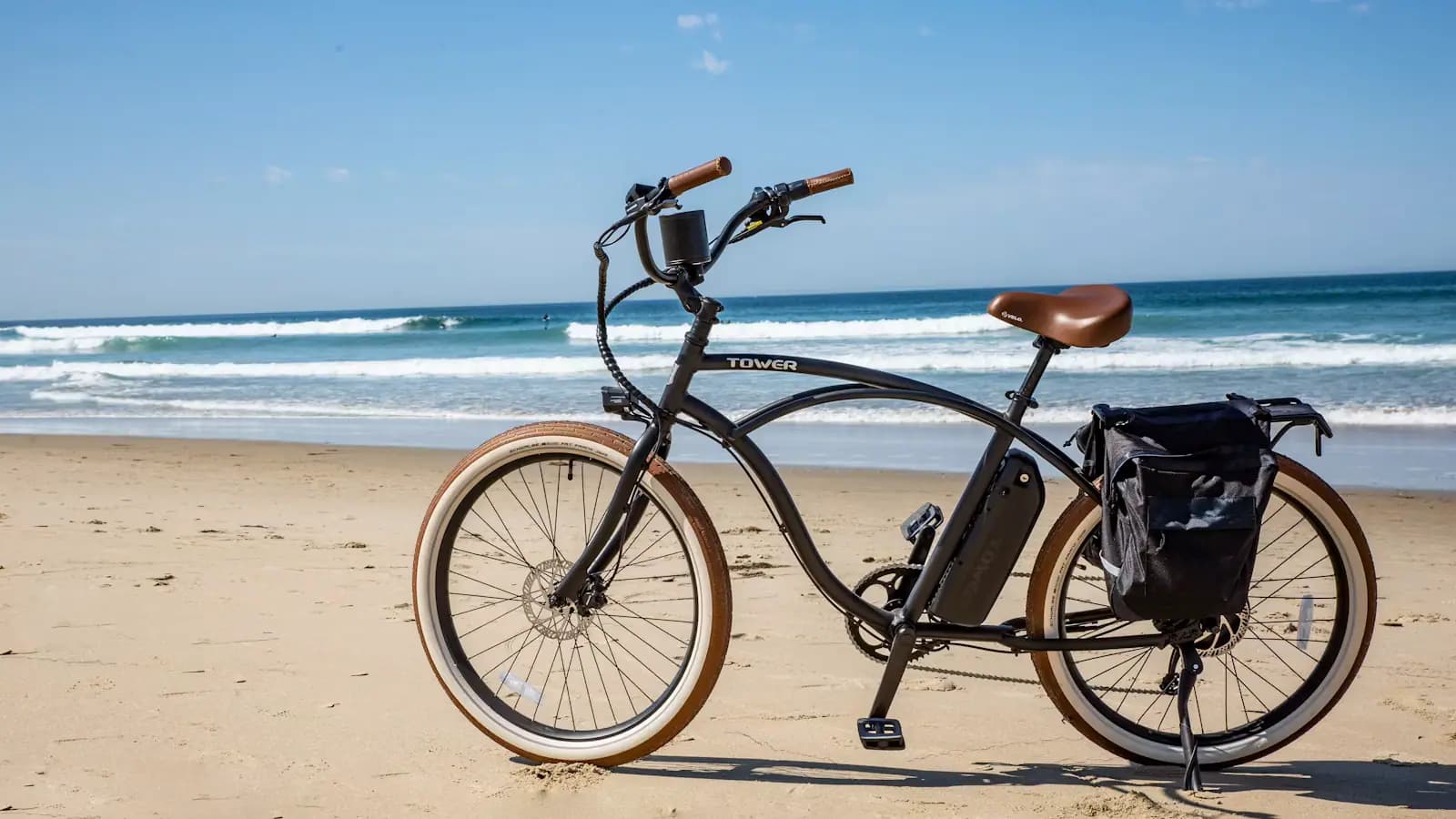
Cycling in Miami traffic is not for the nervous, with two exceptions worth making a morning of.
The Venetian Causeway is low, slow, tolled for cars and lined with residential islands, and it is the best cycling in the county. Bike share docks exist on both sides. Go early, before the heat.
The Underline, a linear park being built in phases beneath the elevated Metrorail track from the Miami River south toward Dadeland, is the other. When complete it runs about ten miles; the finished sections through Brickell and Coconut Grove are already a shaded, traffic-free route past several Metrorail stations. Check which phases are open before planning a long ride on it.
Getting in from the airport without hiring
Miami International sits about eight miles west of downtown. The MIA Mover connects the terminals to the Miami Intermodal Center, and from there the Metrorail Orange Line runs into the city and on to Coconut Grove, Coral Gables and Dadeland. It is cheap, reliable and takes a little over twenty minutes to downtown.
There is no rail link from MIA to Miami Beach. That is a rideshare or a taxi, and at rush hour it can take forty-five minutes for what looks like a short hop on the map.
Fort Lauderdale-Hollywood International is about thirty miles north and often cheaper to fly into. Brightline connects downtown Fort Lauderdale to MiamiCentral, so the practical route is a short ride from the airport to the Fort Lauderdale station, then the train.
If you are renting anyway, note that the rental car centre is at the Intermodal Center rather than at the terminals, so budget an extra twenty minutes in both directions.
Parking without getting towed
Three rules cover most of the trouble visitors get into.
Use garages, not meters. Municipal garages in South Beach, Brickell and Coconut Grove cost less per hour than street parking and far less than hotel valet, and you are not watching a clock.
Read the residential signage. Streets a block or two off the main strips in South Beach, the Grove and the Gables are permit-only for residents at posted hours, and enforcement is active. A rental plate in a permit zone is towed rather than ticketed.
Pay by app. Most municipal parking here runs through pay-by-phone systems rather than coins, including county parks such as Haulover and Crandon. Install whichever app the signage names before you need it, because mobile signal in a concrete garage is unreliable.
One extra: beach parking at popular county parks fills by mid-morning on winter weekends and on any public holiday. Arrive before ten or plan on somewhere else.
Last updated
Opening hours, ordinances and prices move with the season. We re-check this guide rather than rewrite it, and the date above is the last time someone did. How we research and correct.