Skip to content
Search
Menu

We earn a commission if you book through this link. You pay the same price.

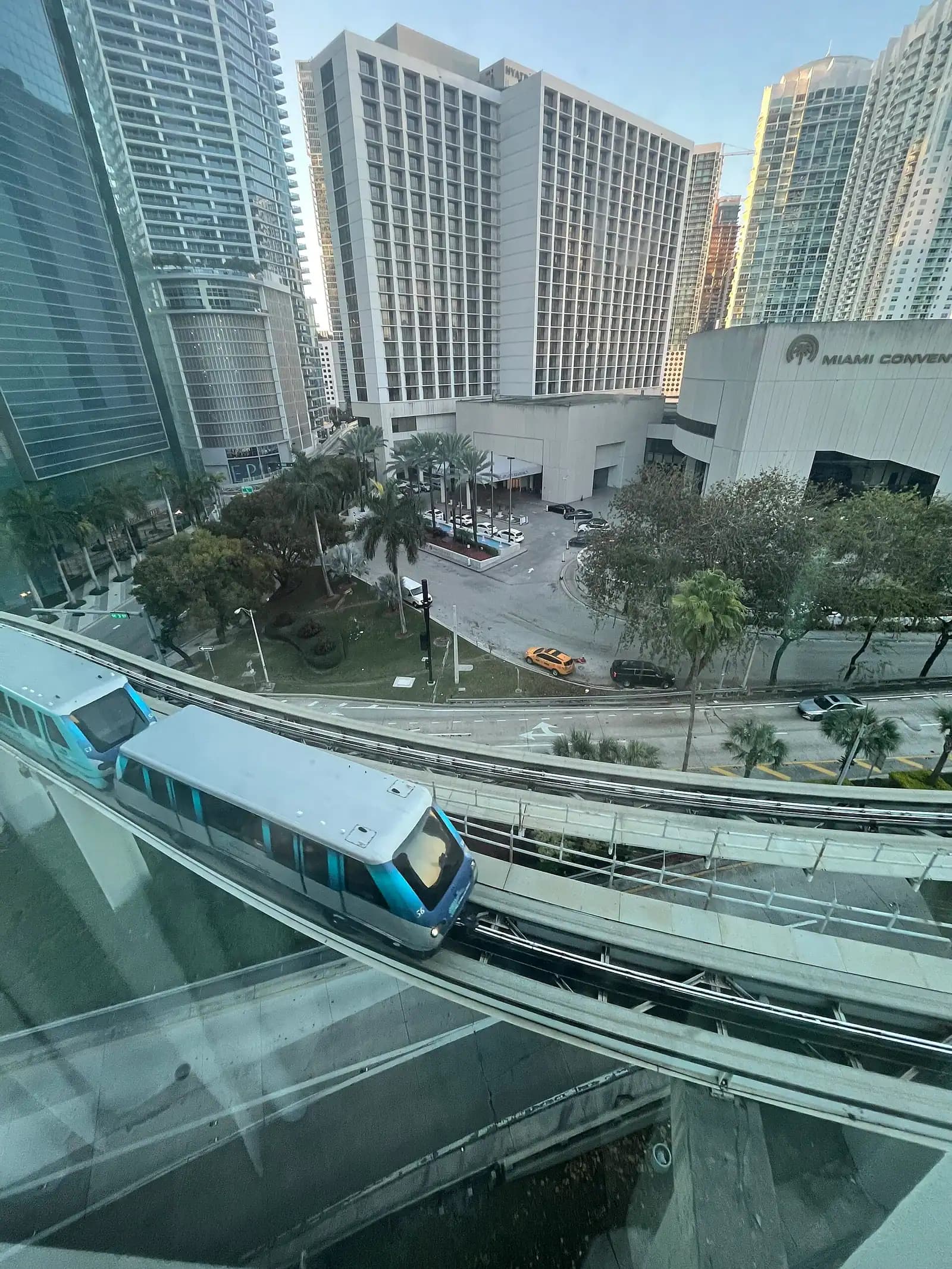
A small elevated train running on a raised concrete guideway between city office towers
Benoît Prieur

Landmark

Metromover

Last updated

Free, driverless and elevated: 21 stations and the cheapest skyline tour in Miami, provided you know which loop you are on.

Metromover is a free, driverless, elevated railway looping through downtown Miami, Brickell and the Omni district, and it is the single most useful thing a visitor to central Miami can learn about. It costs nothing. There is no ticket, no tap, no gate — you go up the escalator and get on.

It is also, accidentally, a very good ride. The guideway runs two or three storeys up, threading between office towers, over the Miami River, past the bay. The cars have no driver, which means the front window is a seat rather than a cab. Sit at the very front, going anticlockwise round the Inner Loop, and you get a slow, free, air-conditioned tour of downtown at the exact height where the architecture makes sense.

The system is about 4.4 miles across 21 stations, arranged as three loops. The Inner Loop circles the downtown core. The Omni Loop runs north to the Adrienne Arsht Center and the Omni district. The Brickell Loop runs south over the river into the financial district. Understanding which loop you want is the only skill involved, and getting it wrong just means a longer, still free, ride.

It opened in 1986 as the downtown loop, gained the Brickell and Omni extensions in 1994, and shed its small flat fare in the early 2000s.

What it reaches, for a visitor: the Pérez Art Museum and Frost Science at Museum Park, Bayside Marketplace, the Freedom Tower, the Arsht Center, the Kaseya Center, the Riverwalk, Brickell City Centre, Government Center for Metrorail, and the Overtown Lyric Theatre district.

What it does not reach: Miami Beach. There is no rail link of any kind between the mainland and the beach. That is one of the defining facts of getting around this city, and nobody tells you until you are standing on a platform with a hotel booking in South Beach.
Getting there and parking

Metromover stations are spread across downtown Miami, Brickell and the Omni district, so the nearest one is rarely far if you are already in the central city. There are no gates and no tickets: go up the escalator or lift to the platform and board.

From Metrorail, change at Government Center or at Brickell — both are direct interchanges.

From Miami International Airport, take the MIA Mover to the Miami Intermodal Center, then Metrorail to Government Center, then Metromover. Roughly 45 minutes end to end.

From Miami Beach, there is no rail connection. Take a bus across the MacArthur or Julia Tuttle Causeway to downtown and pick up the Metromover there, or take a rideshare.

From Brightline, MiamiCentral station is a short walk from the Metromover at Government Center and from several downtown stations.

If you are driving into downtown, the sensible pattern is to park once in a garage and use the Metromover for everything else.

The three loops, and which one you want

  • Inner Loop. A tight circuit of the downtown core: Government Center, Miami Avenue, Bayfront Park, College/Bayside, First Street, Knight Center, Riverwalk. This is the one to ride for the sake of riding. Short, frequent, and the most visually interesting because the guideway runs closest between buildings.
  • Omni Loop. North from downtown through Park West to the Adrienne Arsht Center and the School Board station, passing the Freedom Tower, Museum Park (for the Pérez Art Museum and the Frost Science Museum) and the Kaseya Center. This is the culture loop.
  • Brickell Loop. South across the Miami River into Brickell: Fifth Street, Eighth Street, Tenth Street/Promenade, Financial District, Brickell. The river crossing is the best thirty seconds in the system, and Brickell station connects to Metrorail.

Reading the platform. Trains are labelled by loop, and at shared stations several loops use the same or adjacent platforms. Check the destination on the car before you board. If you get it wrong, stay on — every loop returns to the downtown core.

Frequency. Every few minutes at busy times, longer in the evening. Occasionally the system runs reduced service with loops combined or one loop suspended; screens and announcements will say so.

Riding it as a sightseeing trip

Treat this as a free hour and it repays the time.

The route to ride: board at Brickell or Financial District, take the Brickell Loop north across the river — the crossing gives you the working river, the bascule bridges and the skyline at once — change to the Inner Loop in the core, then pick up the Omni Loop north past the Freedom Tower and Museum Park to the Arsht Center. Ride it back. About an hour, no charge.

Sit at the front. There is no driver's cab. The front window is the whole point and locals leave it free more often than you would expect.

What you see from up there: the geometry of Brickell's towers, the river with ships on it, Bayfront Park, the port and the cruise terminals across the water, the Freedom Tower framed against newer glass, and the odd juxtapositions of Miami's downtown — a 1920s bank front at the foot of a 60-storey residential tower.

When to ride: avoid weekday rush hours, when it is full of commuters and you will not get a window. Mid-morning and mid-afternoon are ideal. Evening is good for lights but some stations feel emptier.

Photography. The window glass is often scratched or grimy; hold the lens right against it.

Using it as actual transport, and its limits

It is free, it is frequent and it is genuinely useful for getting around the core without a car. It is also slow, and it does not go where a lot of visitors want to go.

What it does well. Downtown to Brickell. Downtown to the Arsht Center or Museum Park. Anywhere along the loops to Government Center for the Metrorail, which runs south to Coral Gables, Coconut Grove, Dadeland and north to the airport via a connector. Bayside and the port area. Short hops in heat or rain that would be miserable on foot.

What it does not do.

  • It does not go to Miami Beach. Nothing on rails does. Use a bus across the causeway, the free trolley once you are there, or rideshare.
  • It does not go to Wynwood, the Design District, Little Havana or Coconut Grove. Metrorail reaches Coconut Grove and Coral Gables; the rest need a bus, a rideshare or a trolley.
  • It does not go to the airport directly — change to Metrorail at Government Center for the airport connection.

Reliability. Lifts and escalators at individual stations go out of service regularly, which matters if you are using a wheelchair or carrying luggage. Stations are open-air and hot in summer. The vehicles themselves are air-conditioned.

Safety. Ordinary city awareness. The system is busy by day and quieter late at night, particularly at the northern and southern ends.

Tours that visit Metromover

Operators run these trips past Metromover, or stop there as part of a longer route. We list what the booking data supports — not everything that mentions the name.

Some links below go to Viator, our booking partner. We earn a commission on bookings made through them — at no extra cost to you, and with no influence on what we recommend.

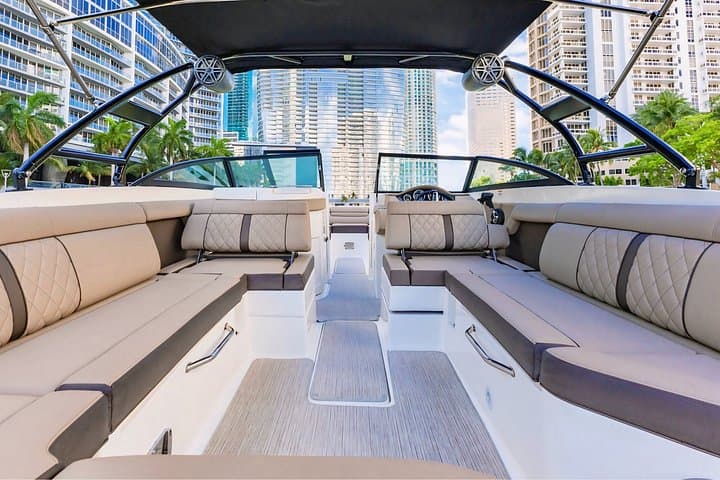
Private and small-group departurespriced per boat or per vehicle, not per person

Near Metromover

Straight-line distances, so allow more on the road — the island is long and has one main parkway.

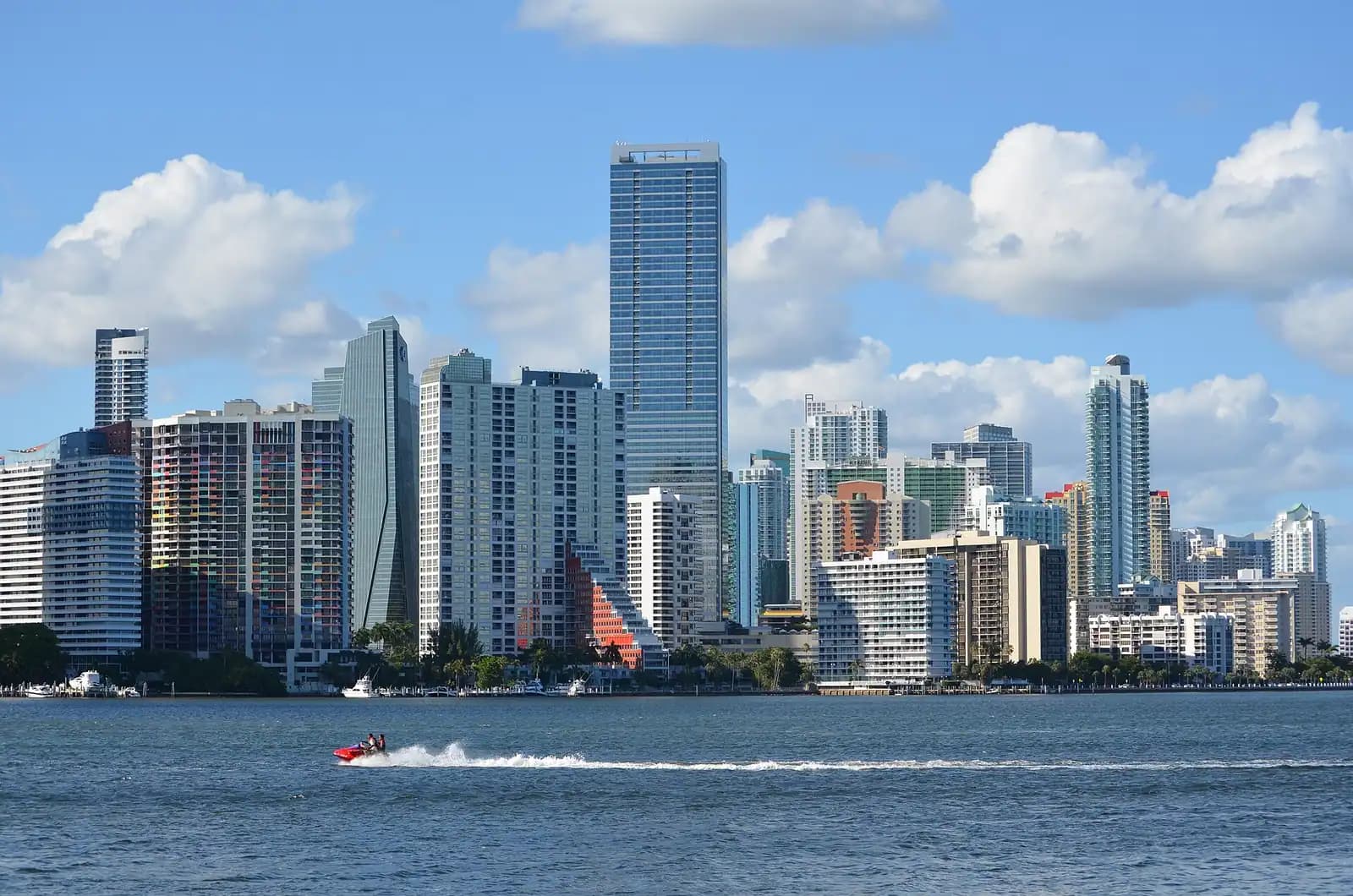
  • A dense cluster of downtown towers seen across water at the end of the day
    Free

    Neighbourhood

    Downtown Miami

    The original Miami: a railway terminus that became a city in 1896, now a downtown of towers, museums and a free elevated railway.

    3–8 hoursFree to walk, and the Metromover that connects it costs nothing. Museums, the Freedom Tower galleries, bay cruises and events are ticketed separately.0.2 mi away

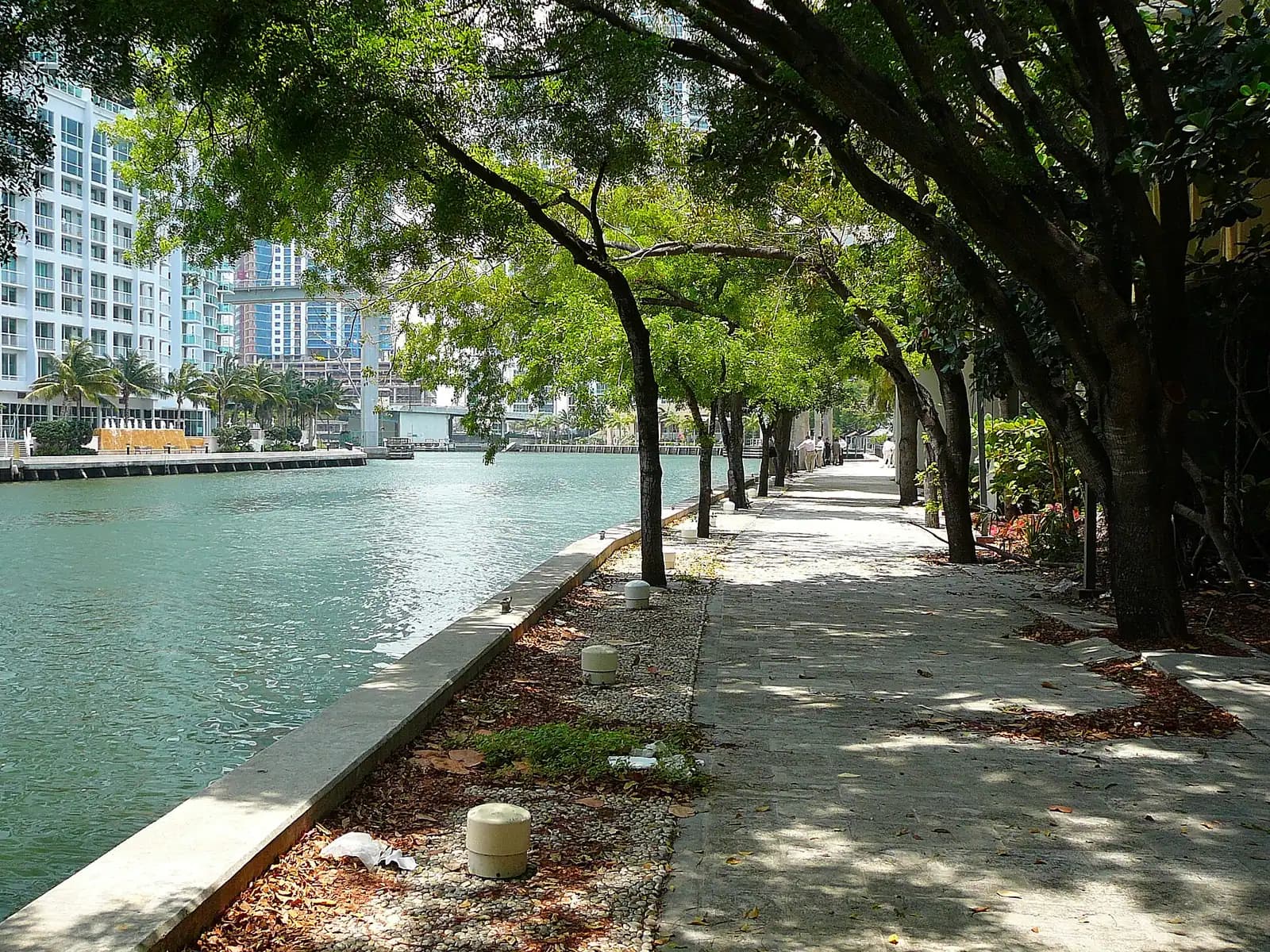
  • A narrow urban river running between city towers with a drawbridge crossing it
    Free

    Trail

    Miami Riverwalk

    The short, busy, unglamorous river Miami was built on — freighters, drawbridges and a 2,000-year-old circle cut into the bedrock.

    1–2.5 hoursFree. The Riverwalk and the Miami Circle site are both public and open to the street.0.3 mi away

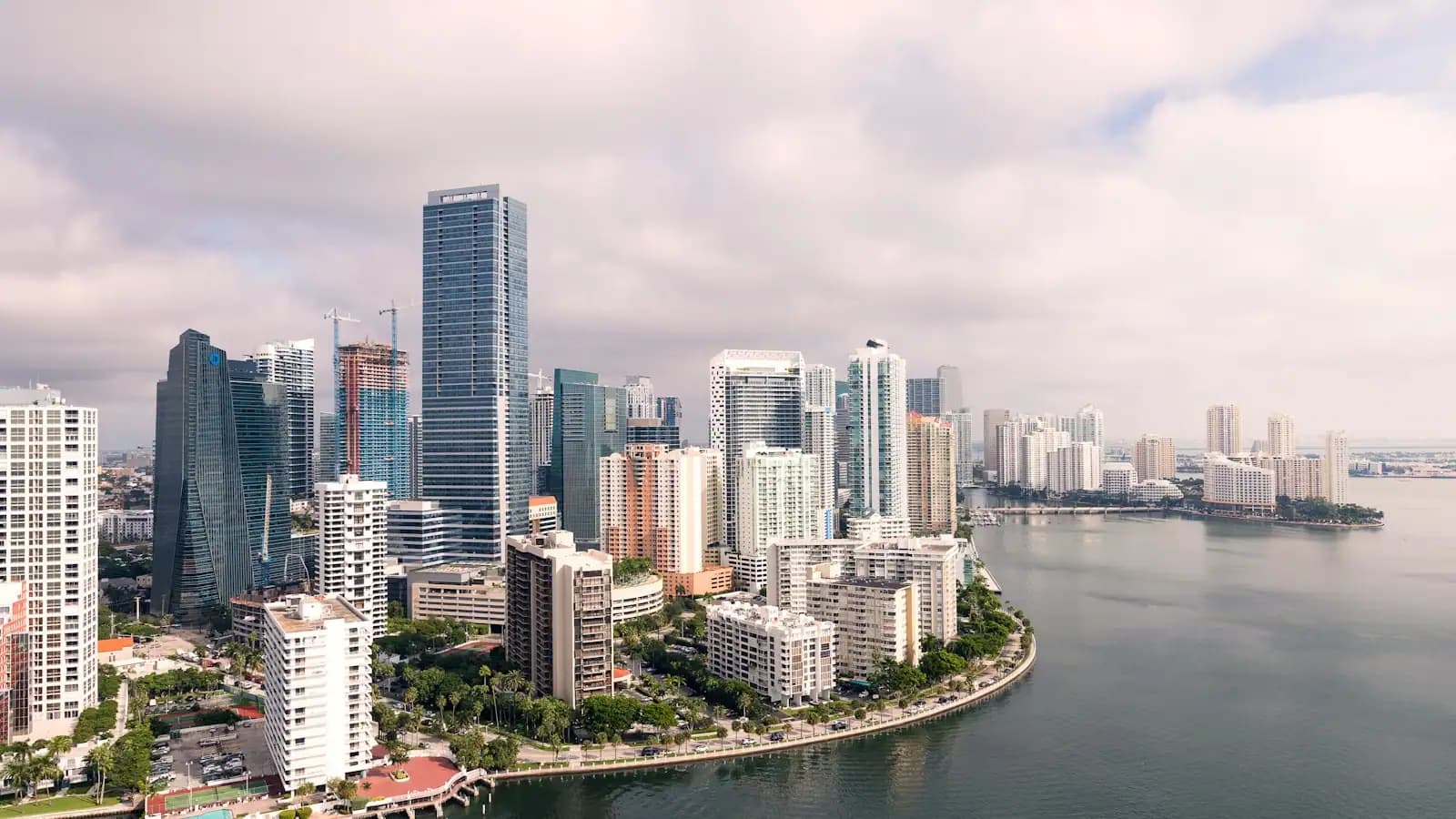
  • Glass residential and office towers rising above a tree-lined street in Miami's Brickell district
    Free

    Neighbourhood

    Brickell

    Miami's most walkable neighbourhood: towers, a free elevated train, and a two-thousand-year-old Tequesta site at the river mouth.

    1.5–5 hoursFree. Walking the district, riding the Metromover and visiting the Miami Circle all cost nothing.0.9 mi away

  • Boats moored at a downtown marina with a city skyline of towers rising behind
    Free

    Shopping

    Bayside Marketplace

    Downtown Miami's bayfront mall, best understood as the dock most Biscayne Bay cruises leave from rather than as somewhere to shop.

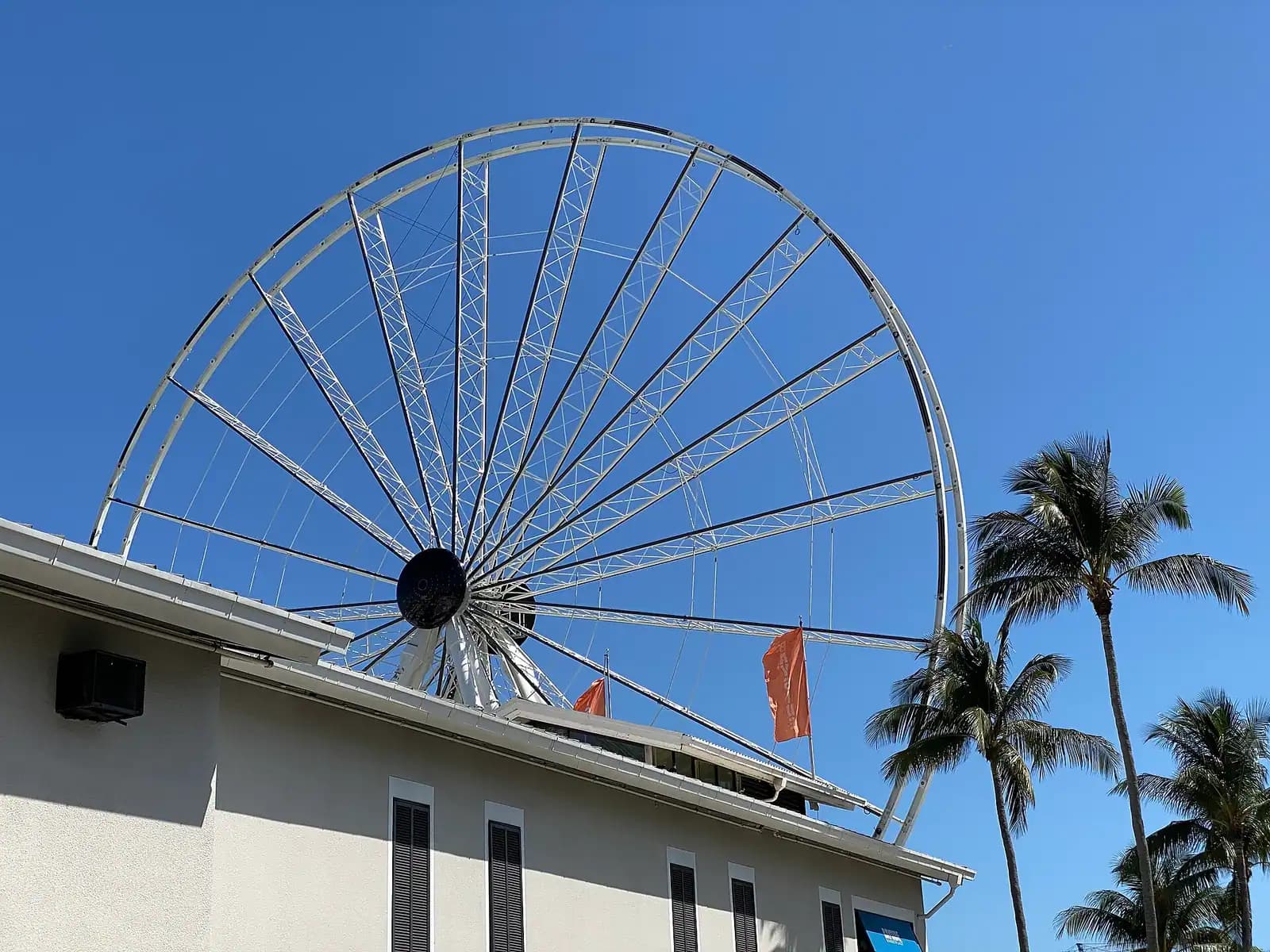
    1–3 hoursFree to enter and to walk the waterfront. Boat trips, the Skyviews observation wheel and Bayfront Park concerts are each ticketed separately.0.8 mi away

Metromover: common questions

Is the Miami Metromover really free?

Yes, completely, at every station and at every hour it runs. There are no gates, tickets or taps — you take the escalator or lift up to the elevated platform and board. The small flat fare it once charged was dropped in the early 2000s. Connecting services are not free: Metrorail and Metrobus both require payment by transit card or contactless.

Does the Metromover go to Miami Beach?

No, and neither does anything else on rails. There is no rail connection at all between mainland Miami and Miami Beach — a fact that catches out a great many visitors who have booked a hotel in South Beach. To cross, take a Metrobus over the MacArthur or Julia Tuttle Causeway, or a rideshare. Once you are on the beach, the free Miami Beach trolley circulates locally.

How long does it take to ride the whole Metromover?

About an hour to cover all three loops with the changes, which makes it a genuinely good free sightseeing hour. The system is roughly 4.4 miles across 21 stations. A single loop takes ten to fifteen minutes. If you only have time for one, take the Brickell Loop for the river crossing and the towers, then the Inner Loop through the downtown core.

What can you reach on the Metromover?

The Pérez Art Museum Miami and the Frost Science Museum at Museum Park, Bayside Marketplace and the bayfront, the Freedom Tower, the Adrienne Arsht Center, the Kaseya Center, the Miami Riverwalk, Brickell City Centre and the Financial District, the Overtown Lyric Theatre area, and Government Center for Metrorail. It does not reach Wynwood, the Design District, Little Havana or Coconut Grove.

Is the Metromover worth riding just for the view?

Yes. The guideway runs two or three storeys up between office towers and across the Miami River, and because the trains are driverless the front window is a passenger seat. Sitting there for a loop gives you a slow, free, air-conditioned tour of downtown at the height where the architecture reads properly. Ride mid-morning or mid-afternoon, when you can actually get that seat.