Skip to content
Search
Menu

We earn a commission if you book through this link. You pay the same price.

The east facade of an Italianate villa facing across formal terraces to open water
Daderot

Historic site

Vizcaya Museum & Gardens

Last updated

A 1916 Italian villa built on the edge of a mangrove shore, with formal gardens running down to a carved stone barge in Biscayne Bay.

Photo: DaderotPublic domain

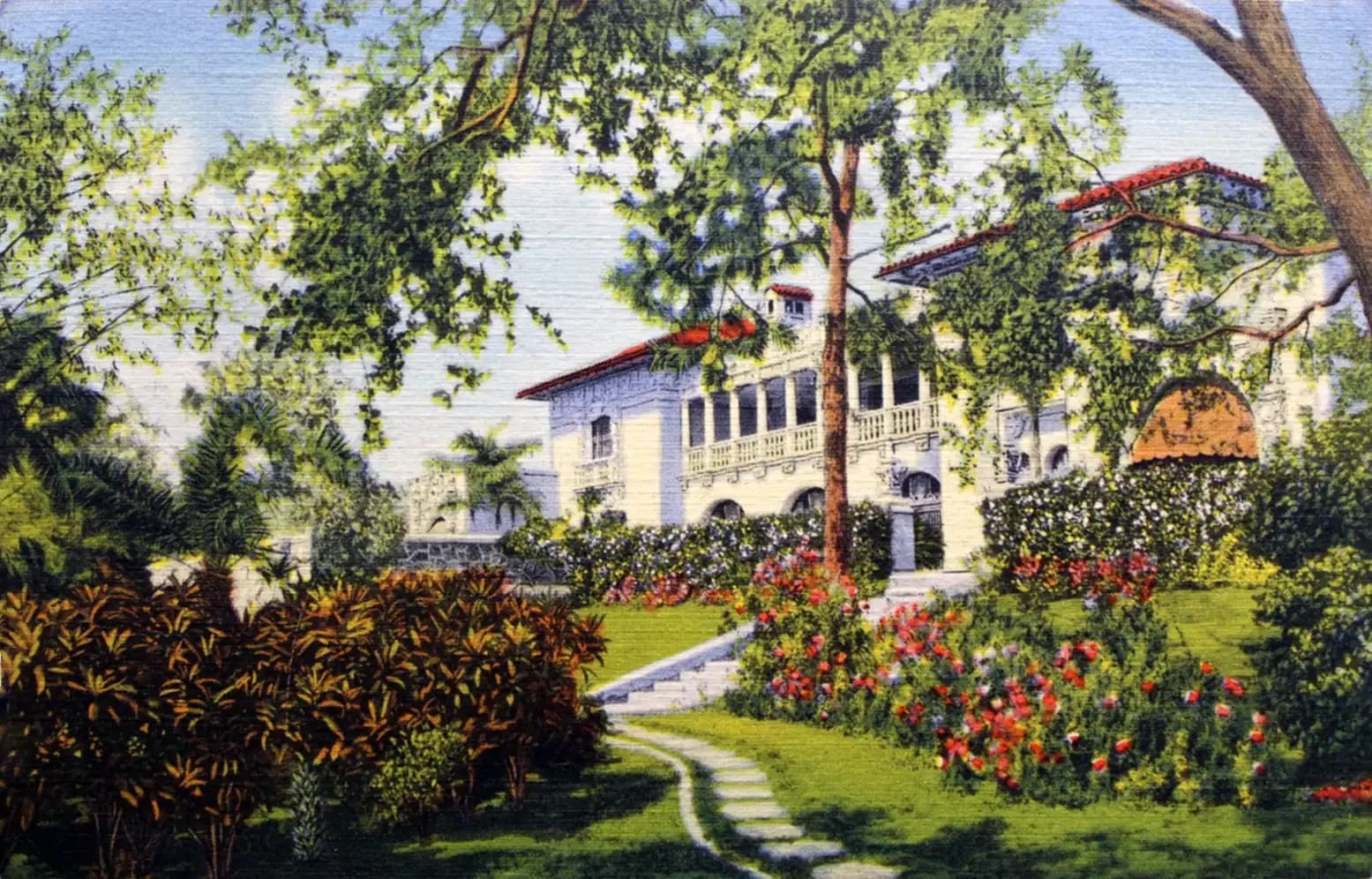
Vizcaya was finished in 1916, which in Miami terms is almost prehistoric. The city was twenty years old, the land boom had not yet happened, Coral Gables and Miami Beach did not exist in any recognisable form, and James Deering — vice-president of International Harvester, wintering south for his health — built a seventy-room Italianate villa on a mangrove shoreline south of the Miami River.

The result is stranger and better than "rich man's mansion" suggests. Deering's decorative director, Paul Chalfin, bought whole rooms in Europe — ceilings, panelling, chimneypieces, doors — and the architect F. Burrall Hoffman assembled a house around them. The interiors therefore run through several centuries of Italian, French and Spanish work in the space of a single corridor, which sounds like a mess and is in fact coherent, because the organising idea was a villa that had been lived in and altered for four hundred years. Landscape architect Diego Suarez laid out the formal gardens to the south, working with the problem that Miami has no hills, a high water table, and light far harsher than the Veneto.

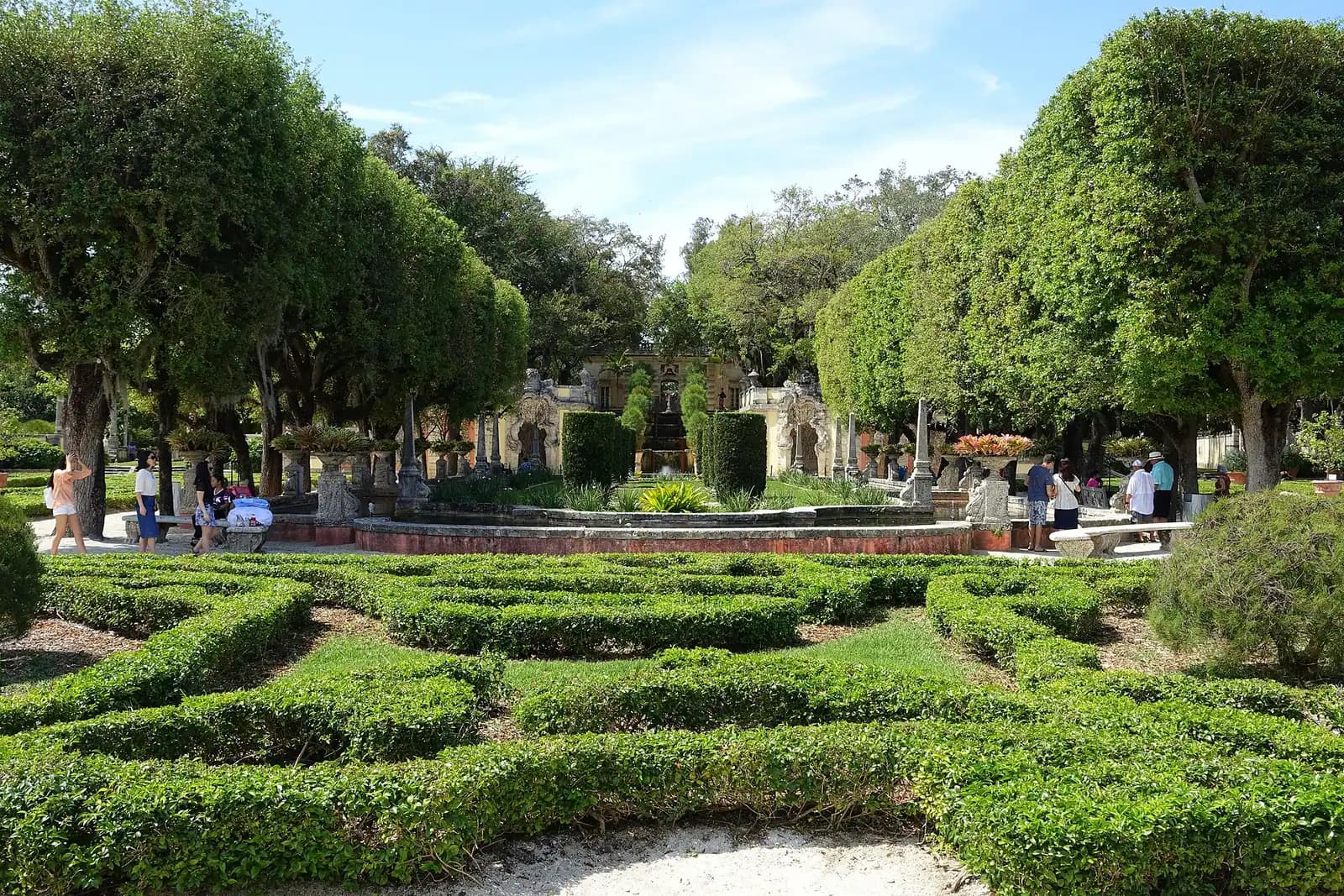
The gardens are the reason to allow real time here. They are terraced, hedged, and worked in coral rock — oolitic limestone quarried on site — with a theatre garden, a secret garden, a maze mount and a long basin. Beyond them the ground is deliberately left as subtropical hammock, so you can walk from clipped parterre into native forest in a minute. Out in the bay sits the Stone Barge, a carved breakwater shaped like a ship, with sculpture by A. Stirling Calder facing the house across the water.

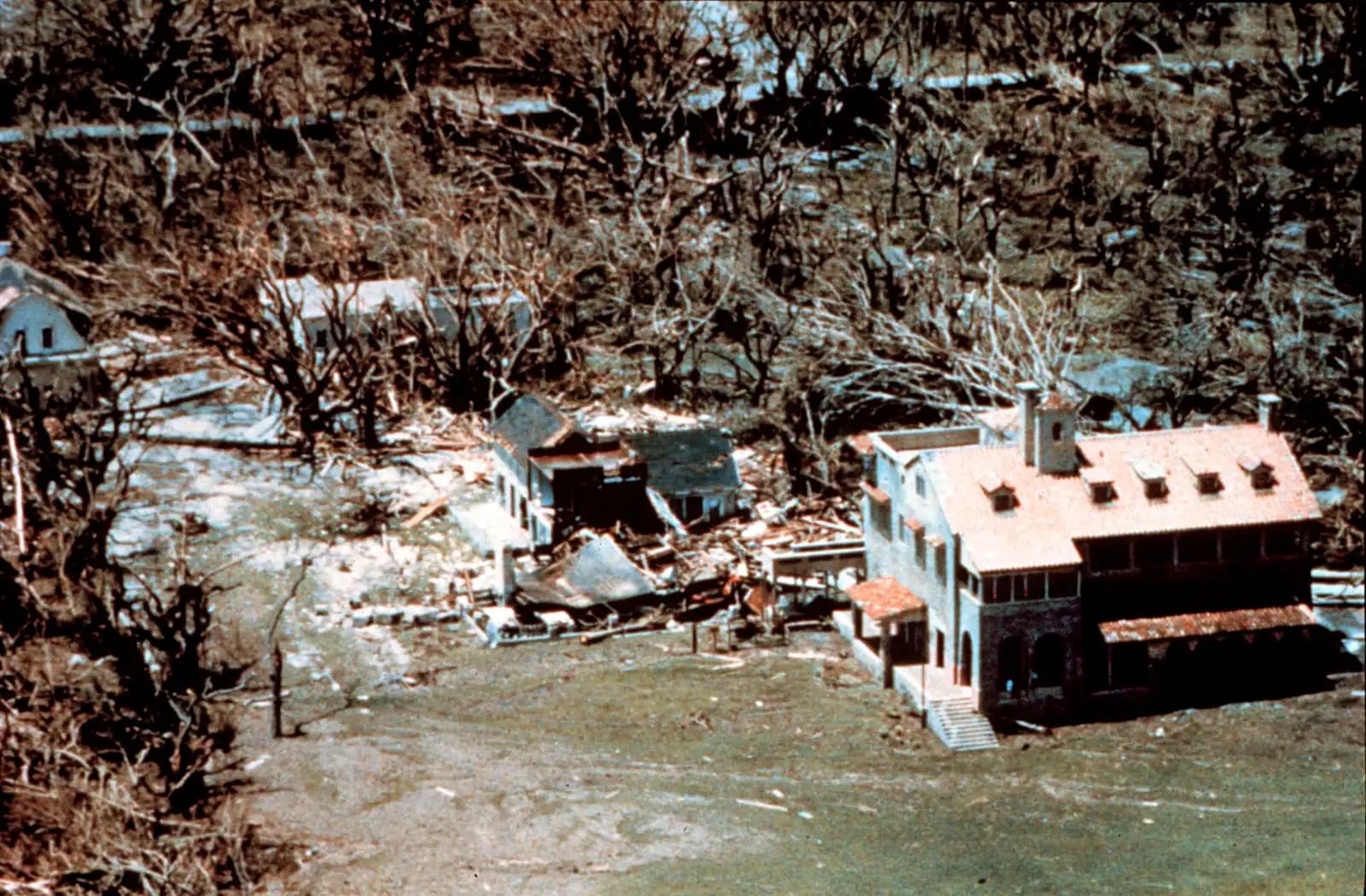
It is a National Historic Landmark, and it is also a building on a shoreline in a warming, storm-prone city. Hurricane Irma pushed water through the ground floor and across the gardens in 2017. Restoration is continuous and visible, and some areas are closed on any given day.

Allow two to three hours, go early, and do the gardens before the sun is high.
Getting there and parking

Vizcaya sits on South Miami Avenue between Brickell and Coconut Grove, on the bay side of the road.

Metrorail is genuinely the easy option. The Vizcaya station on the Metrorail Green and Orange lines is a short signposted walk from the entrance — one of very few Miami attractions you can reach on rail without a connection. From downtown or Brickell it is a few minutes; the free Metromover connects to Metrorail at Government Center and Brickell.

Driving, there is a paid car park on site off South Miami Avenue. It is not large and fills on weekend mornings in winter. South Miami Avenue itself is busy and the turn is easy to miss southbound.

Rideshare drops at the visitor entrance. Roughly ten minutes from Brickell, fifteen from downtown, thirty to forty-five from South Beach.

Cycling along South Miami Avenue and the Underline path is feasible from Brickell, though traffic on this stretch is fast.

Coconut Grove village is about ten minutes further south, which makes an obvious pairing for the rest of the day.

Inside the house: rooms bought whole

The self-guided route through the main floor takes most people forty-five minutes to an hour, and it rewards slowing down at the joins between rooms rather than at the furniture.

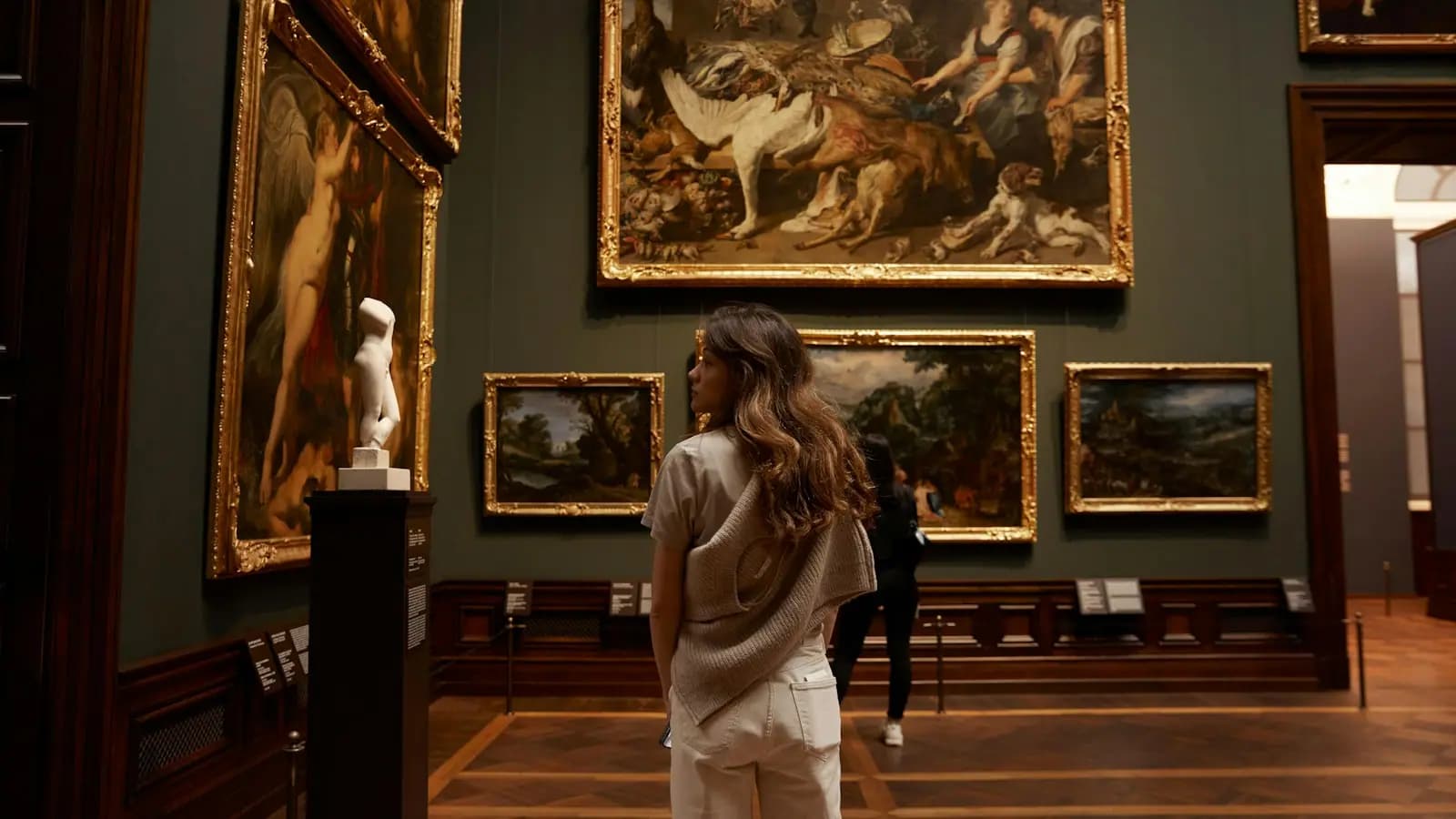
Chalfin's method was acquisitive on an industrial scale. Ceilings from Italian palazzi, a Rococo drawing-room interior, Neoclassical panelling, Renaissance doorways — bought, shipped and fitted into a steel-and-concrete house designed around them. Look for the seams. The trick of the place is that it pretends to four centuries of accretion while being a single commission delivered in three years.

Practical modernity is hidden throughout and worth spotting: Vizcaya had a telephone exchange, elevators, central vacuum, refrigeration and its own generating plant at a time when much of Miami had none of that. The estate was substantially self-supporting, with a farm village across South Miami Avenue that grew its food.

The courtyard at the centre was originally open to the sky and now carries a glass roof, added in the 1980s to allow climate control. Purists object; the collection survives.

Photography without flash is generally permitted in the house. Tripods, large bags and food are not. Rooms close for conservation and filming without much notice, so treat any particular room as a bonus rather than a promise.

The gardens, the hammock and the Stone Barge

Allow at least an hour outside, and more if the weather is reasonable.

  • The formal gardens run south from the house: a central basin, terraces cut in coral rock, a theatre garden framed by hedges, a secret garden, and the Mound with its grotto beneath. The scale reads as European; the plant material is emphatically not, because most Mediterranean garden species will not survive a Miami summer.
  • The Stone Barge sits offshore directly east of the house — a carved limestone breakwater in the form of a ship, with figures by A. Stirling Calder, father of Alexander Calder. It has taken heavy weather over a century and its condition is a long-running restoration project. You view it from the terrace, not from a boat.
  • The native hammock on the north and east edges is left as subtropical forest: gumbo limbo, live oak, mangrove fringe on the shoreline. It is shaded and generally empty.
  • The Village across South Miami Avenue held the estate's working buildings and is open on a separate footing with its own programming.

Wear something you can walk in. The coral rock paths are uneven, there are steps between terraces, and there is very little shade in the formal sections.

Tickets, Tuesdays and the practical stuff

Closed Tuesdays. Vizcaya opens Wednesday through Monday, generally 9:30am to 4:30pm, with last entry well before closing. It also closes on Thanksgiving and Christmas Day. Turning up on a Tuesday is the single most common mistake made here.

Admission has recently sat at around $25 for adults, with a reduced rate for children roughly 6 to 12 and free entry for under-6s. Discounts exist for students, seniors, military and Miami-Dade residents. Prices change; verify on the official site before you go.

Book ahead. Timed entry is standard and weekend slots do sell out, particularly in the dry winter season and around holidays.

Photography. Personal photography is welcome. Professional and commercial shoots, including engagement and quinceañera sessions, require a paid permit arranged in advance, and staff do enforce it — this is one of Miami's most photographed locations and the rules exist for a reason.

No food or drink beyond water in the house or gardens. There is a café near the entrance.

Storms close it. Vizcaya shuts for hurricane warnings and reopens after damage assessment, which can take days. During hurricane season, check the day before.

Why a house from 1916 matters in Miami

Miami erases itself with unusual enthusiasm. The city incorporated in 1896, boomed catastrophically in the mid-1920s, was flattened by the 1926 hurricane, boomed again after the war, and has been rebuilding over itself ever since. Buildings from before the boom are rare, and buildings of this quality from before the boom are essentially singular.

Vizcaya is therefore a reference point. When Coral Gables' developer George Merrick mandated Mediterranean Revival across his city a few years later, and when Miami Beach's hoteliers built their own version of European grandeur, they were working downstream of ideas Vizcaya had already made concrete on this shore.

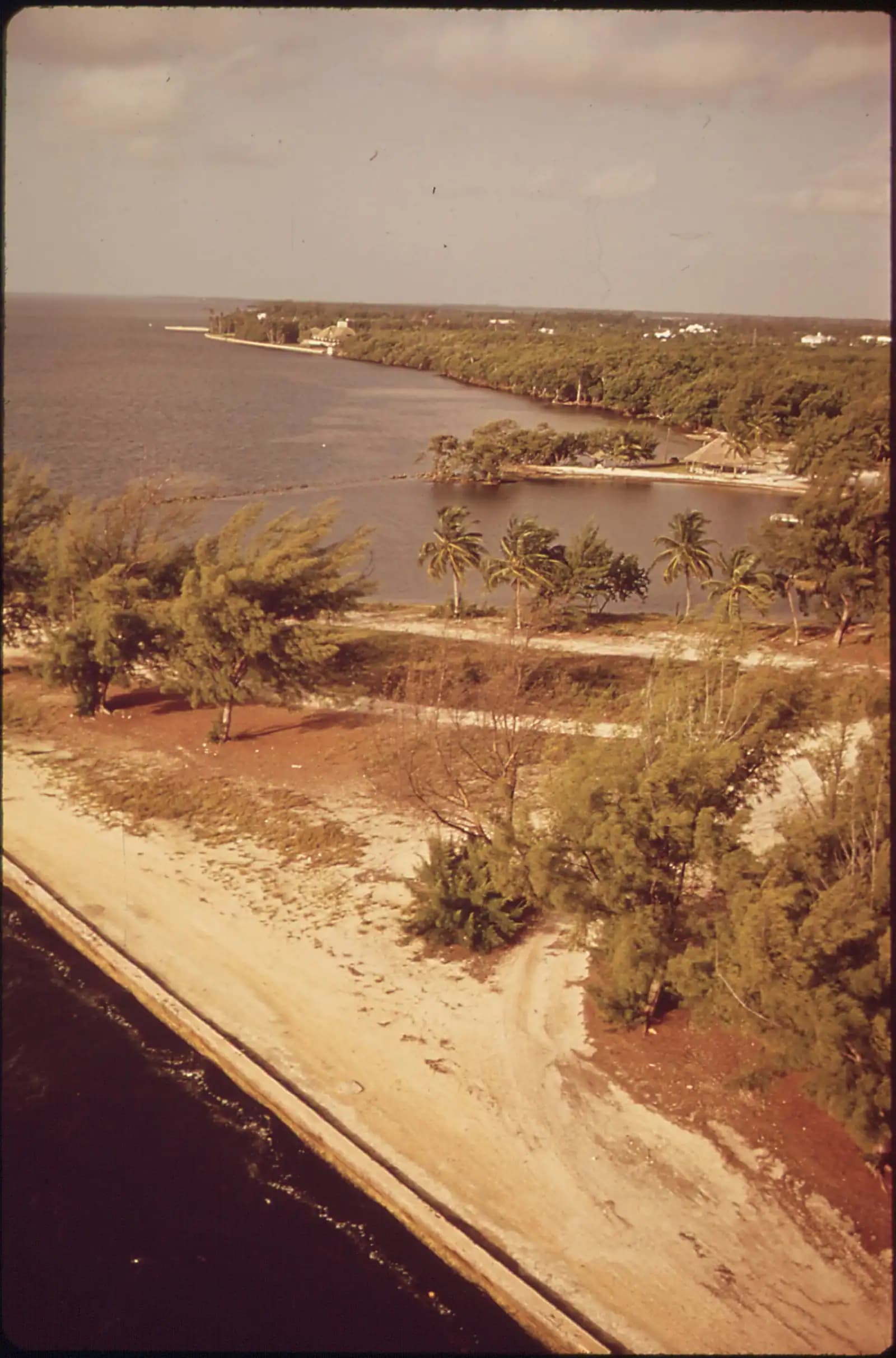
It is also a record of what was here before. Deering's architects built on the edge of a mangrove shoreline and kept a substantial piece of the native hammock rather than clearing it, which is why the estate still holds forest that most of the coastline lost.

The estate originally ran to around 180 acres. Most of that was sold off in the decades after Deering's death in 1925, and the remaining fifty-odd acres passed to Miami-Dade County in 1952. What you walk is a fragment, and the surrounding hospital complex and highway make that obvious from certain angles.

Tours that visit Vizcaya

Operators run these trips past Vizcaya, or stop there as part of a longer route. We list what the booking data supports — not everything that mentions the name.

Some links below go to Viator, our booking partner. We earn a commission on bookings made through them — at no extra cost to you, and with no influence on what we recommend.

Near Vizcaya

Straight-line distances, so allow more on the road — the island is long and has one main parkway.

  • A narrow street shaded by a heavy canopy of live oak and banyan trees in a residential Miami neighbourhood
    Free

    Neighbourhood

    Coconut Grove

    Miami's oldest continuously inhabited neighbourhood, settled by Bahamians and Yankee pioneers two decades before the city existed.

    2–5 hoursFree to walk. The Barnacle Historic State Park charges a small state-park admission, and the Kampong operates by appointment with its own fee.2.3 mi away

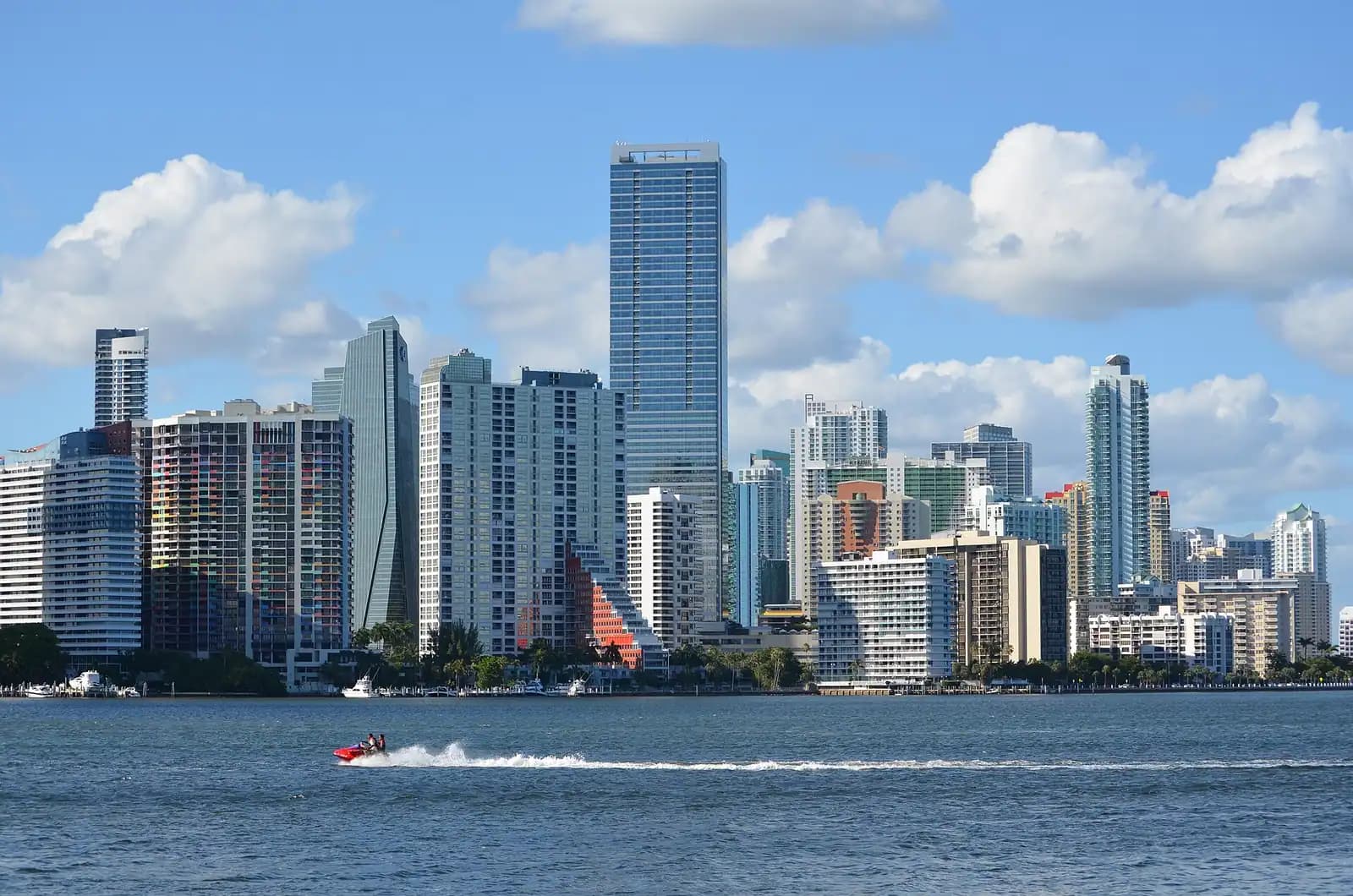
  • Glass residential and office towers rising above a tree-lined street in Miami's Brickell district
    Free

    Neighbourhood

    Brickell

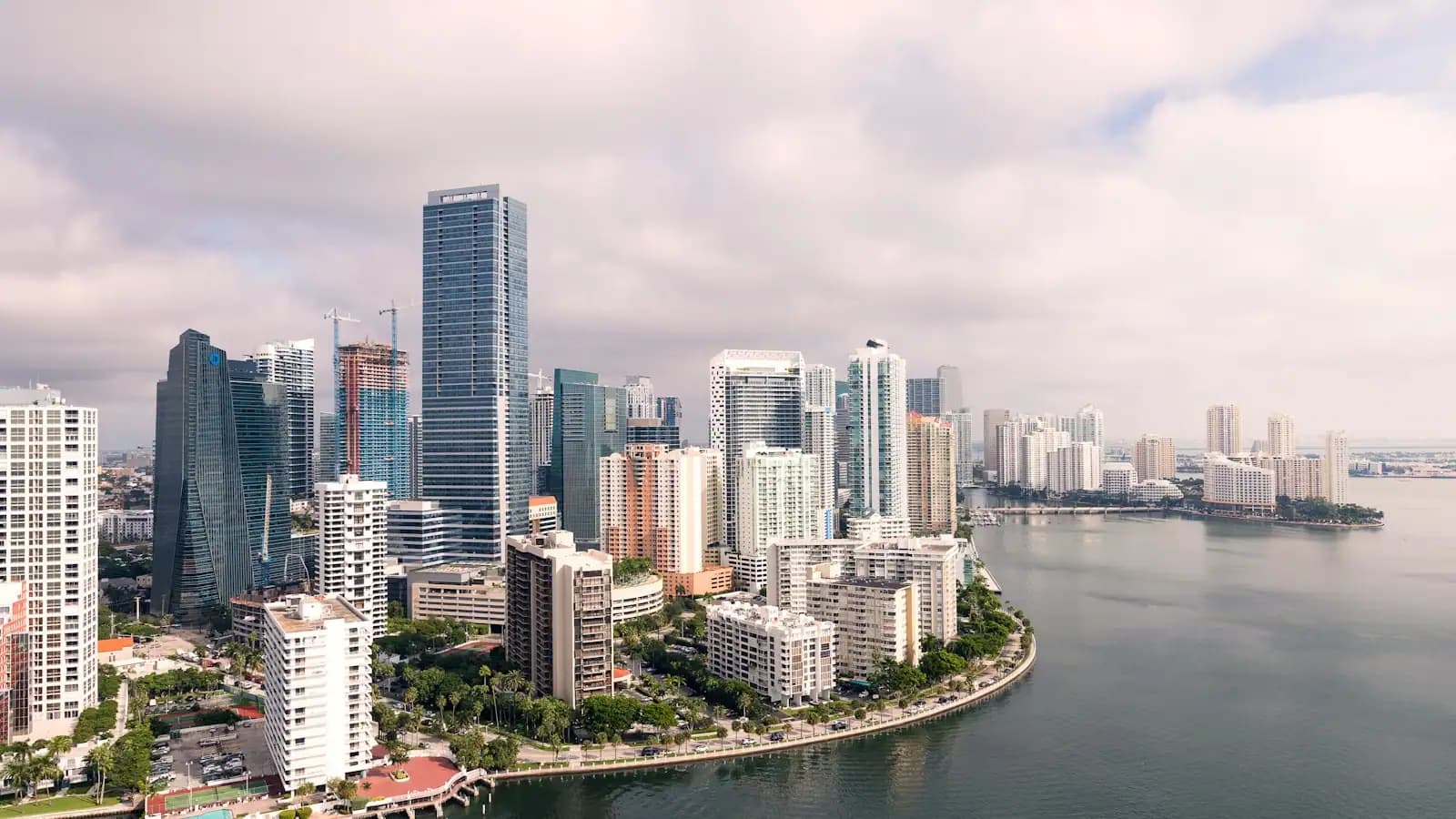
    Miami's most walkable neighbourhood: towers, a free elevated train, and a two-thousand-year-old Tequesta site at the river mouth.

    1.5–5 hoursFree. Walking the district, riding the Metromover and visiting the Miami Circle all cost nothing.1.7 mi away

  • A stone Mediterranean-revival house with arched loggias seen across a lawn under palms

    Historic site

    Deering Estate

    Charles Deering's bayfront estate: an 1896 pioneer hotel, a 1922 stone house, and a Paleoindian fossil site in the pine rockland behind.

    2–4 hoursAround $18 for adults and roughly $10 for children, including the house tours and the guided nature walk when running. Young children generally free.10.8 mi away

  • A calm circular saltwater pool ringed by sand and mangrove with a distant city skyline

    Park

    Matheson Hammock Park

    A man-made tidal pool cut into the mangrove edge in the 1930s, flushed by the bay and framed by the downtown skyline.

    2–5 hoursA per-vehicle parking charge at the gate, higher at weekends. Entry on foot or by bicycle is free. Boat ramp and marina use are charged separately.5.9 mi away

Vizcaya: common questions

Is Vizcaya closed on Tuesdays?

Yes. Vizcaya opens Wednesday through Monday, generally 9:30am to 4:30pm, and closes every Tuesday along with Thanksgiving and Christmas Day. Last entry falls well before the closing time, so arriving at four is not a visit. It also shuts entirely for hurricane warnings during the June to November season, and individual rooms and garden areas close for conservation work and private events throughout the year.

How much time do you need at Vizcaya?

Two to three hours is right. The self-guided route through the main floor of the house takes forty-five minutes to an hour, and the formal gardens deserve at least as long again, particularly if you walk out to the terrace overlooking the Stone Barge and into the native hammock on the edges. Add time for the café. Rushing the gardens to save half an hour is the wrong economy here.

Can you take photos at Vizcaya?

Personal photography without flash is welcome in the house and gardens, and no tripods or large bags are permitted indoors. Professional and commercial shoots are a different matter: engagement, wedding, quinceañera and fashion sessions require a paid permit booked in advance, and staff enforce it. Vizcaya is among the most photographed sites in Miami, which is exactly why the rule exists.

How do you get to Vizcaya without a car?

Take Metrorail to Vizcaya station, which sits a short signposted walk from the entrance — it is one of the very few Miami attractions with direct rail access. The free Metromover connects downtown and Brickell to Metrorail at Government Center and Brickell stations. Rideshare is the alternative and takes about ten minutes from Brickell, fifteen from downtown and thirty to forty-five from South Beach.

Is Vizcaya good for children?

Reasonably, with expectations set. The gardens, the grotto, the maze mount and the view out to the Stone Barge hold most children's attention; the house, which is a decorative-arts collection behind stanchions, holds much less of it. There is no play equipment and nothing hands-on. Families tend to do best going early, spending most of the time outside, and keeping the indoor circuit brisk.