Skip to content
Search
Menu

We earn a commission if you book through this link. You pay the same price.

A small boat on flat shallow turquoise water with low green islands on the horizon
National Park Service Digital Image Archives

Nature preserve

Biscayne National Park

Last updated

A national park that is 95 percent water: mangrove shoreline, a bay, the northernmost Florida Keys and a living coral reef.

Biscayne is the national park Miami forgets it has, and the reason is simple arithmetic. Around 95 percent of it is water. Drive to the Dante Fascell Visitor Center at Convoy Point in Homestead, walk the short boardwalk, look out at a flat green bay, and it is entirely possible to leave thinking you have seen it. You have seen the car park.

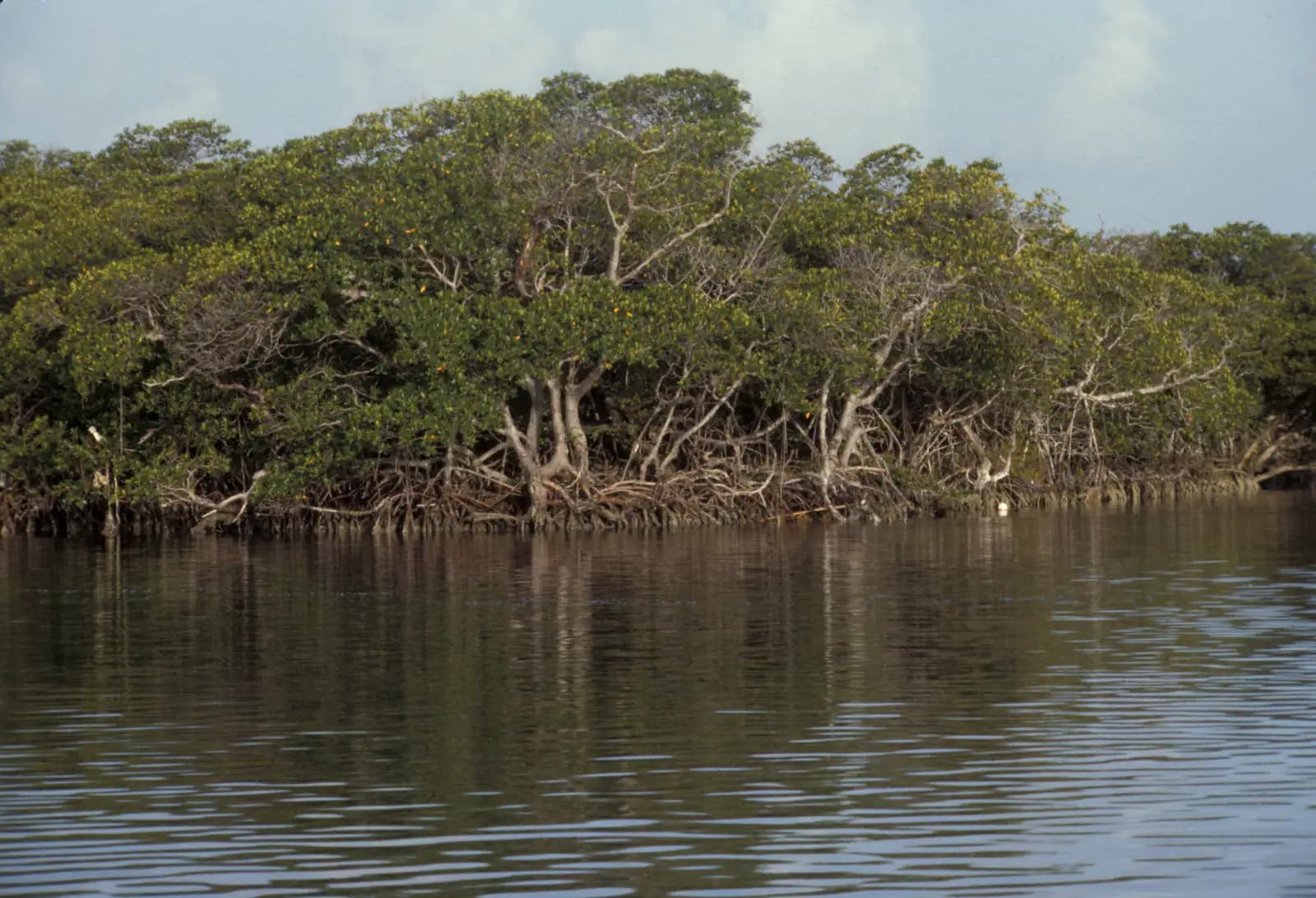
The park protects four connected systems stacked one behind the other. First the mangrove shoreline, the longest undeveloped stretch left on Florida's east coast. Then Biscayne Bay itself, shallow and clear-ish and full of juvenile fish that use it as a nursery. Then a chain of low coral-limestone islands — Elliott Key, Boca Chita, Adams Key — which are the northernmost Florida Keys, reachable only by boat. And beyond them, the northern end of the Florida Reef, the only living barrier coral reef in the continental United States.

Getting onto the water is therefore not an optional extra. It is the visit. Boat trips run from Convoy Point through the park's non-profit partner and through permitted operators: snorkel and dive trips out to the reef, sailing afternoons, paddling in the mangrove creeks near the visitor centre, and heritage cruises past Stiltsville — the cluster of wooden houses standing on pilings in open water off Key Biscayne, built from the 1930s onwards, now inside the park boundary and preserved as a curiosity of Miami's more inventive decades.

Underwater, the park runs a Maritime Heritage Trail: a set of buoyed shipwreck sites from a nineteenth-century wooden hull to a steel steamship, most of them requiring a boat and several requiring dive skills. It is the only trail of its kind in the national park system.

There is no entrance fee. The park is free to enter, which is unusual and worth saying plainly. What costs money is the boat, and without one you are looking at a very nice view of somewhere you did not go.

Getting there and parking

From downtown Miami, take US-1 or the Florida Turnpike south towards Homestead, then head east on SW 328th Street (North Canal Drive) and follow it to the end. Roughly 50 minutes without traffic, longer in the weekday afternoon build-up on US-1. The last few miles run between agricultural fields and a canal, which is disorienting the first time — keep going, the road ends at the visitor centre.

Parking at Convoy Point is free and usually easy, even at weekends.

There is no public transport to the park and no shuttle. If you are not driving, a rideshare from Homestead is straightforward but the return leg is less so; agree it before you are dropped.

Do not confuse this with the Everglades. Biscayne's entrance is about 20 minutes east of the Everglades' Homestead gate, on the opposite side of US-1. Visiting both in one day is possible but makes for a long one.

What you get without a boat

Be clear-eyed about this before you drive 50 minutes from downtown Miami. Convoy Point is a pleasant, quiet, free shoreline park, and it is roughly one twentieth of the story.

What is there: the Dante Fascell Visitor Center, with exhibits, a gallery and rangers who will tell you honestly what is running that day. A short boardwalk and jetty walk with views across the bay towards the keys. A picnic area under trees. Restrooms. A small artificial beach area. Kayak and canoe launch, with mangrove creeks within reach of a modest paddle.

What is not there: the reef, the keys, the wrecks, the clear water, and the wildlife most people come to a national park for.

If you have an hour and a car, Convoy Point is a genuinely calm break from Miami, and the visitor centre is well done. If you have made a special trip, come with a boat trip already booked. The park's non-profit partner runs most of the public trips from this dock, and they sell out at weekends and through the winter season.

One practical detail people miss: the visitor centre and the boat desk keep different hours from each other, and trips are weather-dependent. A choppy forecast cancels the reef and reroutes to the bay.

The trips that are actually worth booking

The park's trips are limited in number and small in group size, which is why they sell out. Roughly what is on offer, in ascending order of commitment:

  • Paddling near Convoy Point. Guided kayak or canoe through the mangrove edge. Two to three hours, no experience needed, and the one option that runs when it is too rough for the reef. You see the nursery habitat rather than the reef.
  • Boca Chita Key. A short crossing to the park's most photographed island: a harbour, a picnic ground, and a 65-foot ornamental lighthouse built in the 1930s by Honeywell, the industrialist who owned the island. The lighthouse was never a working navigational light. Climbing it depends on staffing.
  • Sailing and snorkelling. Half-day, out over seagrass and patch reef. Water clarity is the variable; in settled weather it is excellent, after wind it can be disappointing, and nobody can promise you which.
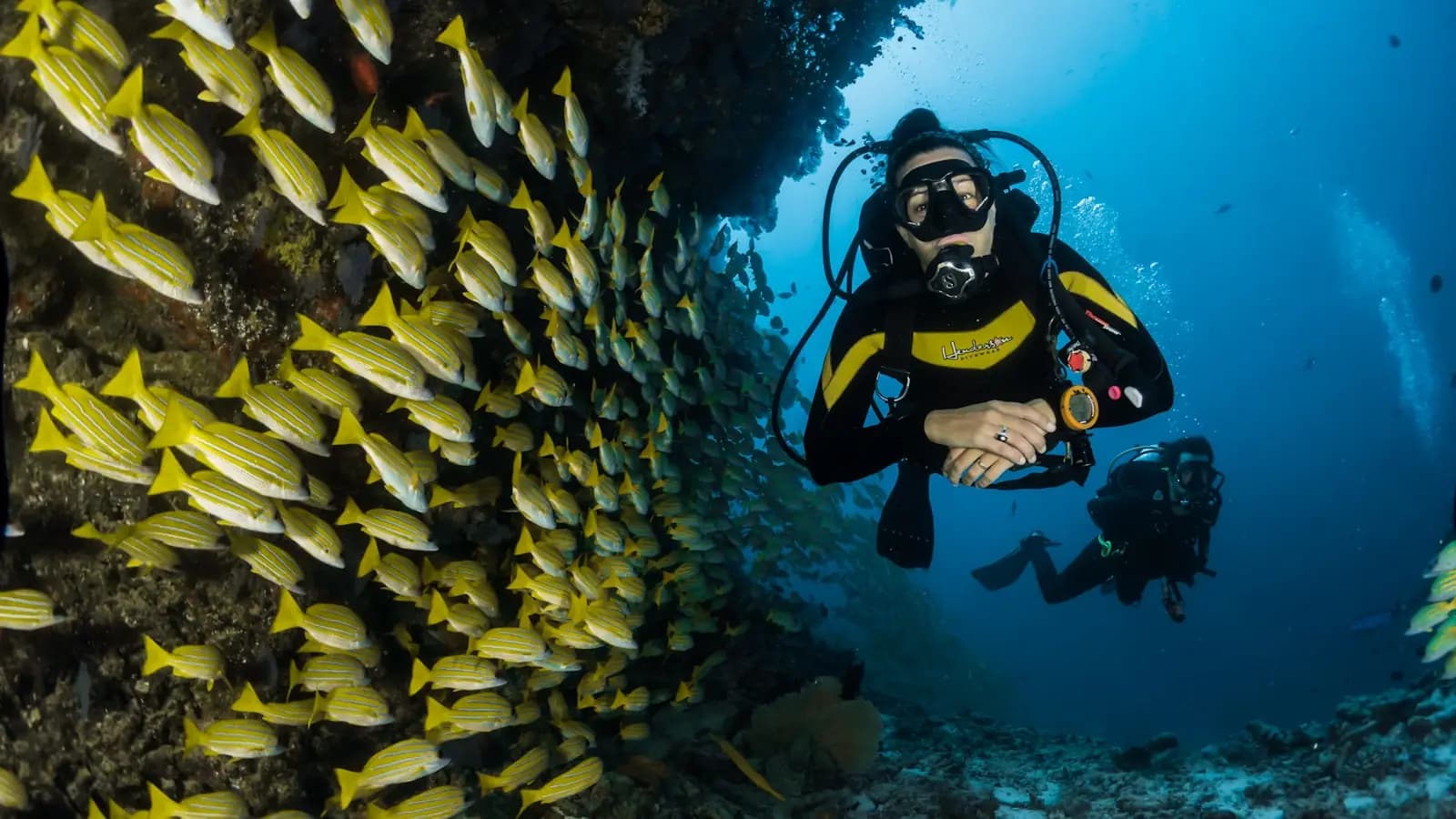
  • Reef snorkel or dive. The real thing, out to the Florida Reef. Longer day, weather-dependent, and the one to book if you only do one.
  • Heritage cruise past Stiltsville. The northern bay run, past the houses on pilings. Good for photographers and for anyone interested in how Miami behaved when nobody was watching.

Private charters and permitted operators work the park too. Whoever you book with, confirm they are operating inside the park rather than nearby.

Stiltsville, and why the houses are still there

A mile or so south of Cape Florida, in open water a foot or two deep at low tide, seven wooden houses stand on pilings. They are what remains of a community that began in the 1930s as a shack over a shoal and grew through the 1940s and 1950s into a scatter of two dozen structures: fishing camps, private clubs, and at least one establishment whose business model depended on being outside the reach of shore-based law.

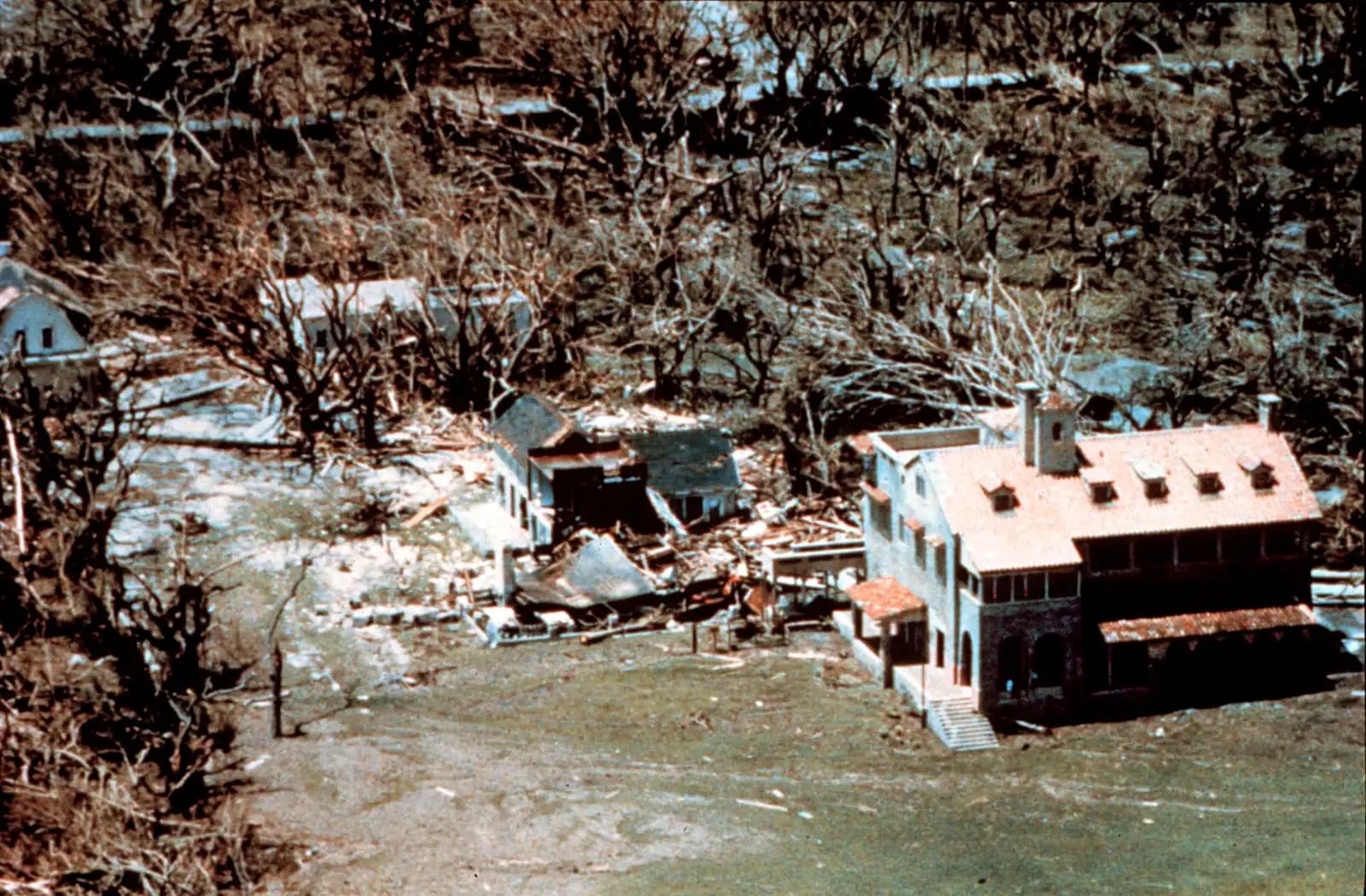
Storms took most of them. Hurricane Betsy in 1965 flattened the majority, Andrew in 1992 took most of what was left. The survivors sat in legal limbo for years — the state leases had expired, the land is submerged, and the houses had ended up inside a national park boundary drawn around them in 1980.

What was agreed in the end is that the seven remaining buildings stay, managed by the park through a non-profit trust, as historic structures rather than private homes. They are used for education and by permit; you cannot rent one for the weekend, and there is no casual access.

The practical version for a visitor: you see Stiltsville from a boat. Heritage cruises from Convoy Point pass it, and so do many private charters running out of Key Biscayne and Coconut Grove, which is a shorter crossing. From land, the houses are a smudge on the horizon from Cape Florida on a clear day.

Weather, clarity and the seasons that matter

Everything here depends on the wind, because everything here happens on a boat.

Winter, December to April. The most reliable season for a trip running at all and the most pleasant on deck. The catch is cold fronts: a front drops through every week or two, the wind swings north, and the bay turns choppy and cloudy for a couple of days afterwards. Book early in your stay so you have a spare day to move to.

Late spring, May to early June. Arguably the sweet spot. Light winds, water warm enough to snorkel without a shortie, the best average clarity of the year, and before the afternoon storm pattern sets in.

Summer, June to October. Hot, humid and glassy in the mornings, which is genuinely good for the reef. Afternoons bring fast, violent thunderstorms that end boating for a few hours. Go early. Hurricane season runs 1 June to 30 November with the peak from August to October, and a storm anywhere in the basin can shut the park for days.

Two things nobody controls: manatee sightings in the bay, which are more common in cooler months, and water clarity, which follows wind rather than season. Ask the dock staff what visibility has been doing that week rather than trusting a photograph.

Tours that visit Biscayne NP

Operators run these trips past Biscayne NP, or stop there as part of a longer route. We list what the booking data supports — not everything that mentions the name.

Some links below go to Viator, our booking partner. We earn a commission on bookings made through them — at no extra cost to you, and with no influence on what we recommend.

Shared departurespriced per seat, best value for one or two

Private and small-group optionsoften cheaper per head for a family or a group of six

Near Biscayne NP

Straight-line distances, so allow more on the road — the island is long and has one main parkway.

  • Open sawgrass prairie stretching flat to the horizon under a tall sky of building cumulus cloud

    Nature preserve

    Everglades National Park

    A river 60 miles wide moving at the speed of a walking ant, with three entrances that do not connect to each other.

    4–10 hoursA single vehicle pass covers all three entrances for seven consecutive days. Expect somewhere in the region of $30–35 per vehicle, with lower rates for motorcycles and for arriving on foot or by bike.16.3 mi away

  • A stone Mediterranean-revival house with arched loggias seen across a lawn under palms

    Historic site

    Deering Estate

    Charles Deering's bayfront estate: an 1896 pioneer hotel, a 1922 stone house, and a Paleoindian fossil site in the pine rockland behind.

    2–4 hoursAround $18 for adults and roughly $10 for children, including the house tours and the guided nature walk when running. Young children generally free.10.6 mi away

  • A giraffe standing in an open grassy enclosure with no visible fencing in the foreground

    Wildlife

    Zoo Miami

    Florida's largest zoo: 750 acres of moated, cage-free habitat where the animals are tropical and the walking is the hard part.

    4–6 hoursExpect roughly $25 for an adult and a few dollars less for a child, with very young children free. Parking, tram, safari cycle hire and animal encounters are extra.10.8 mi away

  • A long causeway bridge curving across shallow bay water towards a low green island
    Free

    Neighbourhood

    Key Biscayne

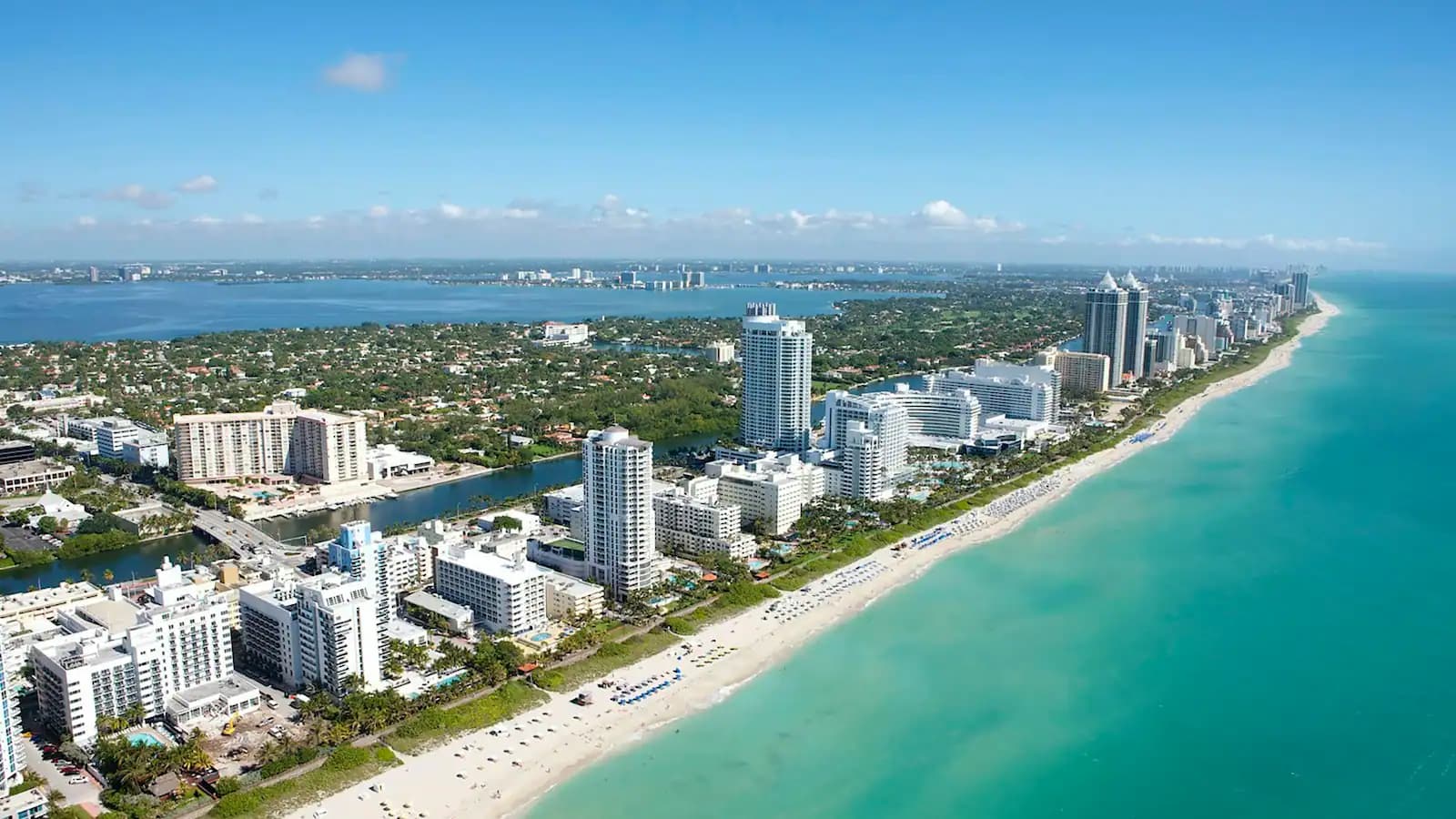
    One causeway, two big parks and a village in between — the island Miami drives to when it wants the ocean without the noise.

    3–8 hoursThe village and its streets are free. You pay an eastbound causeway toll to drive on, and a per-vehicle entry charge at each of the two parks.18.9 mi away

Biscayne NP: common questions

Is Biscayne National Park worth visiting without a boat?

Honestly, only for an hour. Around 95 percent of the park is underwater, and the shore section at Convoy Point is a visitor centre, a boardwalk, a picnic area and a jetty view. It is free, quiet and pleasant, but it is not the park. If you are driving 50 minutes from Miami, book a boat trip — snorkelling, sailing, paddling or a heritage cruise — before you go rather than hoping to arrange one at the dock.

Does Biscayne National Park charge an entrance fee?

No. Entry to the park and parking at Convoy Point are both free, which makes it one of the few national parks with no gate fee. What you pay for is getting on the water: boat trips, snorkel and dive trips, paddling tours and island camping are all ticketed separately, run by the park's non-profit partner and by permitted operators. Verify current prices when booking, and expect weather to matter.

Can you see Stiltsville at Biscayne National Park?

Yes, from a boat. The seven surviving houses on pilings sit in the shallow northern bay south of Key Biscayne, inside the park boundary. Heritage cruises from Convoy Point pass them, and many private charters from Key Biscayne and Coconut Grove make a shorter run out to them. The buildings are managed as historic structures and there is no casual access — you look, you photograph, you do not land.

What is the difference between Biscayne and Everglades National Park?

They are two separate national parks about 20 minutes apart near Homestead, and they protect opposite things. The Everglades is a freshwater river of grass — sawgrass prairie, alligators, wading birds, reached on foot, by bike or by tram. Biscayne is a marine park: a bay, mangroves, the northernmost Florida Keys and a living coral reef, reached by boat. Doing both in one day is possible, but it makes for a twelve-hour outing.

Can you snorkel at Biscayne National Park?

Yes, on a boat trip. The snorkelling is out on patch reef and the northern end of the Florida Reef, well offshore from Convoy Point — there is no worthwhile shore snorkelling at the visitor centre. Trips run in settled weather and are cancelled or moved into the bay when the wind gets up. Clarity follows wind rather than season, so ask the dock staff what visibility has been doing that week.