Skip to content
Search
Menu

We earn a commission if you book through this link. You pay the same price.

A busy commercial street in Little Havana with Spanish-language shop signs and traffic running one way
Sharon Hahn Darlin

Dining district

Calle Ocho

Last updated

SW 8th Street: eight walkable blocks of Cuban and Central American Miami, on a road that runs west until it becomes the Tamiami Trail.

Calle Ocho is a street, and remembering that explains most of what visitors find confusing about it. It is SW 8th Street, a one-way eastbound arterial carrying commuter traffic through Little Havana at a speed nobody would describe as strolling pace. The pedestrian experience happens on the pavements either side of that, which is why the good blocks feel good and the bad blocks feel like standing next to a road.

Keep going west and the street stops being Calle Ocho, picks up US-41, and turns into the Tamiami Trail — the two-lane road that crosses the Everglades and comes out at Naples on the Gulf. The same tarmac that carries you past a ventanita in Little Havana runs past airboat docks and Miccosukee land ninety minutes later. Very few city streets do that.

The walkable part is short: roughly SW 12th Avenue to SW 17th Avenue. Within those eight or nine blocks you get Máximo Gómez Park at 15th, the Tower Theater opposite it, Ball & Chain on the 1400 block with live music most nights since long before any of this was a destination, a run of cigar storefronts where rollers work Dominican and Nicaraguan leaf in the window, and pink marble stars set into the pavement honouring Latin performers. There are ventanitas — literally "little windows" — every block or two, and they are the single best thing on the street.

The order of operations at a ventanita is fixed and quick. You stand on the pavement. You order at the window. A cafecito is a small sweet espresso for one. A colada is the same coffee in a larger cup with a stack of plastic thimbles, and it is not a big coffee for you — it is a round for four or five people, which is the whole point of it. You drink standing up, you talk, and then you leave.

East of 12th Avenue the street loses its pavement life and becomes approach roads to the Miami River and Brickell. West of 17th it goes residential and then commercial-suburban. Walk the middle.

Getting there and parking

Aim for SW 8th Street and SW 15th Avenue and walk out from there in both directions.

A warning for drivers: through Little Havana, SW 8th Street is one-way eastbound. SW 7th Street one block north is the westbound pair. Satellite navigation handles this fine; drivers improvising do not. Kerbside metered parking exists on the numbered avenues running off the strip, with a handful of small paid lots. On Viernes Culturales evenings it fills early, and during the March festival it is not worth attempting.

Rideshare drops you at the kerb and is the simplest option: roughly ten minutes from Brickell or downtown, twenty-five to forty from Miami Beach depending on the causeway.

Metrobus runs the length of SW 8th Street and connects east into downtown. The free Metromover does not reach Little Havana — it stops on the Brickell side of the Miami River, about a mile and a half east.

Heading west by car, the same street becomes US-41, the Tamiami Trail, and runs to the Everglades. Shark Valley is roughly an hour out; the airboat operators on the way are on tribal and private land north of the national park.

Block by block, west to east

The strip is compact enough to walk end to end in twenty minutes without stopping, and nobody should walk it without stopping.

  • SW 17th to SW 16th avenues. The quieter western end. Bakeries, fruit stands, a couple of fritangas serving Nicaraguan food rather than Cuban, and fewer visitors.
  • SW 16th to SW 15th. Cigar storefronts with rollers working at the window. The tobacco is Dominican, Nicaraguan or Honduran — Cuban leaf cannot legally be imported into the United States, and anyone telling you otherwise is either joking or lying.
  • SW 15th Avenue. The centre of gravity. Máximo Gómez Park on the south side, the Tower Theater on the north, and the densest concentration of pavement stars.
  • SW 15th to SW 14th. Ball & Chain, restaurants with back patios, and the block that stays busiest latest.
  • SW 14th to SW 12th. Thinning out. Ventanitas, small groceries, and the point at which most walkers turn back.

SW 13th Avenue, running north from the street, is Cuban Memorial Boulevard — a shaded block of monuments including the Brigade 2506 eternal flame. It is two minutes off Calle Ocho and most visitors never turn up it.

How to order at a ventanita

The ventanita is a serving window opening onto the pavement, usually attached to a restaurant or a grocery, and it is Miami's most durable piece of street culture.

  • Cafecito (or colada de uno): a single shot of dark espresso whipped with sugar into espumita, the pale foam on top. Sweet by default. Asking for it unsweetened is allowed but will be noted.
  • Colada: the same coffee in a styrofoam cup with a sleeve of thimble-sized plastic cups. It is a communal round, meant to be poured out and shared. Ordering one for yourself is the clearest possible signal that you are new here.
  • Cortadito: cafecito cut with steamed milk. The mid-morning default.
  • Café con leche: a much larger milk coffee, usually taken with toasted buttered Cuban bread for dunking.
  • Pastelito: flaky pastry, guava and cheese being the standard. Ask for it warm.

Cash is quicker than a card at most windows though both are usually accepted. There is no seating, no queue system beyond common sense, and no expectation that you linger. The whole transaction takes about ninety seconds and costs a couple of dollars.

The same street, ninety minutes later

Drive west on SW 8th Street out of Little Havana and it stays urban through Coral Gables' edge and Westchester, passes the turnpike, and then, somewhere past Krome Avenue, runs out of city entirely. From there it is the Tamiami Trail — US-41 — a straight two-lane road with a canal on one side and sawgrass on the other, running clean across the Everglades to the Gulf coast.

This is the road that made the Everglades reachable from Miami, and it is also the road that damaged them: built between 1915 and 1928, it functions as a dam across a system that is supposed to flow south, and much of the current restoration work involves bridging sections of it to let water move again.

For a visitor, the practical consequence is that the Everglades are closer than they look. Shark Valley, inside the national park, sits on the Trail roughly an hour west of Calle Ocho. The airboat operators you pass along the way are mostly on Miccosukee land and private property north of the park boundary — airboats do not run inside Everglades National Park itself, whatever the billboards suggest.

You can, in other words, drink a cafecito on SW 8th Street at nine and be looking at an alligator from the same street at eleven.

The last Friday, and the Sunday in March

Viernes Culturales takes over the street on the last Friday of every month, roughly 5pm to 10pm, between about SW 13th and SW 22nd avenues. Traffic is closed off, galleries and artist studios open late, there is live music on the pavement and a free guided walk. Nothing costs anything unless you buy it. This is the version of Calle Ocho most worth planning around, and it happens twelve times a year rather than once.

The Calle Ocho Music Festival is a single Sunday in March and is a different scale of event: roughly two dozen blocks closed, dozens of stages, hundreds of thousands of people, and the largest Latin street festival in the country. It is excellent and it is not a stroll. Arrive early, accept that driving and parking near it are hopeless, and use rideshare drop-offs well outside the closure.

The rest of the year, the street is at its best from about four in the afternoon until late evening, when the domino tables are still going, the restaurants fill and the music venues open up. Mornings before eleven are genuinely quiet.

Hurricane season runs 1 June to 30 November, and outdoor programming can be cancelled at short notice from August to October.
Tours that visit Calle Ocho

Operators run these trips past Calle Ocho, or stop there as part of a longer route. We list what the booking data supports — not everything that mentions the name.

Some links below go to Viator, our booking partner. We earn a commission on bookings made through them — at no extra cost to you, and with no influence on what we recommend.

Shared departurespriced per seat, best value for one or two

Private and small-group optionsoften cheaper per head for a family or a group of six

Near Calle Ocho

Straight-line distances, so allow more on the road — the island is long and has one main parkway.

  • A Cuban coffee window on a Miami street with customers standing at the counter drinking from small cups
    Free

    Neighbourhood

    Little Havana

    The neighbourhood Cuban exiles built west of downtown Miami, now shared with Nicaraguan and Honduran Miami and still entirely lived-in.

    2–5 hoursFree to walk. Individual venues, tours and shows charge their own admission.190 ft away

  • Domino tiles laid out on a tiled table during a game in an outdoor park
    Free

    Park

    Máximo Gómez Park

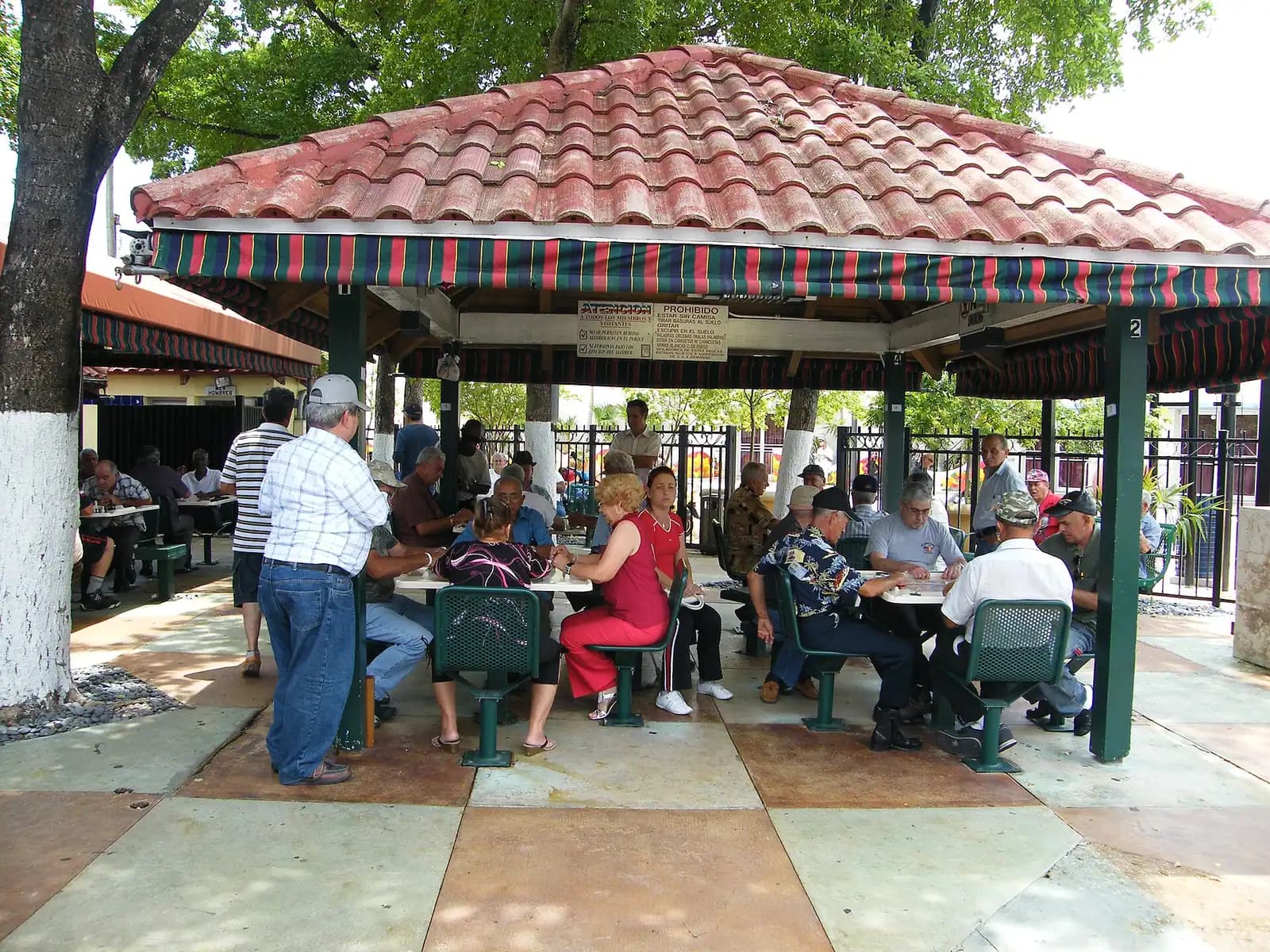
    A quarter-acre of Calle Ocho where the dominoes are competitive, the players are permitted residents over 55, and visitors watch.

    10–40 minutesFree to enter and free to watch. Playing requires a City of Miami permit and an age of 55 or over.80 ft away

  • Glass residential and office towers rising above a tree-lined street in Miami's Brickell district
    Free

    Neighbourhood

    Brickell

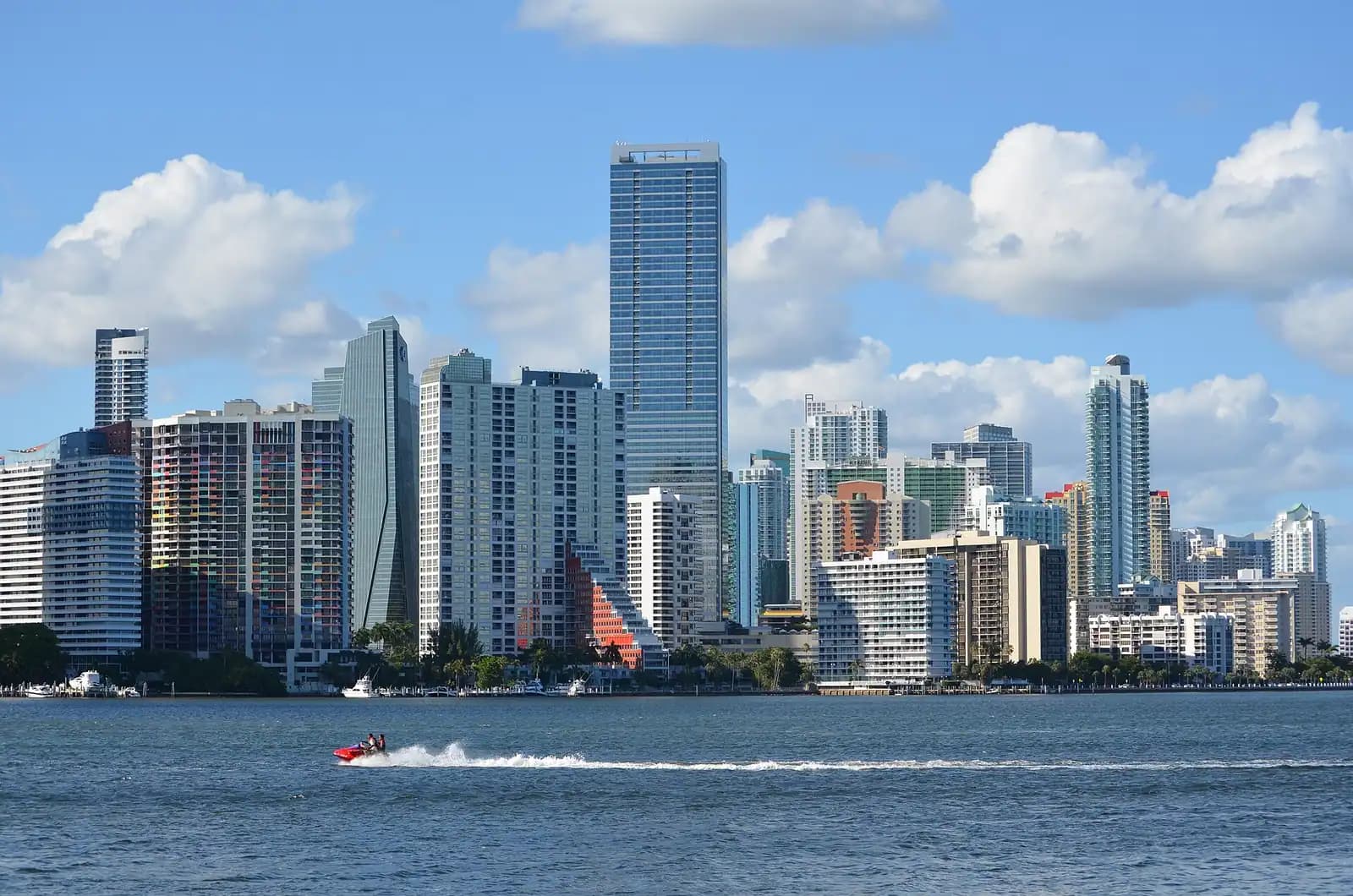
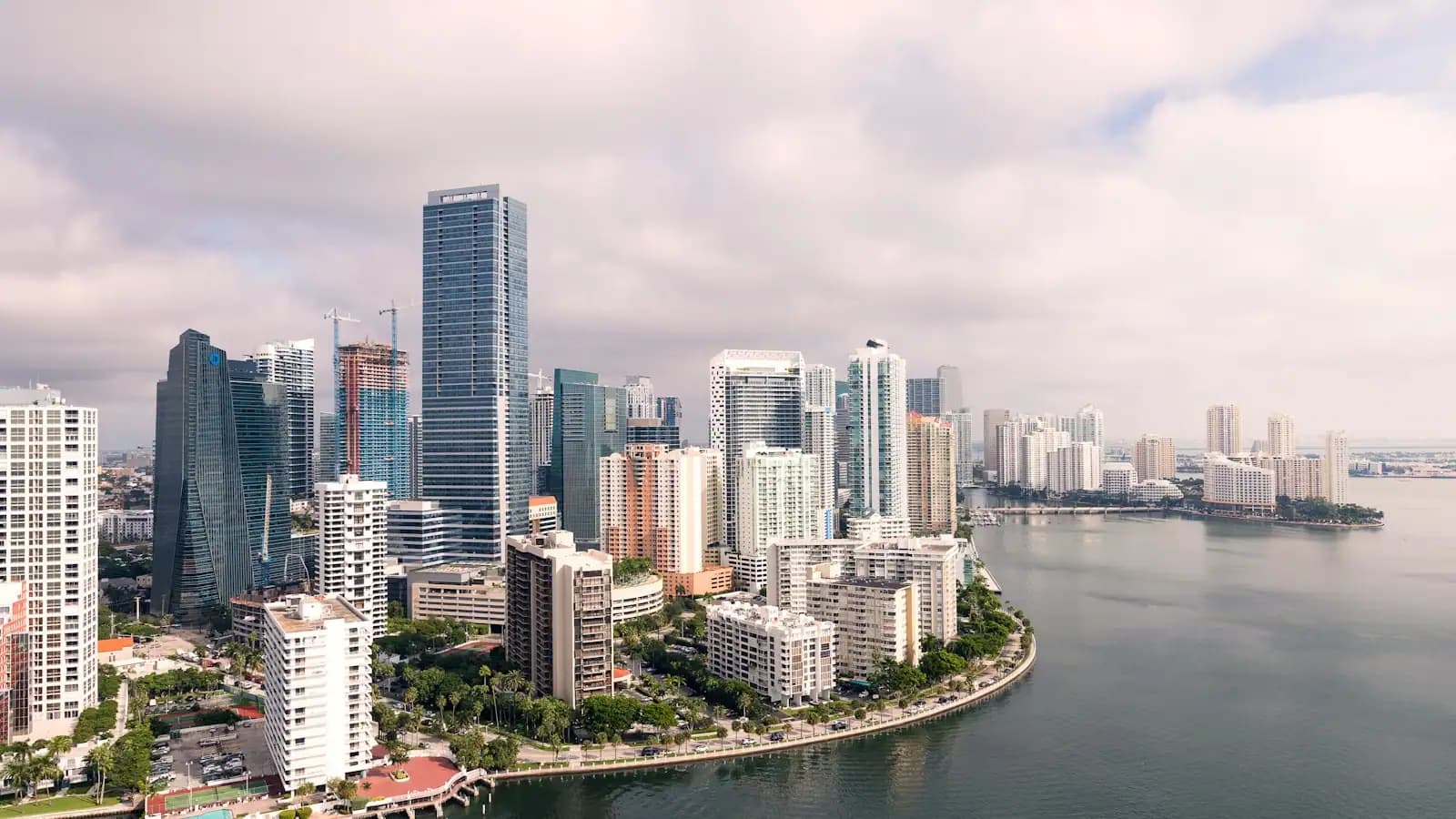
    Miami's most walkable neighbourhood: towers, a free elevated train, and a two-thousand-year-old Tequesta site at the river mouth.

    1.5–5 hoursFree. Walking the district, riding the Metromover and visiting the Miami Circle all cost nothing.1.7 mi away

  • A dense cluster of downtown towers seen across water at the end of the day
    Free

    Neighbourhood

    Downtown Miami

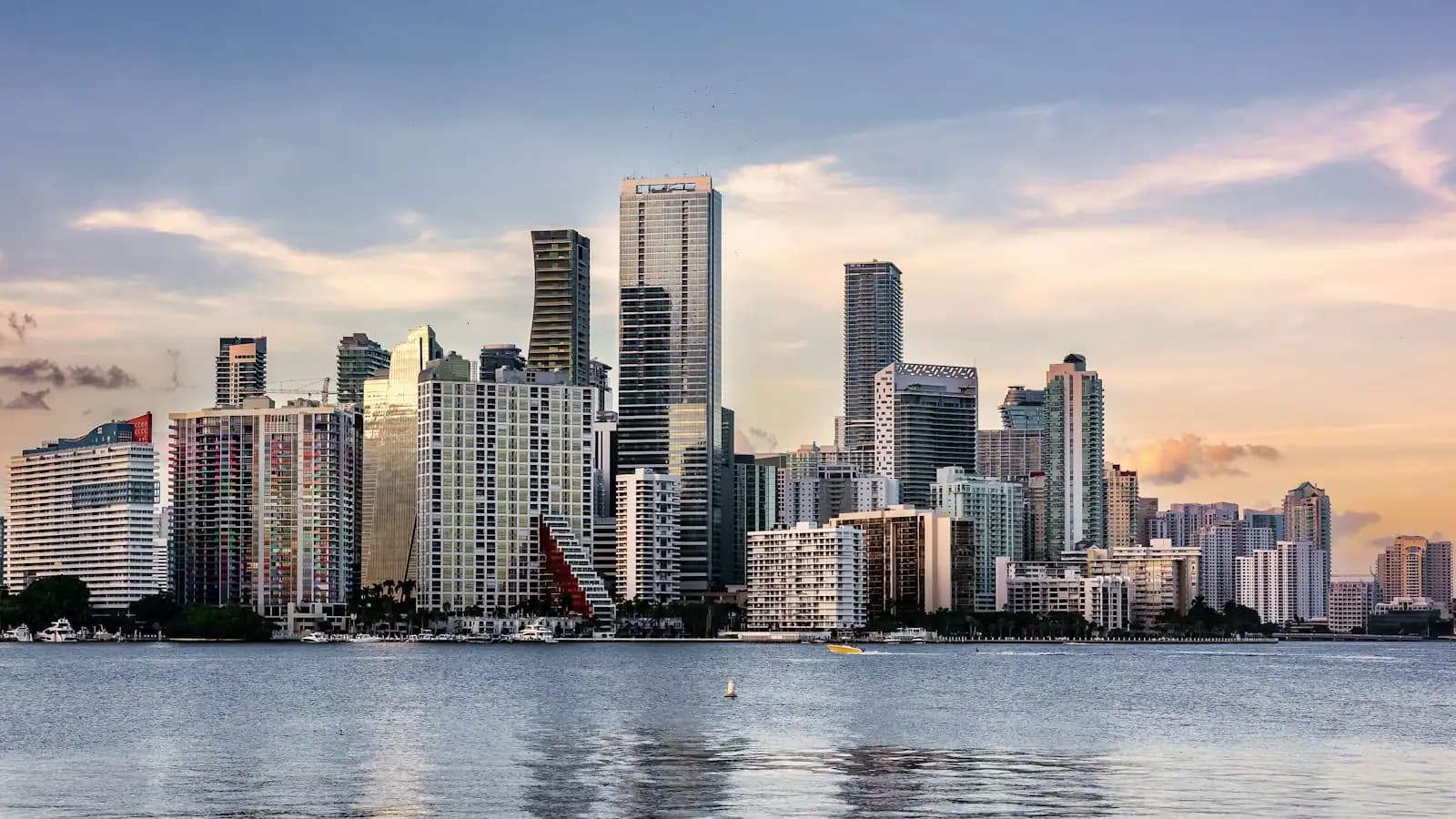
    The original Miami: a railway terminus that became a city in 1896, now a downtown of towers, museums and a free elevated railway.

    3–8 hoursFree to walk, and the Metromover that connects it costs nothing. Museums, the Freedom Tower galleries, bay cruises and events are ticketed separately.1.7 mi away

Calle Ocho: common questions

What is Calle Ocho and where does it start?

Calle Ocho is SW 8th Street, the commercial spine of Little Havana in Miami. The walkable, visitor-facing stretch runs roughly between SW 12th and SW 17th avenues — about eight blocks — with Máximo Gómez Park and the Tower Theater at its midpoint around SW 15th Avenue. East of that it becomes approach roads to the Miami River; west it turns residential, then eventually becomes US-41, the Tamiami Trail across the Everglades.

What is a colada and how do you order one?

A colada is a large cup of sweet Cuban espresso served with a sleeve of small plastic thimbles, and it is meant to be shared between four or five people rather than drunk alone. Order it at a ventanita, the serving window that opens onto the pavement. If you want coffee for one, ask for a cafecito. A cortadito adds a little steamed milk; a café con leche is the big breakfast version.

Is Calle Ocho the same thing as Little Havana?

Not quite. Little Havana is a residential neighbourhood of around seventy thousand people covering many square blocks. Calle Ocho is the street running through it, and it is where the restaurants, cigar shops, theatre, park and music venues are concentrated. Most visitors see Calle Ocho and call it Little Havana. Walking one block off the street, into the bungalow blocks, shows you the difference quickly.

Can you buy real Cuban cigars on Calle Ocho?

You can buy excellent hand-rolled cigars, and you can watch them being rolled in the window, but the tobacco is Dominican, Nicaraguan or Honduran. Cuban-origin tobacco cannot legally be imported into the United States, and shops on Calle Ocho are not exempt from that. Anyone selling you a box of Cubans on the street is selling counterfeits. The rolling itself is real and the product is often very good.

When is the Calle Ocho festival?

The Calle Ocho Music Festival takes place on a Sunday in March and closes roughly two dozen blocks of SW 8th Street for what is billed as the largest Latin street festival in the United States. The exact date shifts each year, so confirm it before booking around it. A smaller and much more manageable event, Viernes Culturales, runs on the last Friday of every month from about 5pm to 10pm, and it is free.