The Venetian Pool exists because George Merrick's builders needed stone. The oolitic limestone under Coral Gables — the porous rock everyone here calls coral rock — was quarried out of this site and used to build the houses around it, leaving a large ugly hole in the middle of a city being sold on beauty.
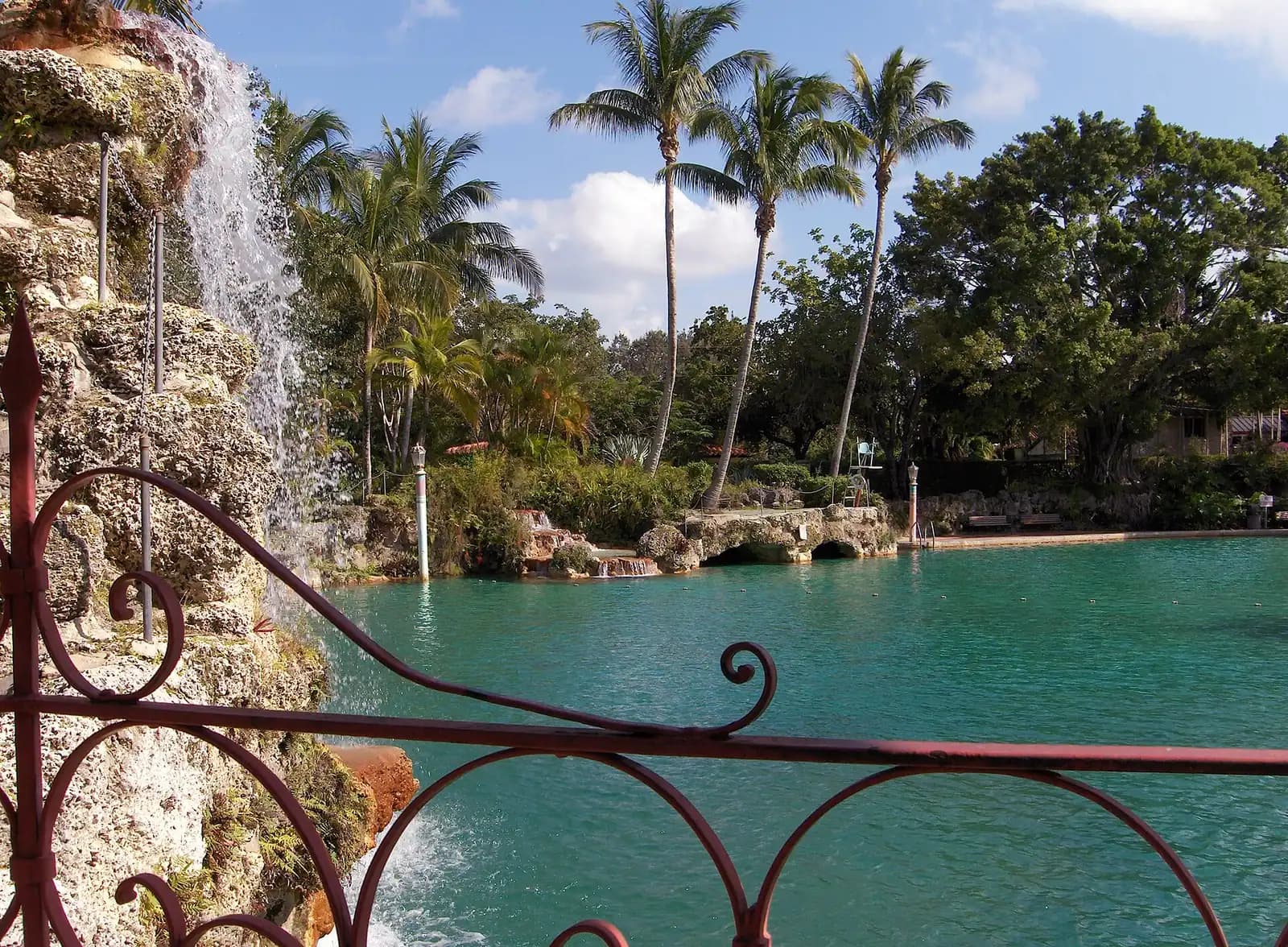
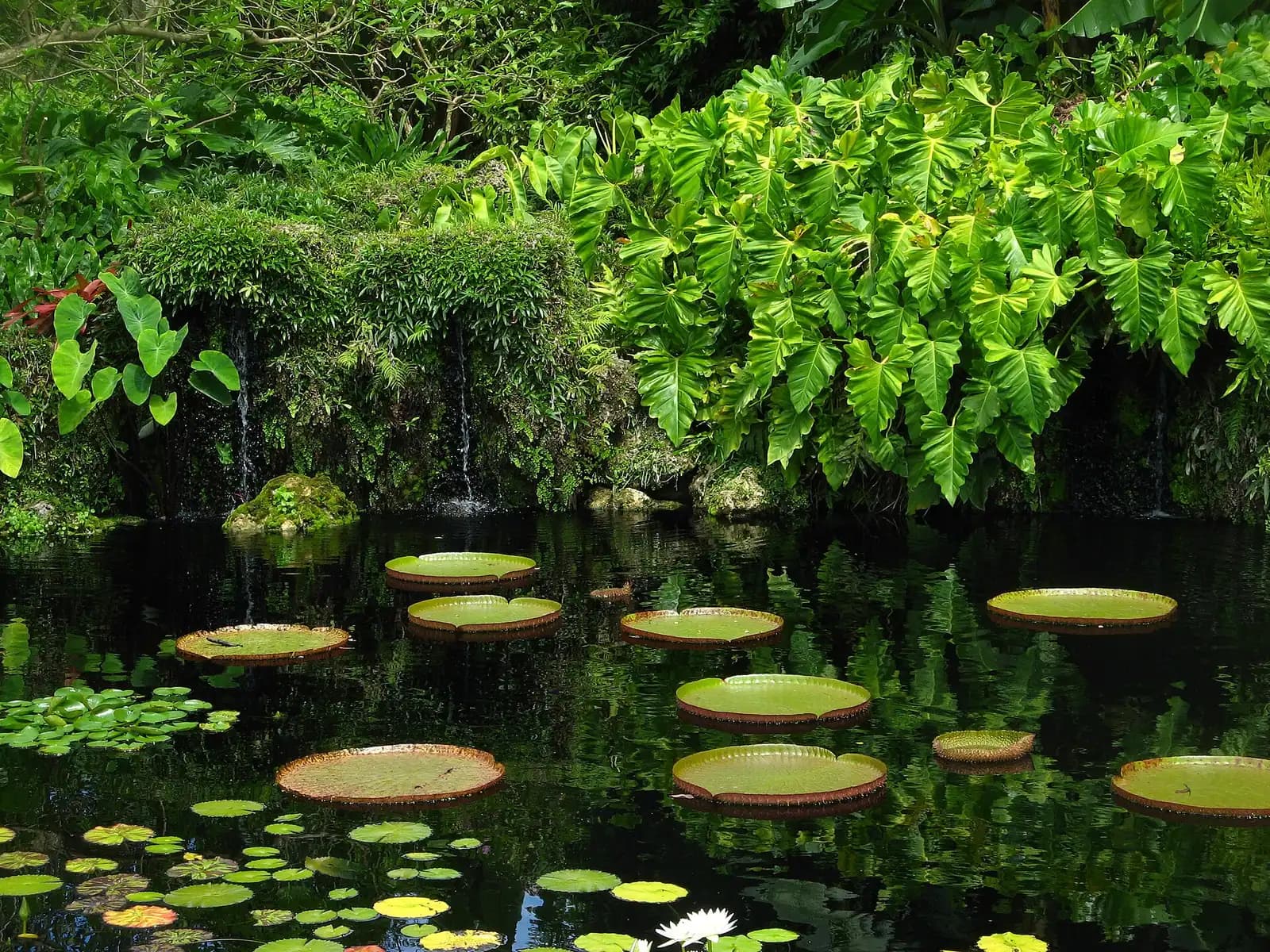
In 1924 Merrick's designers turned the hole into the pool. Phineas Paist, his supervising architect, and Denman Fink, his aesthetic director and uncle, lined the quarry with concrete, left the rock walls exposed, and built a Venetian fantasy around them: loggias, a striped-pole bridge, two towers, caves cut into the quarry face, waterfalls, palms and coral-rock terraces. It holds roughly 820,000 gallons, and for most of its life it was filled each morning from an artesian well tapping the Biscayne Aquifer and drained each evening, which meant swimmers in the warmer months got fresh, cold, unchlorinated spring water every day.
It is a working municipal pool, and it is also on the National Register of Historic Places — one of very few swimming pools anywhere with that listing. Both facts are true at the same time and they pull against each other constantly. It closed in October 2024 for a restoration reported at around six million dollars, covering the pool basin, the walkways, the plumbing and the structures around the waterfalls, and reopened to the public in December 2025, its centennial year having passed under scaffolding.
What it is like to swim in: cold, considerably colder than any hotel pool in Miami, with an uneven rock bottom in places, caves you can swim into, and a proper lifeguarded family atmosphere rather than a resort one. It is not a lap pool. Depths vary sharply.
Check before you drive out. The city has historically closed it for annual maintenance across December and January, and it closes in bad weather.