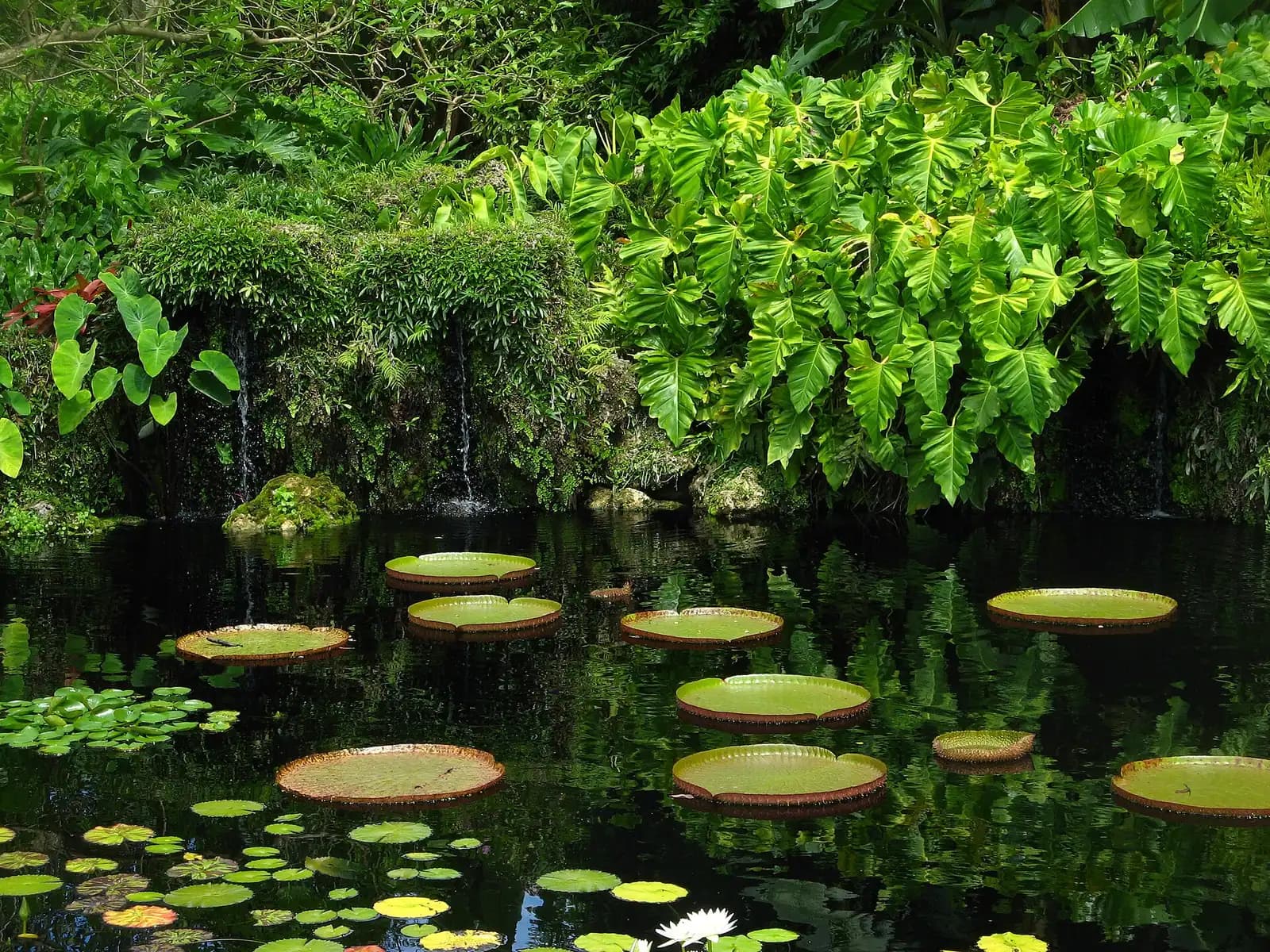
Fairchild opened in 1938 on eighty-three acres of what was then the far southern edge of Coral Gables, and it is easy to underestimate as a nice garden. It is in fact one of the most significant tropical botanical institutions in the world, with palm and cycad collections that researchers travel to see, an active plant-conservation programme working on Florida's endangered natives, and a seed bank.
The name honours David Fairchild, the plant explorer who spent a career travelling the tropics collecting economically useful species for the United States — mangoes, avocados, dates, bamboo, flowering trees. The garden was funded by his friend Robert H. Montgomery and laid out by William Lyman Phillips, a landscape architect trained in the Olmsted office, who designed it as a series of vistas, lakes and long sightlines rather than as a collection of beds. That layout is why it reads as landscape rather than as a catalogue, and why it still works ninety years on.
The palms are the centrepiece. Fairchild holds one of the largest documented palm collections anywhere, planted in a sweeping arboretum that a visitor can simply walk through without knowing any of that. The cycads — ancient, slow, several of them extinct in the wild — are the collection specialists come for. Beyond them: a rainforest section along a shaded creek, the Windows to the Tropics conservatory, a vine pergola, a tropical fruit pavilion, and the Wings of the Tropics butterfly house, which is the thing children remember.
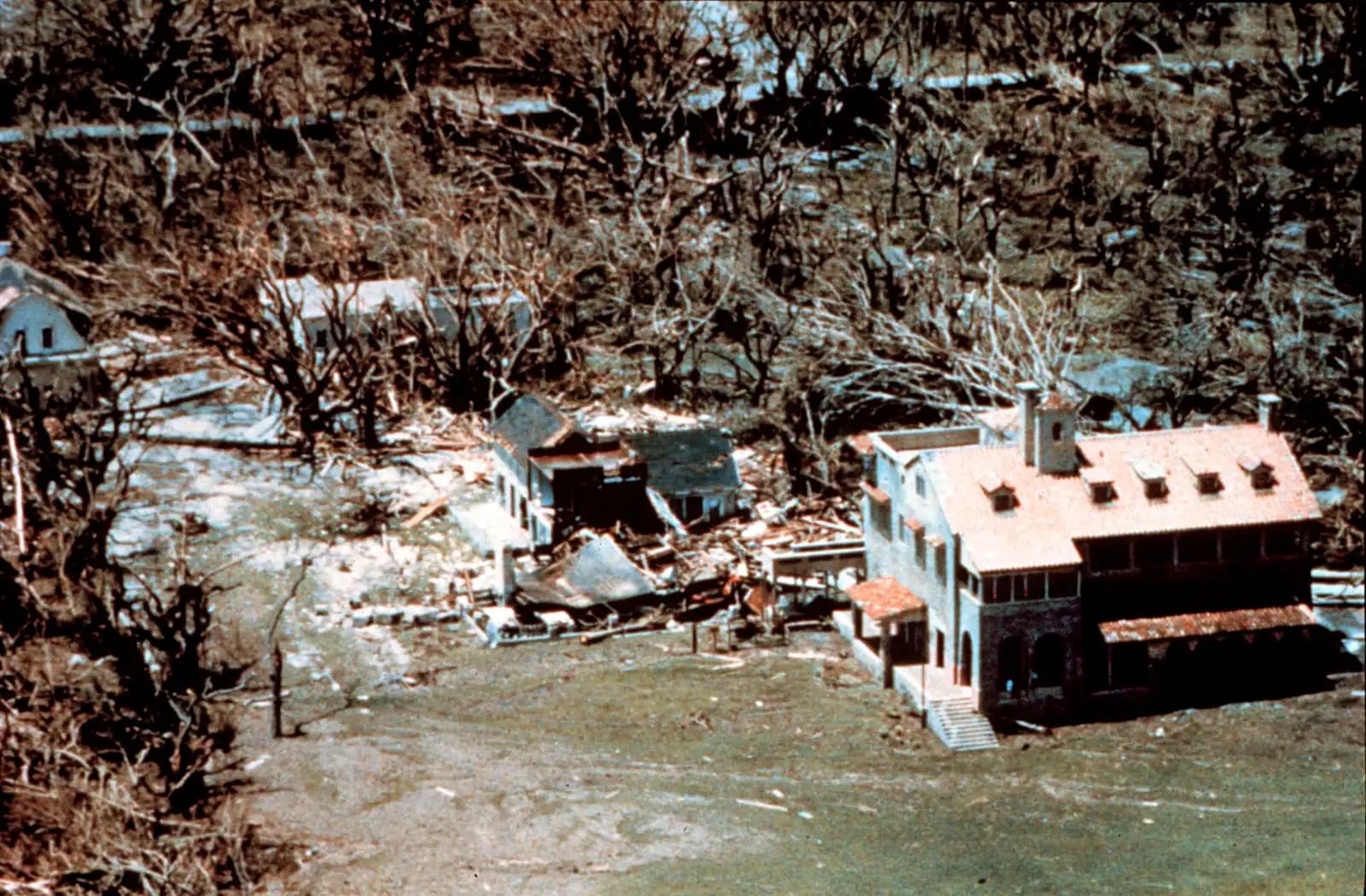
Hurricane Andrew hit this garden hard in 1992, destroying a large share of the mature canopy in a few hours. What you walk through now is substantially a replanting, which is worth knowing as you look at trees that seem old.
Go early. The tram tour is included and worth taking first for orientation. Two to three hours, and half a day if the weather is kind.