Skip to content
Search
Menu

We earn a commission if you book through this link. You pay the same price.

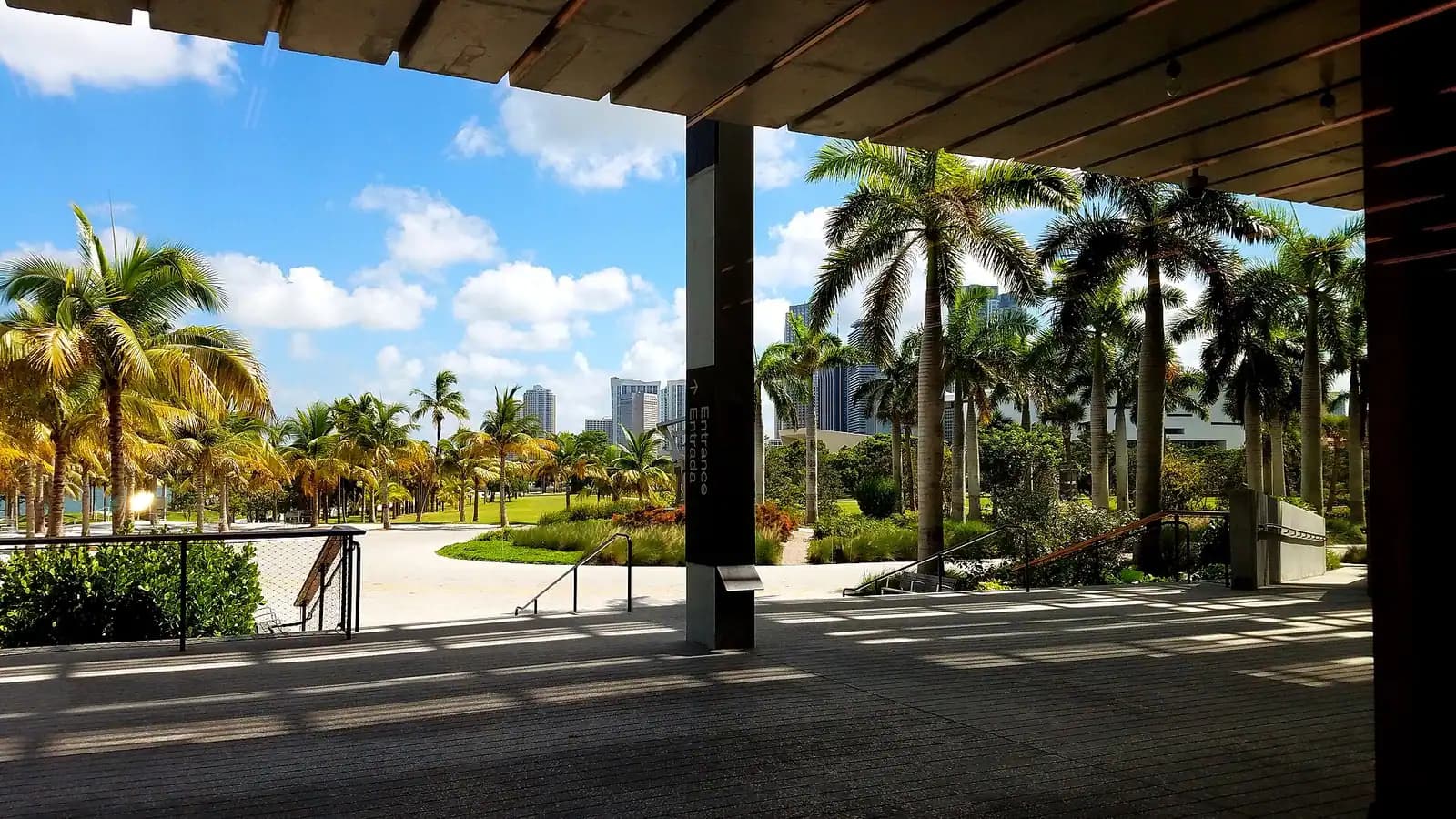
The deep slatted canopy of Pérez Art Museum Miami shading an open veranda above the bayfront lawn
osseous

Museum

Pérez Art Museum Miami

Last updated

A bayfront museum on stilts with hanging gardens on its veranda, collecting the art of the Atlantic world rather than the usual canon.

Photo: osseousCC BY 2.0

PAMM is the museum that decided Miami's art institution should look outward across the water rather than inward at Europe, and both the collection and the building follow from that.

It opened in December 2013 on Biscayne Bay, in what is now Maurice A. Ferré Park, replacing the old Miami Art Museum downtown. Herzog & de Meuron's design answers Miami's actual conditions with unusual honesty: the galleries sit on a raised platform above projected storm surge, a deep wooden canopy extends out over a veranda to throw shade, and columns of plants — hanging gardens designed by the French botanist Patrick Blanc — drop from the canopy in green cylinders. The veranda is the best room in the building and it is outdoors. People sit in the hammocks there for an hour looking at the bay and count it as a visit, which is not wrong.

The collection's organising idea is geography. PAMM concentrates on twentieth and twenty-first century art of the Atlantic world — the Caribbean, Latin America, Africa and the diasporas that connect them to North America and Europe. In practice that means a hang in which artists who would be footnotes elsewhere are central, and in which Miami's own population sees itself represented as a matter of course rather than as a special exhibition. If you have done the standard American museum circuit, this is the one that will show you unfamiliar work.

The scale is manageable. Two gallery floors, rotating temporary exhibitions, and a permanent collection shown thematically rather than chronologically. Ninety minutes to two hours covers it properly.

Two practical things are worth planning around. The museum is free on the second Saturday of every month and on Thursday evenings, which is a real saving for a family. And Frost Science is next door, sharing the same park and the same car park, which makes a rainy-day pairing that works better than either alone.

Getting there and parking

PAMM stands in Maurice A. Ferré Park on the bay side of Biscayne Boulevard, at the northern end of downtown.

Metromover is free and lands you at the door. The Museum Park station is on the Omni loop, at the edge of the park. The Metromover connects to Metrorail at Government Center and Brickell, and it costs nothing to ride — this is the cheapest and usually the fastest way in from anywhere downtown or in Brickell.

Driving, there is a paid garage beneath the park shared with Frost Science. It is charged separately from admission and is not free on the museum's free days. Event nights at the Kaseya Center a few blocks south can make the whole area difficult.

Rideshare drops at the museum entrance off Biscayne Boulevard. Fifteen to thirty minutes from South Beach depending on the MacArthur Causeway.

On foot, Bayside Marketplace is about ten minutes south along the bayfront, and the Adrienne Arsht Center is directly across Biscayne Boulevard.

From Miami Beach without a car, rideshare is the practical answer; there is no rail link across the bay.

A building designed for a city that floods

Most museums on a waterfront pretend the water is scenery. PAMM's design treats it as a threat and a climate.

The galleries sit on a raised platform, lifted above projected storm surge, with the ground level given over to parking and circulation that can take water. This was a deliberate choice made while the building was being designed, not a retrofit, and it puts the institution about a decade ahead of the conversation most coastal museums are now having.

The canopy is the other move. A deep slatted timber overhang extends well beyond the glass, creating a shaded outdoor room between building and bay. In a city where midday sun makes outdoor space unusable for months at a time, this turns a terrace into somewhere people actually sit. Patrick Blanc's hanging gardens drop from it in vertical columns — living plant cylinders, mostly bromeliads, ferns and philodendrons, suspended in the shade. They are the thing visitors photograph and they are also doing work, cooling and softening the space.

Inside, the galleries are deliberately varied in scale and light, with several opening to bay views so you cannot forget where you are. Some curators find this a nuisance. It is very Miami.

The plaza and park around it were rebuilt alongside the museum. Walk out along the bay path towards the Frost's aquarium cone and the downtown skyline stacks up behind you.

What the collection actually covers

PAMM collects the modern and contemporary art of the Atlantic rim: the Caribbean, Latin America, Africa, and the North American and European artists whose work belongs in conversation with them.

That thesis produces a hang you will not see in Chicago or Boston. Cuban, Haitian, Brazilian, Colombian and Puerto Rican artists appear as central figures. Diasporic African-American work is shown in dialogue with African and Caribbean practice rather than in a separate room. The framing is oceanic — the Atlantic as a route along which people, goods and ideas were carried, including by force — and it reframes plenty of familiar work.

The permanent collection is presented thematically and rotates regularly, so specific works cannot be promised. Large-scale commissions and site-specific installations appear in the double-height spaces and in the plaza outside.

Temporary exhibitions run several at a time and are where the museum spends its ambition. Programming clusters around Art Basel Miami Beach in early December, when the museum, like the rest of the city, operates at a different intensity and a different price point for everything around it.

Check what is on before you go. The difference between a strong and an average exhibition season here is larger than at a museum with a fixed masterpiece hang.

Free Thursdays, free second Saturdays

PAMM is one of the better value propositions in a city that is not generally cheap.

  • Second Saturday of each month: free admission to the whole museum, typically 10am to 9pm, with family art-making activities during the day. It is busy, deliberately so, and it is genuinely free rather than free-with-a-catch.
  • Thursday evenings: admission has regularly been free from around 5pm to 9pm, sometimes tied to a programme of talks or music.
  • Paid admission has recently sat at around $16 for adults and $12 for students, seniors and young people roughly 7 to 18, with under-6s free. Members enter free.
  • Miami-Dade library card holders have been able to borrow passes for free entry. Worth knowing if you have local family.

Verify all of this on the museum's calendar before you build a day around it — free evenings and family days are programming decisions and they do change.

Parking in the shared garage beneath the park is charged separately and is not free on free days, which catches people out. If you are coming by Metromover, the Museum Park station is at the edge of the park and costs nothing at all.

Doing PAMM and Frost Science together

The two museums share Maurice A. Ferré Park and the car park beneath it, and they are a two-minute walk apart. They also suit completely different moods, which is what makes the pairing work.

Frost Science first with children. It is loud, hands-on, and exhausting in the good way. Two and a half to four hours is normal. Follow it with PAMM only if everyone still has energy; ninety minutes there is plenty.

PAMM first without children. Go at opening, take the galleries at a proper pace, then sit on the veranda over lunch. If you still want more, the Frost's aquarium and planetarium are next door.

On a rainy day, this park is the single best place in Miami to be. Both buildings are large, indoor and air-conditioned, the walk between them takes two minutes, and summer storms rarely last longer than that.

Combination tickets between the two have been offered at various points; ask at either desk rather than assuming.

Downtown and the Metromover loop are immediately to the south, Bayside Marketplace is a ten-minute walk down the bayfront, and the Adrienne Arsht Center is directly across Biscayne Boulevard.
Tours that visit PAMM

Operators run these trips past PAMM, or stop there as part of a longer route. We list what the booking data supports — not everything that mentions the name.

Some links below go to Viator, our booking partner. We earn a commission on bookings made through them — at no extra cost to you, and with no influence on what we recommend.

Near PAMM

Straight-line distances, so allow more on the road — the island is long and has one main parkway.

  • Large ocean fish and a shark circling in a deep aquarium tank seen from below

    Museum

    Phillip and Patricia Frost Museum of Science

    A bayfront science museum built around a conical aquarium you look down into from the roof and up through from three floors below.

    2.5–4 hoursTicketed, recently around $30 for adults with lower youth rates for roughly ages 4–11 and under-3s free. One planetarium show is normally included, subject to availability.480 ft away

  • Boats moored at a downtown marina with a city skyline of towers rising behind
    Free

    Shopping

    Bayside Marketplace

    Downtown Miami's bayfront mall, best understood as the dock most Biscayne Bay cruises leave from rather than as somewhere to shop.

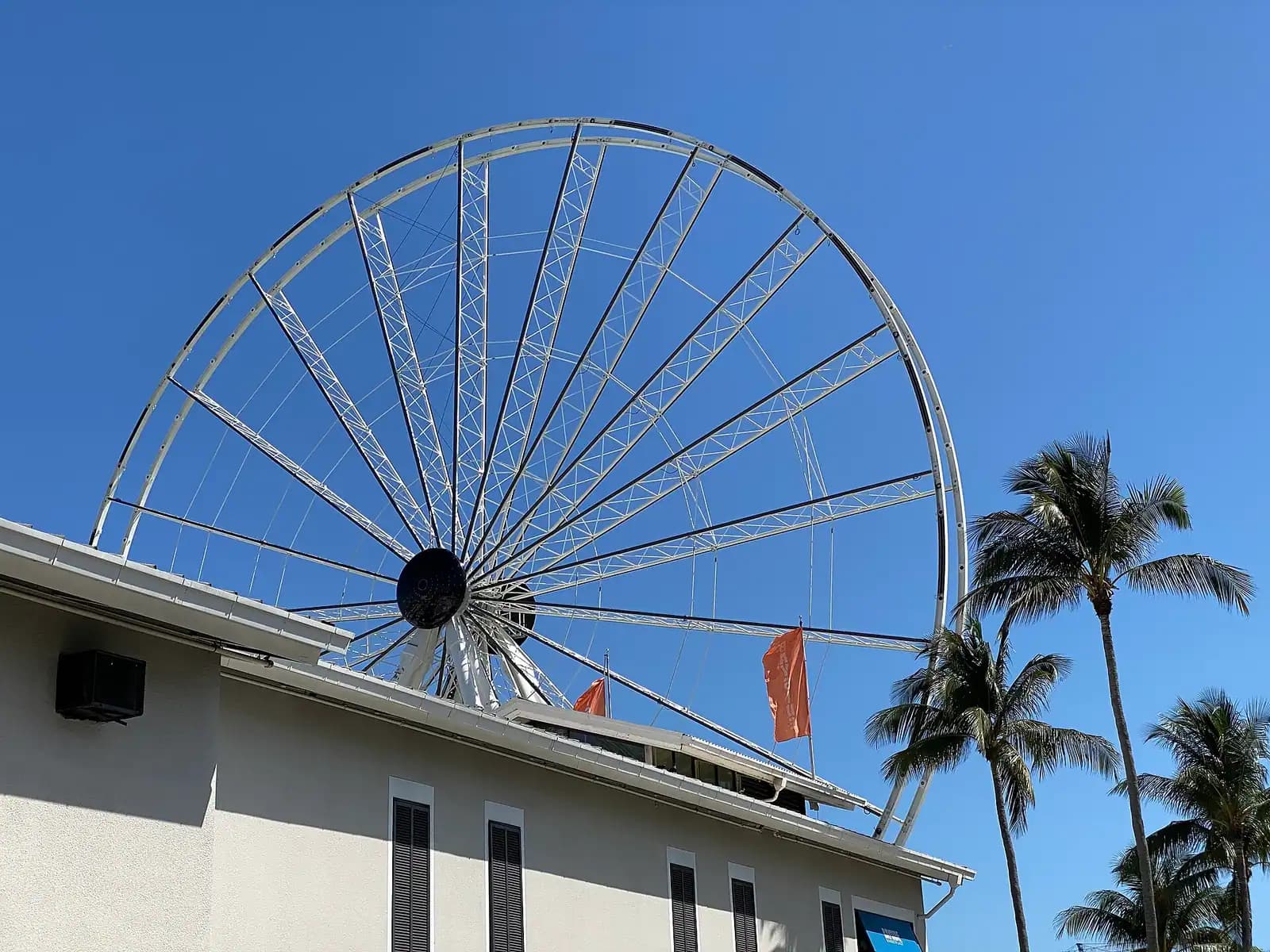
    1–3 hoursFree to enter and to walk the waterfront. Boat trips, the Skyviews observation wheel and Bayfront Park concerts are each ticketed separately.0.5 mi away

  • An ornate 1920s tower with a decorated crown standing among much taller modern glass buildings

    Historic site

    Freedom Tower

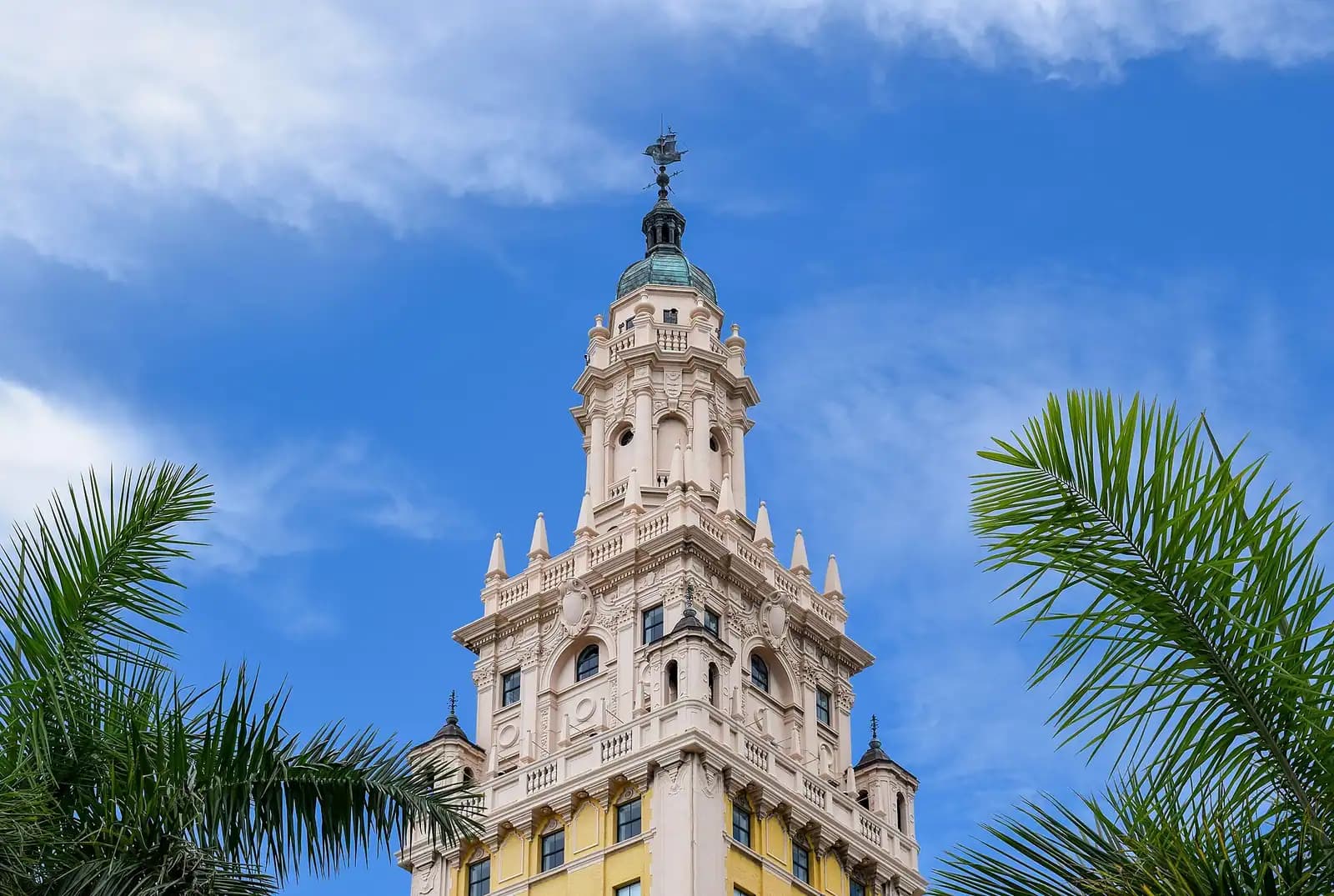
    A 1925 newspaper tower that became the federal processing centre for Cuban refugees, reopened in 2025 after a two-year restoration.

    1–2 hoursOperated by Miami Dade College's Museum of Art and Design. Admission arrangements have varied over the building's life and have been revised since the 2025 reopening — check before you go.0.4 mi away

  • A dense cluster of downtown towers seen across water at the end of the day
    Free

    Neighbourhood

    Downtown Miami

    The original Miami: a railway terminus that became a city in 1896, now a downtown of towers, museums and a free elevated railway.

    3–8 hoursFree to walk, and the Metromover that connects it costs nothing. Museums, the Freedom Tower galleries, bay cruises and events are ticketed separately.0.9 mi away

PAMM: common questions

When is PAMM free?

The Pérez Art Museum Miami is free to everyone on the second Saturday of each month, typically from 10am to 9pm, with family art-making activities during the day. Admission has also regularly been free on Thursday evenings from around 5pm. Both are programming decisions that can change, so check the museum's calendar before you plan around them. Parking in the garage below the park is still charged on free days.

How long does it take to go through PAMM?

Ninety minutes to two hours covers the two gallery floors and the temporary exhibitions at a comfortable pace. Add half an hour if you intend to sit on the shaded veranda under the hanging gardens, which most people do and which is arguably the best part of the building. Frost Science is a two-minute walk away, so a half day covers both if you want a full museum morning.

What kind of art is at the Pérez Art Museum Miami?

Modern and contemporary art of the Atlantic world: the Caribbean, Latin America, Africa, and the diasporas linking them to North America and Europe. The result is a collection where Cuban, Haitian, Brazilian and Colombian artists are central rather than peripheral, shown thematically rather than chronologically. If you have seen the standard American museum canon, PAMM will show you a good deal of unfamiliar work.

Can you get to PAMM on the free Metromover?

Yes. The Museum Park station on the Metromover's Omni loop sits at the edge of Maurice A. Ferré Park, a short walk from the entrance. The Metromover is free to ride, runs throughout downtown and Brickell, and connects to Metrorail at Government Center and Brickell stations. It is the cheapest way to reach the museum and usually faster than driving into the garage beneath the park.

Is PAMM good for kids?

It works better than most art museums, particularly on the second Saturday of the month when free admission comes with art-making activities aimed at families. Large-scale installations hold attention and the outdoor veranda lets children move without disturbing anyone. That said, Frost Science next door is the one designed for them, and families with young children generally do Frost first and PAMM only if energy allows.