Skip to content
Search
Menu

We earn a commission if you book through this link. You pay the same price.

Large ocean fish and a shark circling in a deep aquarium tank seen from below
Unsplash

Museum

Phillip and Patricia Frost Museum of Science

Last updated

A bayfront science museum built around a conical aquarium you look down into from the roof and up through from three floors below.

Frost Science opened in May 2017 on Biscayne Bay, and it is three institutions stacked into one 250,000-square-foot complex: an aquarium, a planetarium and a hands-on science centre, joined by a public plaza.

The aquarium is the architectural idea. A conical tank holding around half a million gallons sits at the centre of the building, narrow at the bottom and wide at the top. You start on the roof deck looking down into it from above the waterline, watching mahi-mahi and sharks move against the sky, then descend through two more viewing levels as the cone widens, finishing three floors below at a 31-foot oculus lens that shows you the whole body of water from underneath. The conceit is the Gulf Stream — the warm current that runs past Florida's coast — and the descent is meant to read as going deeper into it. It works.

Around that sit the other galleries. The aquarium levels cover South Florida habitats specifically: the Everglades, mangrove and coral systems that begin within an hour of the building, including a living-coral exhibit that doubles as a research facility. Upstairs, the science centre runs the usual excellent nonsense — a hurricane-force wind simulator, a vertical feathers-to-flight gallery tracing dinosaurs to aircraft to spaceflight, a body-and-brain lab with real experiments running.

The Frost Planetarium is a full-dome theatre with a 67-foot screen tilted so the projection wraps past your peripheral vision. One show is normally included with admission, chosen on the day and subject to availability, which is the single most important thing to sort out at the ticket desk rather than at two in the afternoon.

Allow two and a half to four hours. With children under ten, four is realistic and you will still leave something unseen. PAMM is next door if the adults want a second act.

Getting there and parking

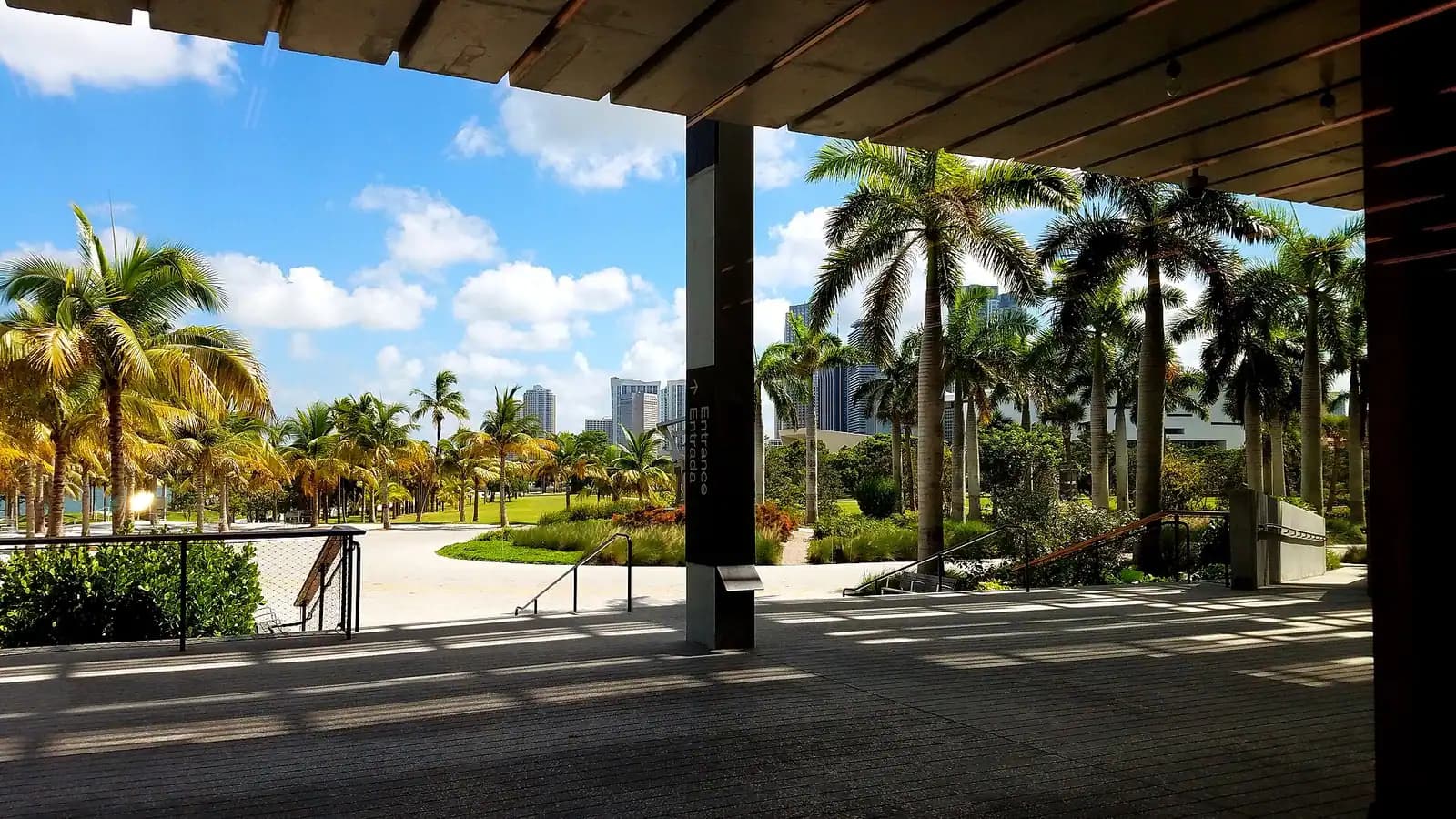
Frost Science shares Maurice A. Ferré Park with PAMM, on the bay side of Biscayne Boulevard at the northern edge of downtown.

Metromover is free and stops at the park. Museum Park station on the Omni loop is a short walk from the entrance, and the Metromover connects to Metrorail at Government Center and Brickell. For anyone staying downtown or in Brickell this is both the cheapest and usually the fastest option.

Driving, use the paid garage beneath the park, shared with PAMM and charged by the hour on top of admission. Arrive before ten on a weekend or expect to circle. Event nights at the Kaseya Center a few blocks south congest the whole area.

Rideshare drops at the plaza entrance. Fifteen to thirty minutes from South Beach across the MacArthur Causeway, longer at rush hour.

On foot, PAMM is two minutes away, Bayside Marketplace about ten minutes south along the bayfront, and the Adrienne Arsht Center directly across Biscayne Boulevard.

The order to do it in

The building rewards a plan, because two of its best things run on schedules and the rest does not.

  1. Book the planetarium show at the desk on arrival. One show is normally included with admission but it is capacity-limited and booked on site. Leaving it until you feel like it is how people miss out entirely.
  2. Go to the roof first. The aquarium's top-down view is on the open-air deck, and it is far more pleasant at ten in the morning than at two in the afternoon. It is also where the Miami skyline view is.
  3. Descend the aquarium levels in order. The building is designed as a descent through the water column and it does not read the same in reverse.
  4. Break for the planetarium at your booked slot. The seats recline and the room is dark and cold, which is a useful reset in the middle of a long visit.
  5. Finish upstairs in the science centre, which is the loudest and most physical part of the museum and the part children will refuse to leave.

The café is on the lower level and gets busy from about twelve thirty. Eating early or late is the usual advice and it applies here.

What the aquarium actually shows you

The collection is deliberately local, which distinguishes it from most big-city aquariums. Rather than a world tour of tanks, the Frost concentrates on the South Florida marine systems that begin a short drive from the front door.

The Gulf Stream cone holds the open-ocean species — sharks, rays, mahi-mahi, large pelagic fish — in a single deep column, viewed from three levels.

The Vista galleries cover the shallow-water habitats in sequence: the Everglades' freshwater sloughs, the mangrove fringe where fresh meets salt, and the coral and hardbottom reef offshore. Seeing them in that order makes the geography legible in a way a map does not, and it is directly useful if you are going on to Biscayne National Park or the Everglades later in the trip.

The coral exhibit is a working facility as much as a display. Florida's reef tract has taken severe damage from disease and bleaching over the last decade, and land-based coral propagation is part of the response. The tanks you are looking at are doing science.

Touch experiences — rays and small sharks in a shallow tank — run at set times and are supervised. Queues form immediately at opening and immediately after lunch.

Tickets, pricing and the Miami-Dade angle

Admission has recently run around $30 for adults, with lower youth rates for roughly ages 4 to 11 and free entry for under-3s. Pricing varies by day — weekends and school holidays cost more than a Tuesday in September — so the figure you are quoted depends on when you go.

One planetarium show is normally included in that price, subject to availability and booked on site. Additional shows are charged separately.

Buy online and in advance. Timed entry is standard, and walk-up availability disappears on rainy days, weekends and school holidays. A downpour in Miami sends every family within ten miles to the same two buildings.

Parking is separate. The garage beneath Maurice A. Ferré Park is shared with PAMM and charged by the hour. It is not included with admission and there is no validation arrangement worth relying on.

Combination tickets with PAMM have been offered at times; ask at either desk rather than assuming.

Verify current pricing on the museum's site before you go. Ticket structures at this museum have changed more than once since opening.

Going with children, honestly

This is the best indoor attraction in Miami for children between about four and twelve, and it is worth being clear about why and where it stops.

Four to twelve: excellent. The wind simulator, the touch tanks, the flight gallery and the aquarium descent are all pitched right, and the building is designed so children can move at speed without breaking anything.

Under four: it works, but they will get the aquarium and very little else, and the planetarium is dark and loud enough to be a mistake for some toddlers. Half a day maximum.

Teenagers: depends entirely on the temporary exhibition and the planetarium programme. The permanent science-centre galleries skew younger.

Practicalities. Strollers are fine throughout, lifts serve every level, the roof deck has shade but not much of it, and the café is the only food inside — you cannot leave and return on the same ticket without checking the policy first.

On a rainy summer afternoon, this is where everyone goes. Book ahead, arrive at opening, and treat the 1pm to 3pm window as the busiest of the day.

Tours that visit Frost Science

Operators run these trips past Frost Science, or stop there as part of a longer route. We list what the booking data supports — not everything that mentions the name.

Some links below go to Viator, our booking partner. We earn a commission on bookings made through them — at no extra cost to you, and with no influence on what we recommend.

Shared departurespriced per seat, best value for one or two

Private and small-group optionsoften cheaper per head for a family or a group of six

Near Frost Science

Straight-line distances, so allow more on the road — the island is long and has one main parkway.

  • The deep slatted canopy of Pérez Art Museum Miami shading an open veranda above the bayfront lawn

    Museum

    Pérez Art Museum Miami

    A bayfront museum on stilts with hanging gardens on its veranda, collecting the art of the Atlantic world rather than the usual canon.

    1.5–3 hoursTicketed, with adult admission recently around $16 and roughly $12 for students, seniors and ages 7–18; under-6s free. Free on the second Saturday of each month and regularly free on Thursday evenings.480 ft away

  • Boats moored at a downtown marina with a city skyline of towers rising behind
    Free

    Shopping

    Bayside Marketplace

    Downtown Miami's bayfront mall, best understood as the dock most Biscayne Bay cruises leave from rather than as somewhere to shop.

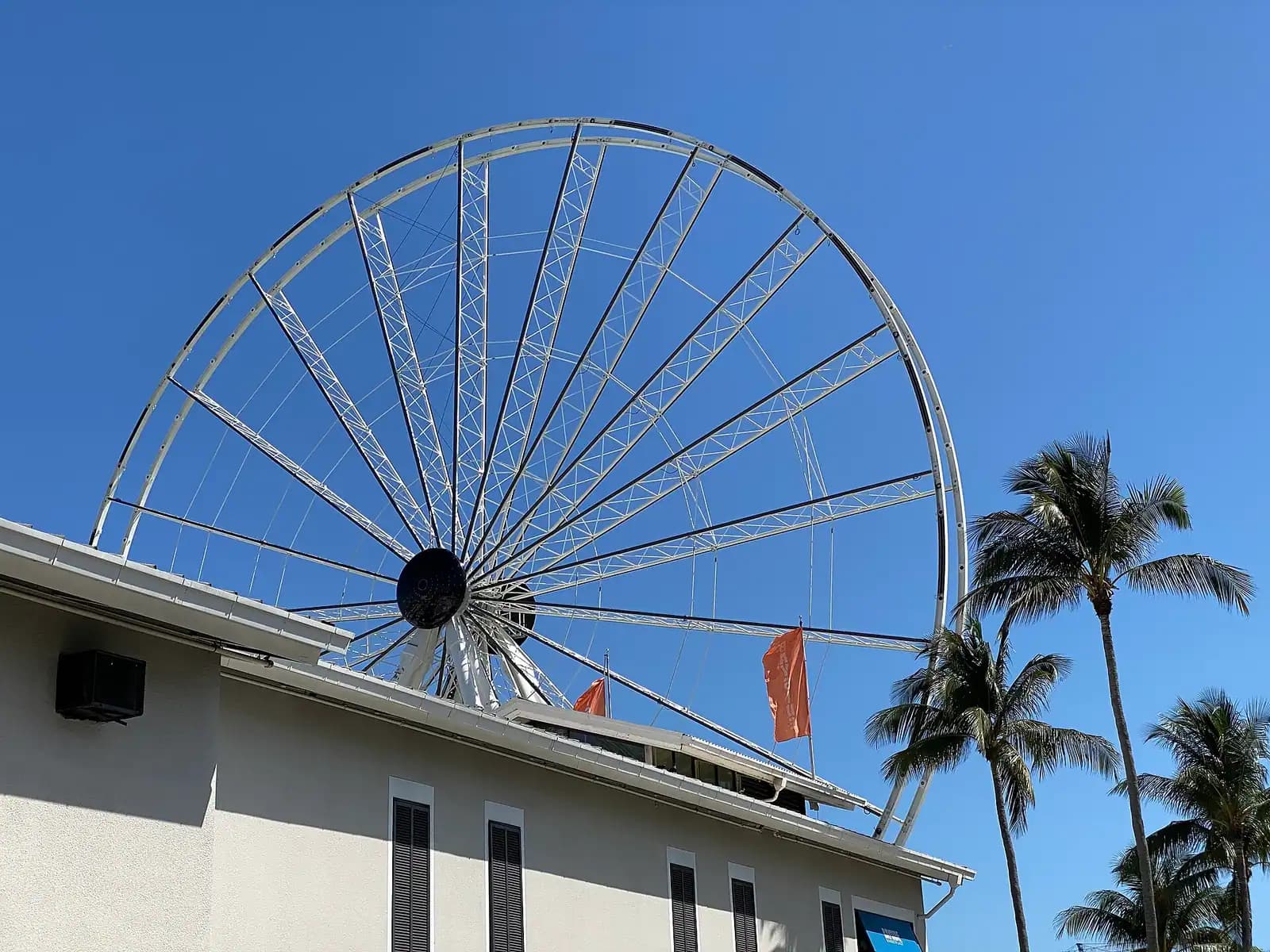
    1–3 hoursFree to enter and to walk the waterfront. Boat trips, the Skyviews observation wheel and Bayfront Park concerts are each ticketed separately.0.5 mi away

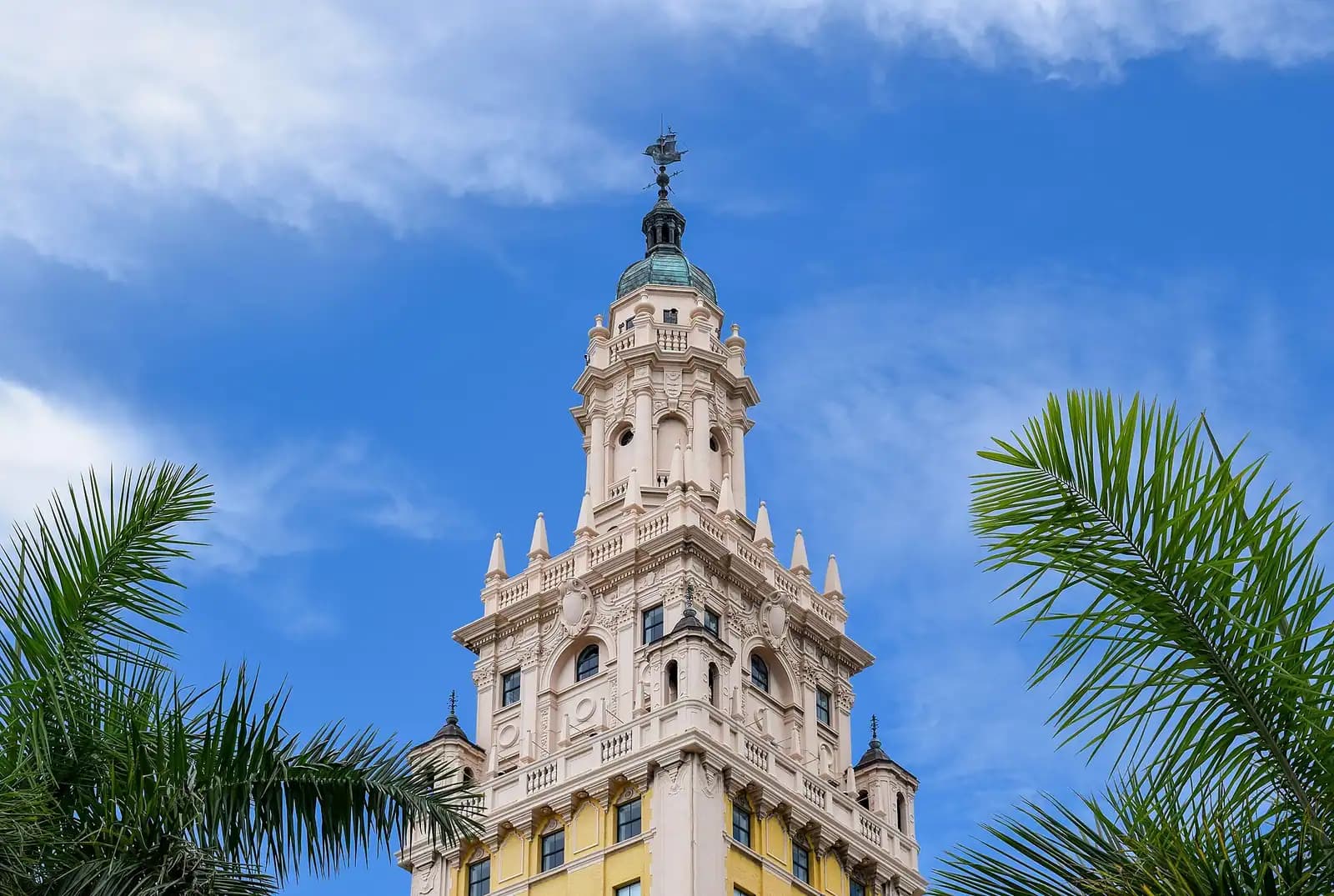
  • An ornate 1920s tower with a decorated crown standing among much taller modern glass buildings

    Historic site

    Freedom Tower

    A 1925 newspaper tower that became the federal processing centre for Cuban refugees, reopened in 2025 after a two-year restoration.

    1–2 hoursOperated by Miami Dade College's Museum of Art and Design. Admission arrangements have varied over the building's life and have been revised since the 2025 reopening — check before you go.0.3 mi away

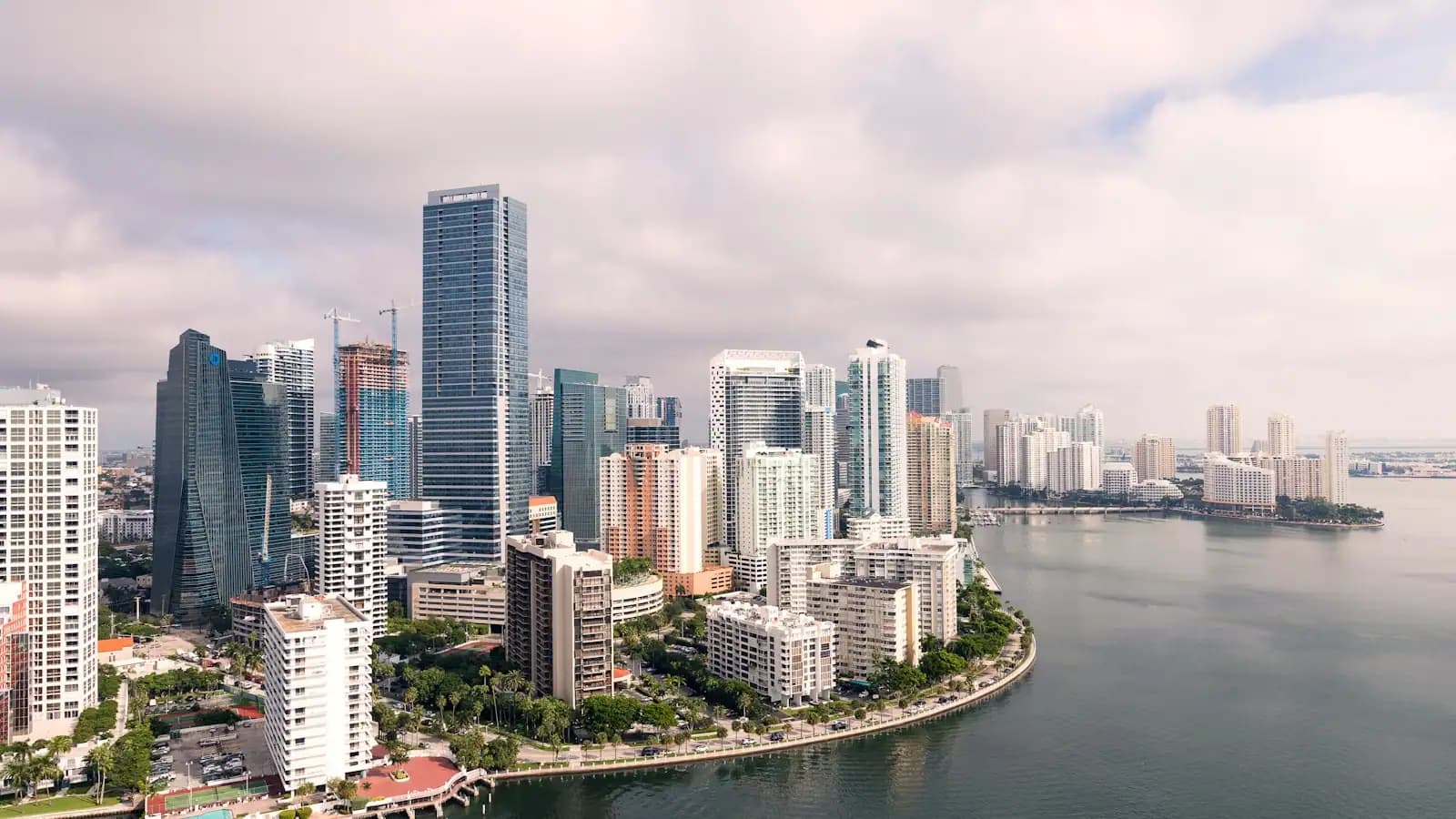
  • A dense cluster of downtown towers seen across water at the end of the day
    Free

    Neighbourhood

    Downtown Miami

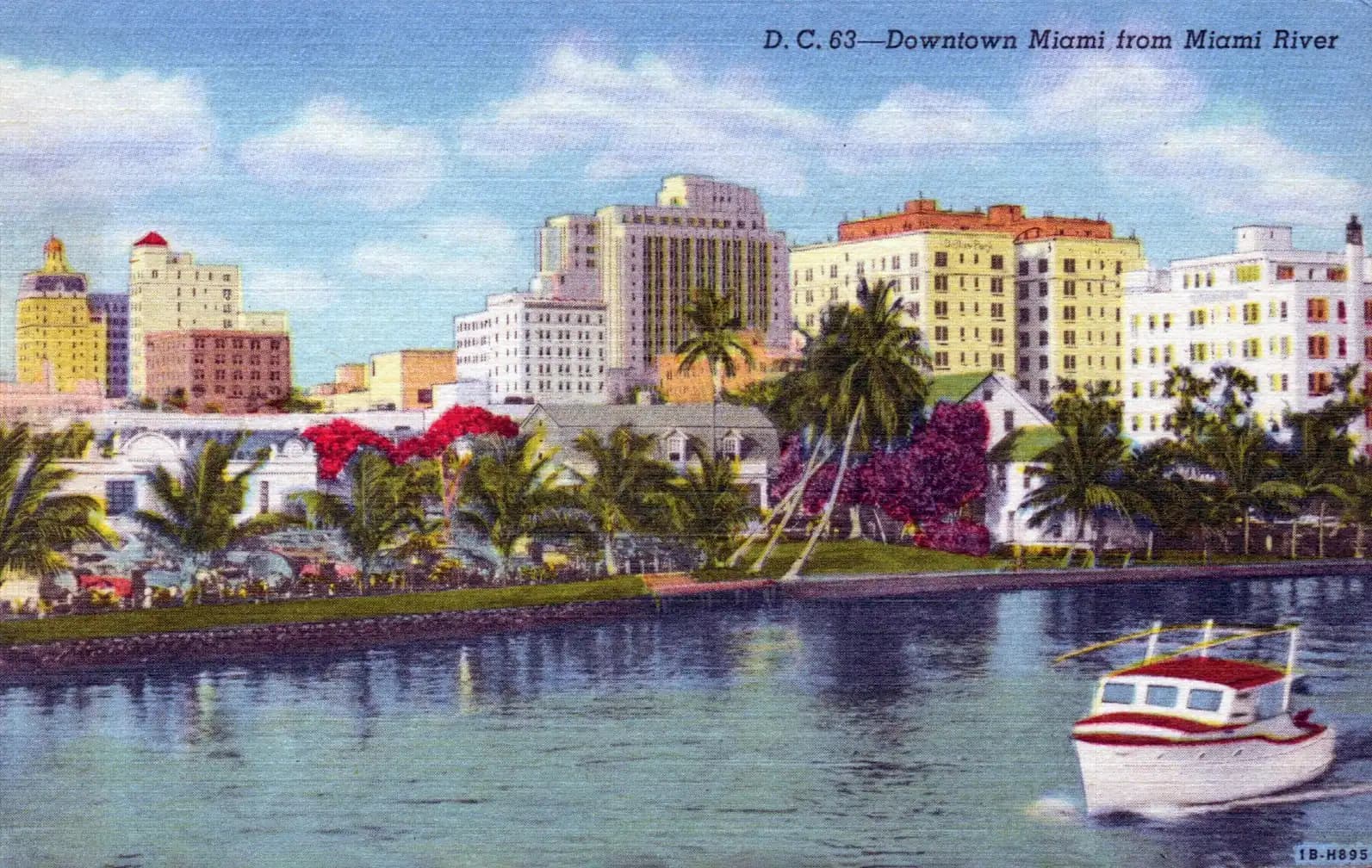
    The original Miami: a railway terminus that became a city in 1896, now a downtown of towers, museums and a free elevated railway.

    3–8 hoursFree to walk, and the Metromover that connects it costs nothing. Museums, the Freedom Tower galleries, bay cruises and events are ticketed separately.0.9 mi away

Frost Science: common questions

How long do you need at Frost Science Museum?

Two and a half to four hours. The aquarium descent from the roof deck down to the oculus takes about an hour on its own, the planetarium show runs around half an hour, and the upstairs science galleries absorb as much time as you give them. Families with primary-school children routinely stay four hours and still leave something unseen. Book the planetarium slot when you arrive rather than partway through.

Is the planetarium included in Frost Science admission?

One show is normally included with general admission, subject to availability, and it is booked on site rather than in advance. Additional shows are charged separately. Because seating is capacity-limited, the practical advice is to reserve your slot at the ticket desk the moment you arrive — visitors who wait until they feel like it frequently find the remaining shows full, particularly at weekends and during school holidays.

What is in the Frost Science aquarium?

The centrepiece is a conical tank of roughly half a million gallons representing the Gulf Stream, holding sharks, rays and large open-ocean fish, viewed from a roof deck above the waterline and from two levels below through a 31-foot oculus. Surrounding galleries cover South Florida's own habitats in sequence — Everglades freshwater, mangrove fringe and offshore coral — including a living-coral exhibit that doubles as a working research facility.

Is Frost Science a good rainy day activity in Miami?

It is the best one in the city, along with PAMM two minutes away in the same park. Summer thunderstorms in Miami are short and violent rather than all-day, and this complex is large, indoor and air-conditioned enough to absorb one comfortably. The catch is that everyone else has the same idea, so book timed entry online before you set off rather than turning up at the desk.

Can you visit Frost Science and PAMM on the same day?

Easily. The two museums share Maurice A. Ferré Park and the car park beneath it, and the walk between them takes two minutes. Families generally do Frost Science first, while energy is high, and add ninety minutes at PAMM afterwards if it survives. Combination tickets have been offered at times, so ask at either desk. The free Metromover stops at the park, which avoids the parking charge altogether.